
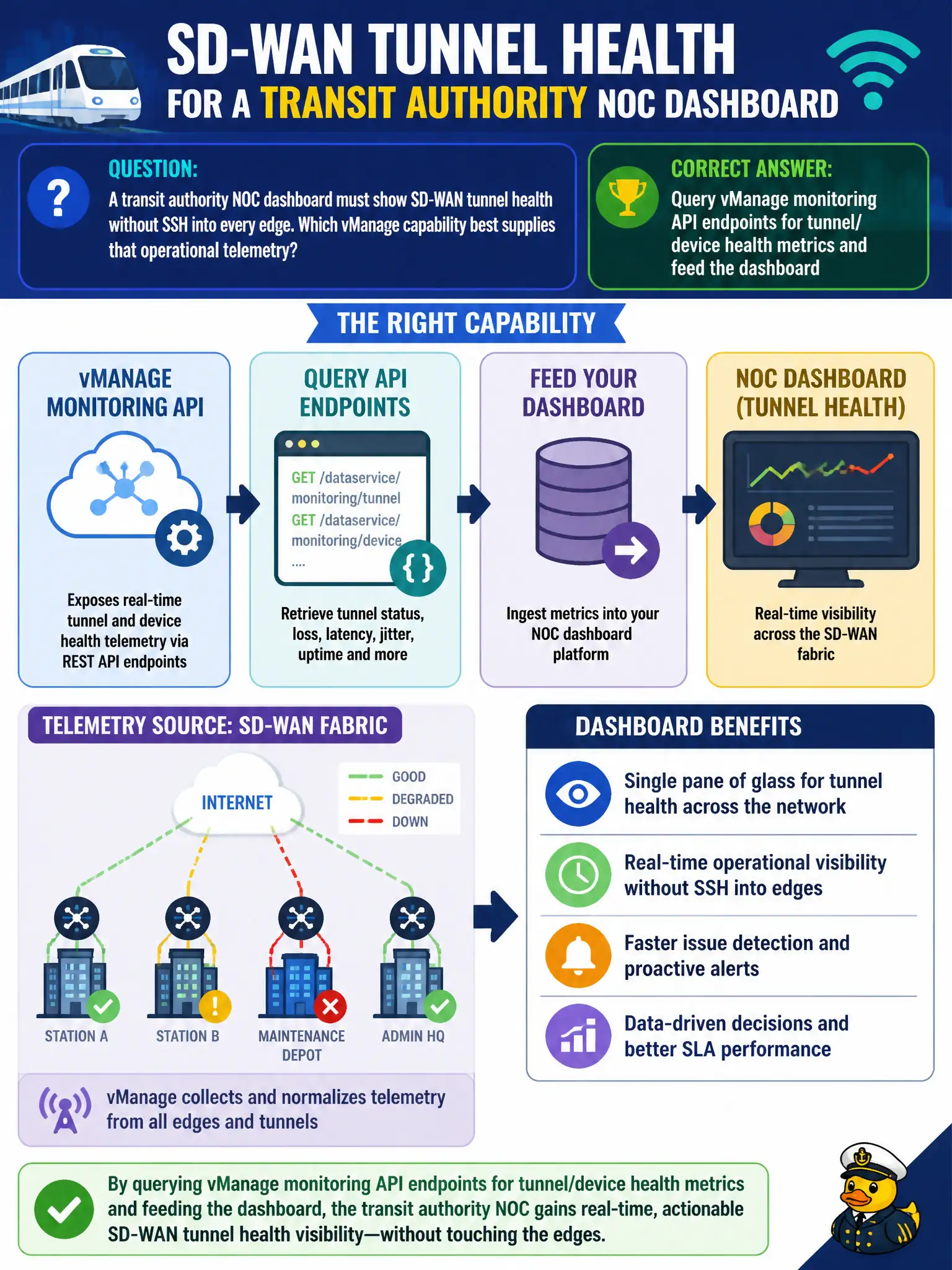
A transit authority NOC dashboard must show SD-WAN tunnel health without SSH into every edge. Which vManage capability best supplies that operational telemetry?
Select an answer to reveal the explanation.
Short Explanation
vManage already watches the tunnels—its monitoring APIs are the scoreboard the NOC should read. Climbing under every bus garage router with a console cable does not scale a transit dashboard.
Full Explanation
Transit NOC dashboards that must show SD-WAN tunnel health without SSH into every edge should query vManage monitoring API endpoints for tunnel/device health metrics and feed the dashboard. Centralized monitoring APIs exist so operations can scale visibility without per-device CLI. That is the EI programmability approach for SD-WAN operational telemetry.
Disabling OMP and inferring health from console cable visits destroys the overlay and does not scale. Relying solely on passenger Wi-Fi RSSI as a proxy for IPsec tunnel state measures the wrong layer. Erasing vManage certificates weekly to avoid stale caches creates avoidable outages.
Exam caveat: understand which monitoring resources cover BFD/tunnel vs device system metrics so the dashboard does not plot the wrong signal. Operational check: authenticate to vManage, GET tunnel health for a known degraded site, confirm the metric matches CLI reality, then wire the dashboard poll with timeouts and caching. Alarm on API failure separately from tunnel failure. Record the chosen control and the rejected alternatives in the municipal change record so future on-call staff understand which failure modes were avoided for city services. Re-validate after the next maintenance window that counters, logs, and failover behavior still match the documented design intent.