
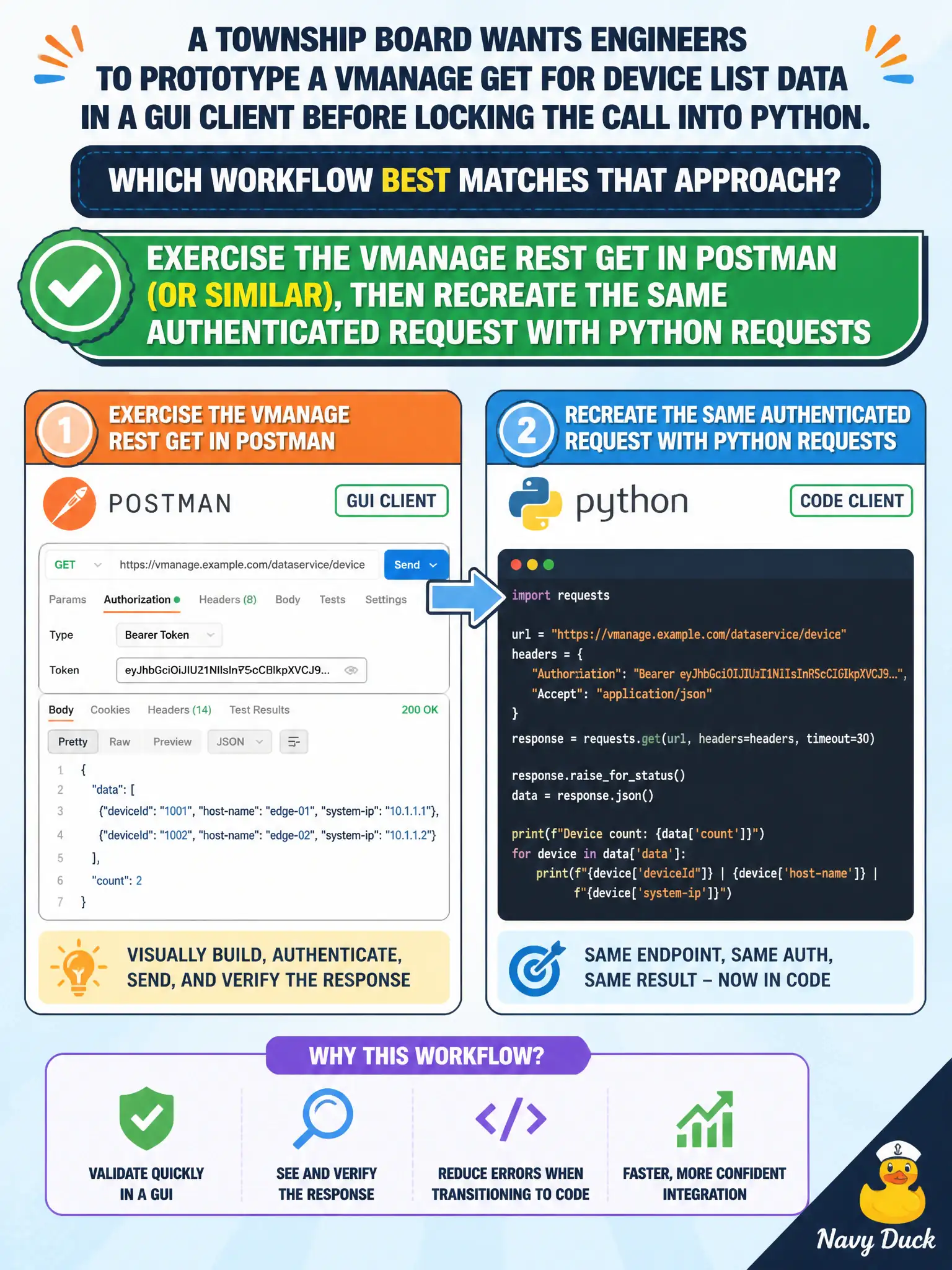
A township board wants engineers to prototype a vManage GET for device list data in a GUI client before locking the call into Python. Which workflow best matches that approach?
Select an answer to reveal the explanation.
Short Explanation
Postman is the sketchpad: click the vManage GET, see the JSON, then copy that homework into Python requests for the real script. Skipping the API and living in ROMMON is the long way around township automation.
Full Explanation
Township engineers prototyping a vManage GET for device list data in a GUI client before locking it into Python should exercise the REST GET in Postman (or similar), then recreate the same authenticated request with Python requests. That workflow validates URL, headers, auth, and payload shape visually before coding, which reduces API integration thrash.
Using only ROMMON on each vEdge because vManage supposedly has no HTTP API is false. Capturing NetFlow from the underlay to reverse-engineer JSON is unrelated. Telnet to vManage without TLS and pasting HTML tables into Excel is insecure and not an API workflow.
Exam caveat: vManage auth tokens/cookies expire—prototype refresh behavior in Postman before coding brittle scripts. Operational check: save a Postman collection with lab environment variables, confirm the device-list GET, export examples, then implement Python with the same paths and auth flow. Keep production credentials out of the shared collection; use vault-backed environments. Record the chosen control and the rejected alternatives in the municipal change record so future on-call staff understand which failure modes were avoided for city services. Re-validate after the next maintenance window that counters, logs, and failover behavior still match the documented design intent.