
Pre-merge CI review for the permitting service must finish before merge gates. Why avoid Message Batches there?
Select an answer to reveal the explanation.
Short Explanation
Merge gates can't wait on the overnight sorter—CI needs the live counter. Synchronous API for blocking reviews; batches for jobs that can wait.
Full Explanation
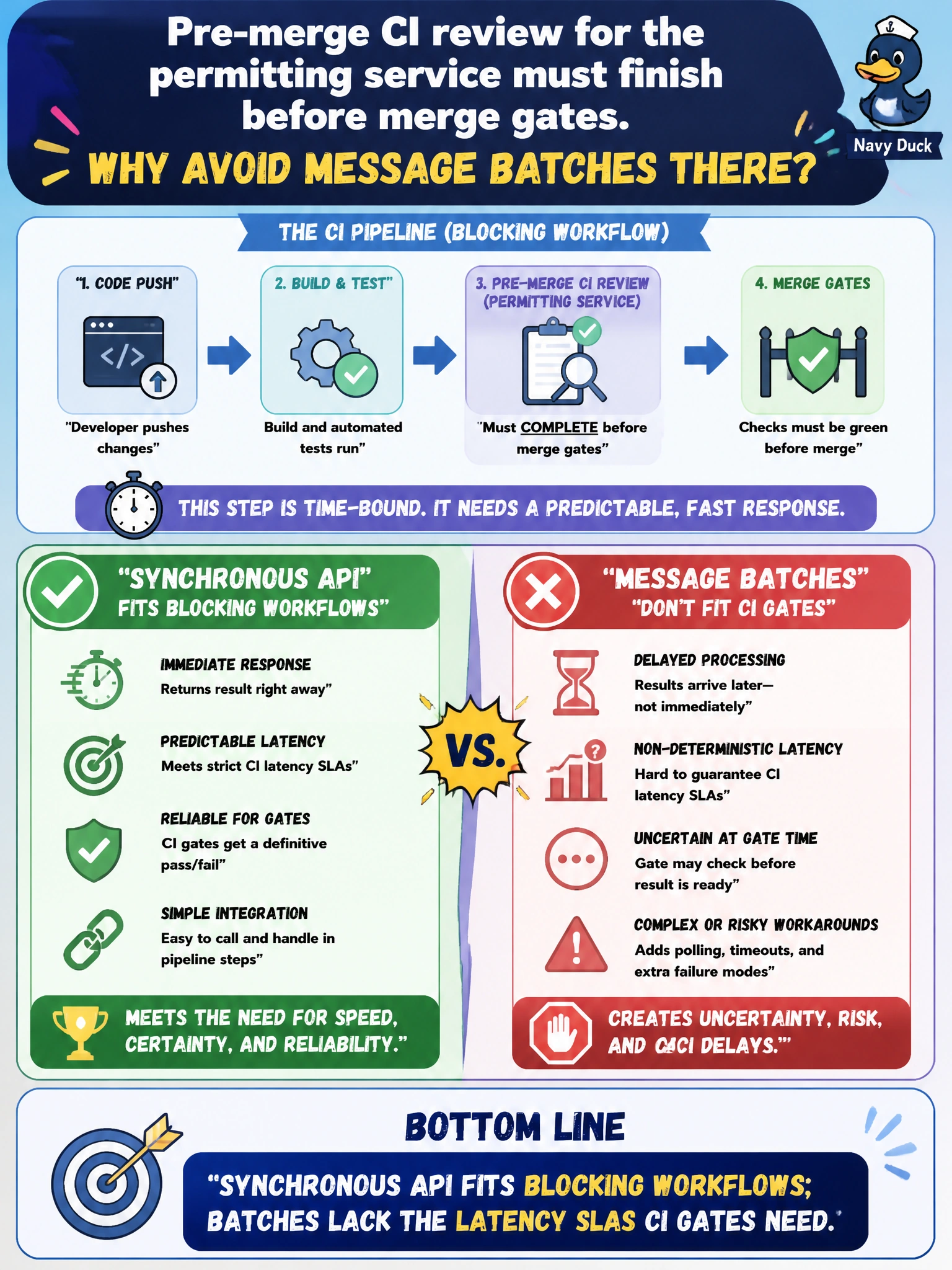
Pre-merge CI review for a municipal permitting service is a blocking workflow: the merge gate cannot close until review finishes inside the pipeline's latency budget. The synchronous API fits that need; Message Batches lack the latency SLAs CI gates require because batches may take many hours within their processing window. Using batches for pre-merge review would stall merges or force unsafe merges without completed checks. Assuming batches always finish faster than any synchronous call confuses cost/throughput optimization with latency guarantees. Claiming CI gates never care about review latency or merge timing ignores why gates exist—to keep defective fee or zoning logic out of production on a predictable cadence. Believing batches provide hard sub-second SLAs ideal for pre-merge checks attributes interactive characteristics to a deferred API. Exam caveat: choose Message Batches for deferred municipal corpora; choose synchronous calls for human- or merge-blocking steps. Operational check: measure p95 CI review latency against the merge SLA, confirm the path uses synchronous inference, and document that batch jobs are reserved for non-blocking overnight extract or offline audit workloads.