
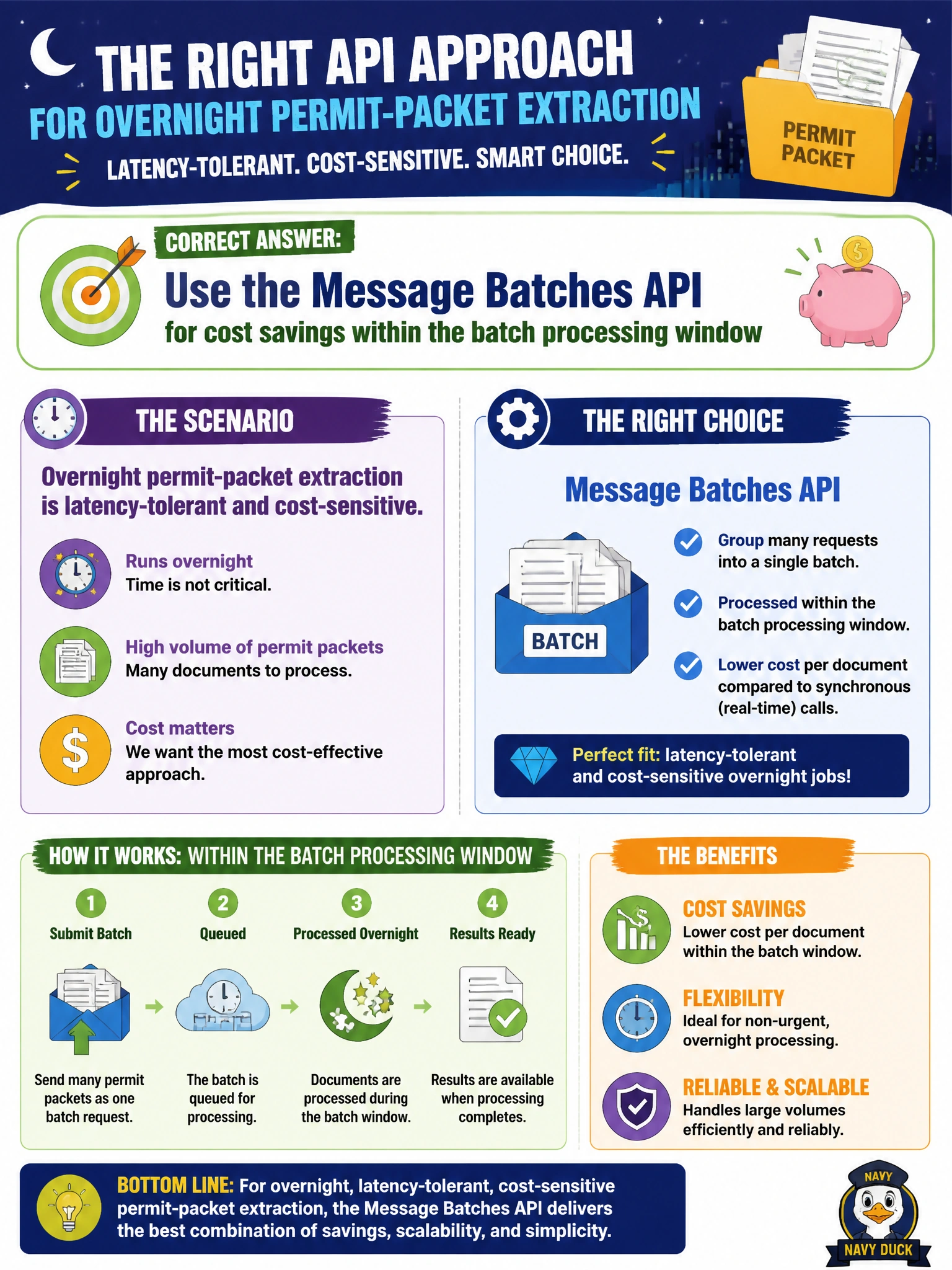
Overnight permit-packet extraction is latency-tolerant and cost-sensitive. Which API approach fits?
Select an answer to reveal the explanation.
Short Explanation
Night-shift packet jobs can wait in the batch queue—like overnight mail sorting—and save money. Message Batches fit latency-tolerant civic extracts.
Full Explanation
Overnight permit-packet extraction is typically latency-tolerant and cost-sensitive: results are needed by the next business morning, not within interactive chat SLAs. The Message Batches API fits that profile by accepting deferred work and offering cost advantages within the batch processing window (commonly up to about twenty-four hours). Civic overnight jobs should use that tradeoff rather than paying interactive premiums for work that can wait. Forcing interactive synchronous calls for every overnight packet burns budget and capacity without buying meaningful resident-facing speed. Blocking the 311 desk until each overnight job finishes live couples front-office service to back-office batch latency and is operationally backwards. Avoiding batches because civic workloads never tolerate deferred results misstates municipal operations—many assessor, permitting, and records pipelines are designed around overnight windows. Exam caveat: batch suitability depends on SLA headroom relative to the processing window; interactive paths remain required for blocking gates. Operational check: map overnight extract completion targets to the batch window, submit early enough that a full window still meets morning clerk availability, and keep a synchronous path for any packets that must unblock live counters.