
A transit-corridor investigation session has grown very long, and the team notices Claude Code responses becoming slower and less focused as irrelevant early exploration accumulates in context. What should the team consider doing?
Select an answer to reveal the explanation.
Short Explanation
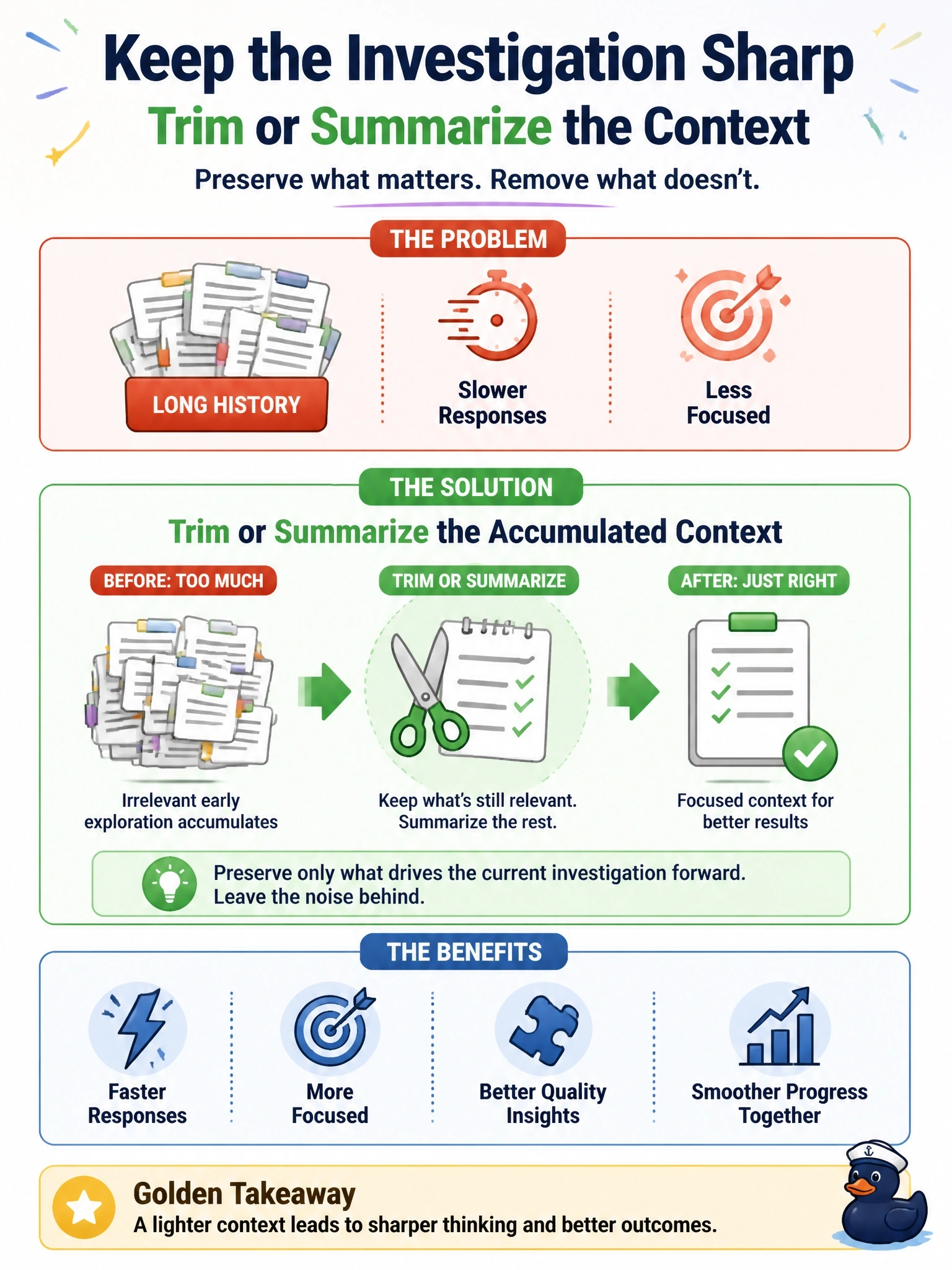
Dragging every dead end from an hours-long corridor investigation forward is hauling discarded maps into the next meeting. Trim to what still matters and keep the findings, not the clutter.
Full Explanation
A long session accumulates material whose relevance decays. Early exploration of a transit corridor that was ruled out hours ago still occupies context, still competes for attention, and still costs tokens on every subsequent turn, so context becomes something to curate rather than something to accrue.
Trimming or summarizing the history down to what still bears on the current investigation removes the decayed material while preserving the established findings. The working context gets smaller and more focused, which is what restores speed and sharpness, and the summary retains the conclusions the team already paid to reach.
Keeping every message forever assumes more context is always better, but stale history crowds attention and is precisely what produced the degradation being described. Restarting from a completely blank session discards real findings and forces the team to rediscover them at full cost. Increasing temperature changes output randomness rather than the amount or relevance of accumulated context, so it addresses none of the reported symptoms.
Exam caveat: summarizing is lossy—decisions, constraints, and file paths should be written into the summary explicitly rather than trusted to survive it. Operational check: before trimming, capture the current findings and open questions into a short durable note, then confirm afterward that the session can still answer each one.