
Low-confidence or contradictory fields appear on a digital permit intake. What should happen first?
Select an answer to reveal the explanation.
Short Explanation
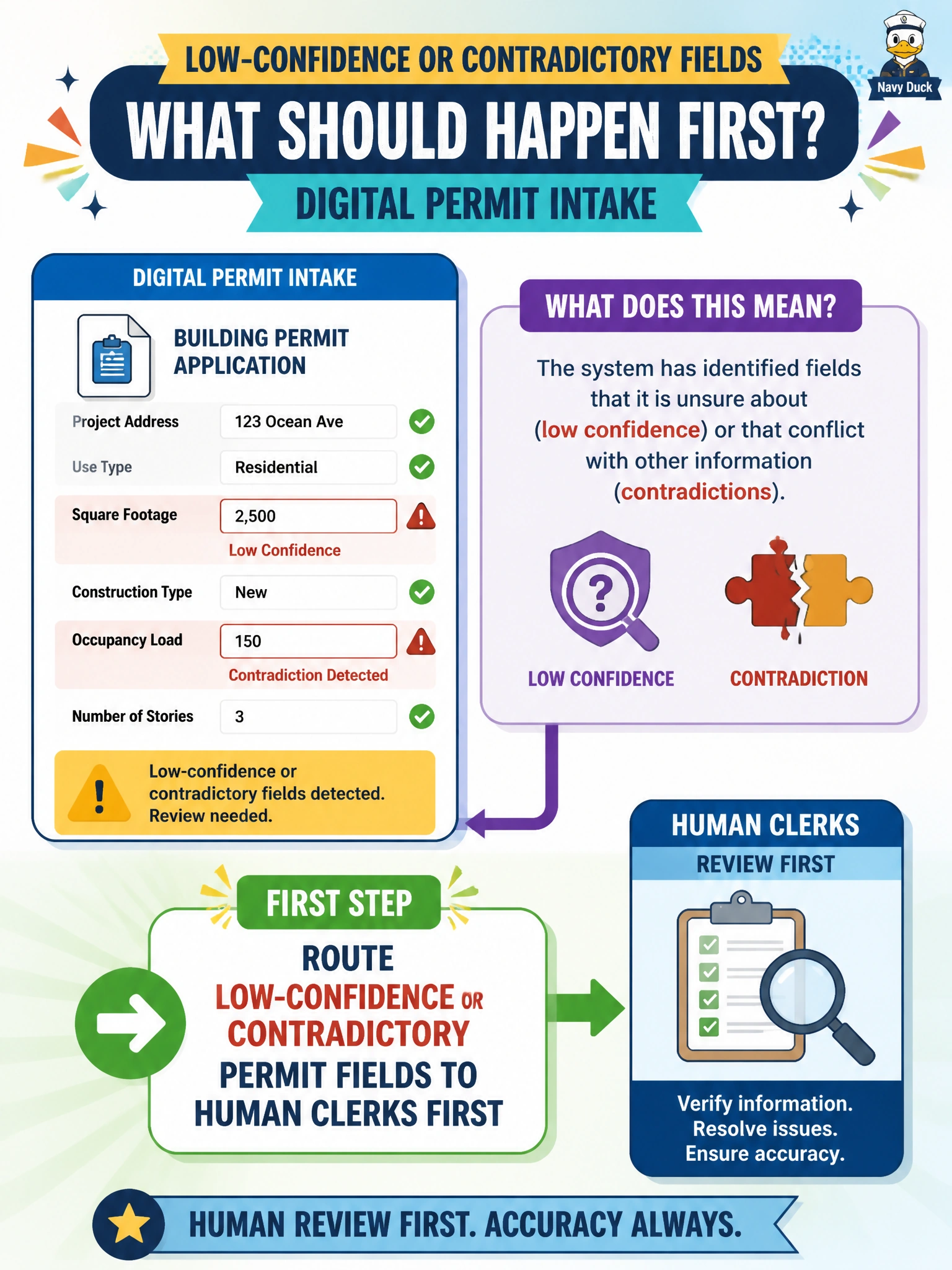
When fields fight or look shaky, send them to a clerk before anything gets stamped. Humans first on low-confidence or contradictory permits.
Full Explanation
On digital permit intake, low-confidence or contradictory fields must route to human clerks first before automation proceeds. Contradictions (mismatched addresses, conflicting parcel IDs, fees that disagree with schedules) and low-confidence extractions are exactly the cases where silent automation creates the costliest municipal errors.
Human-first routing works because clerks can request clarifications, check source PDFs, and apply local policy the model cannot invent. The rest of the clean, high-confidence fields may still flow, but the risky fields stay gated.
Auto-approving the permit despite contradictions fails because it stamps conflict into an official record. Dropping contradictory fields and filing the rest silently fails because omitted fields can be material to zoning, fees, or ownership. Asking the model to invent values that resolve the conflict fails because invented reconciliations are fabrications, not evidence.
Exam caveat: "first" means before approval or downstream writes—not after the permit is already issued. Operational check: when intake flags low confidence or field conflicts, open a clerk review task with the source document and conflicting values; block auto-approve until resolution.