
A valid GIS parcel query returns no matching parcels. How should the subagent label the outcome?
Select an answer to reveal the explanation.
Short Explanation
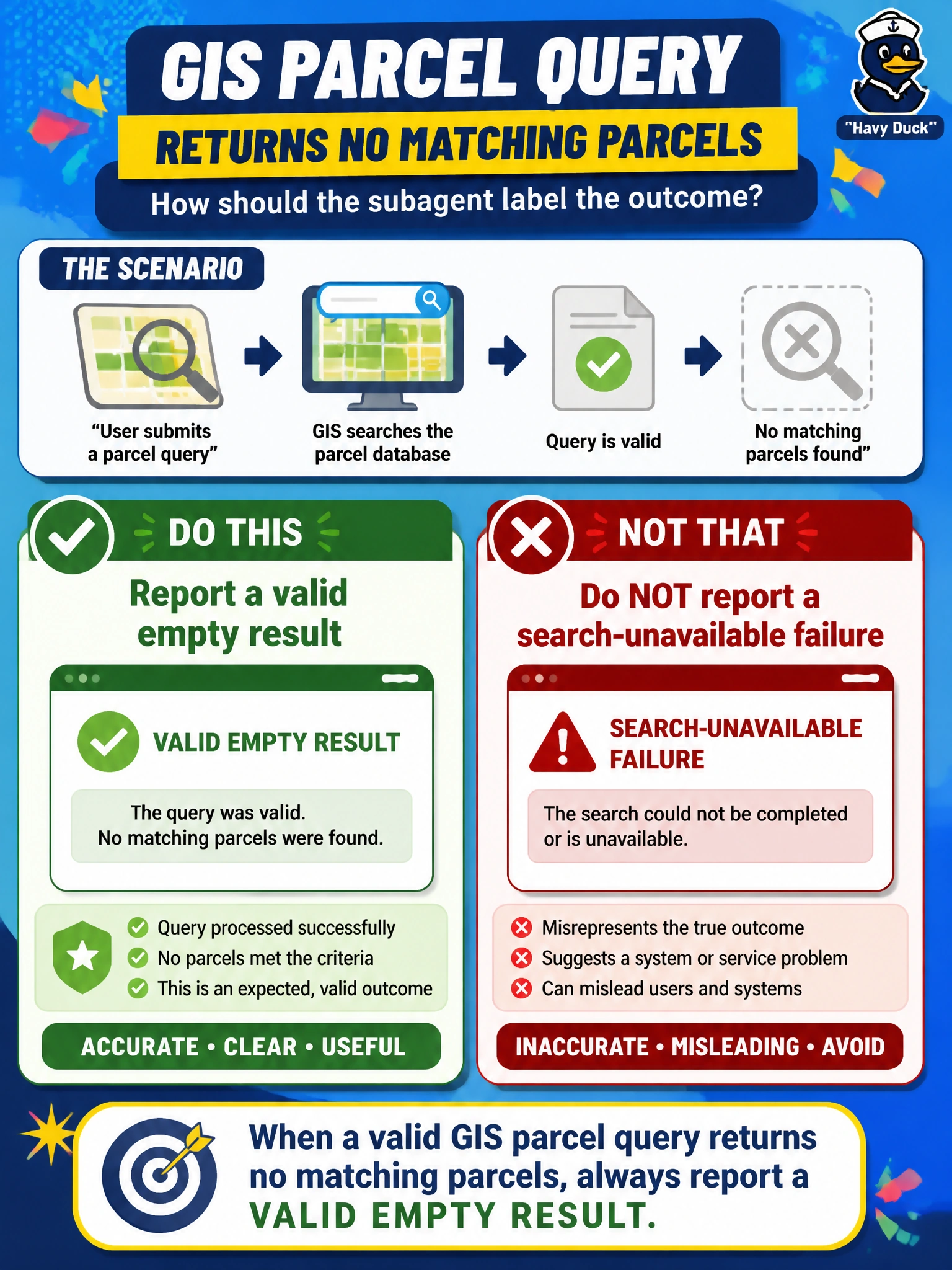
No hits is not the same as the map being down. A clean empty result means "nothing here," not "GIS is broken."
Full Explanation
A valid GIS parcel query that returns no matching parcels must be labeled as a valid empty result, not as a search-unavailable failure. Emptiness means the query executed and the layer simply had no features in that filter; unavailability means the service, credentials, or transport failed. Conflating the two sends municipal research down the wrong recovery path.
Reporting a valid empty result works because the coordinator can then widen the extent, fix an address parse, try an alternate layer, or conclude there is no parcel match—without paging GIS operations for an outage that did not happen. Empty is an informative answer in zoning and ownership workflows.
Labeling the outcome search-unavailable even though the query succeeded fails because it triggers outage playbooks, unnecessary tickets, and delayed briefs. Treating empty as a crash and killing the whole research workflow fails because sibling sources (assessor tables, permits, planning memos) may still answer parts of the question. Inventing nearby parcels so the answer never looks empty fails because fabricated geography is a data-integrity violation that can drive wrong setbacks, fees, or notices.
Exam caveat: distinguish HTTP/tool success with zero features from transport or auth failure—only the latter is unavailable. Operational check: on zero parcel hits after a successful GIS call, emit empty-result with the query footprint; do not raise outage, do not abort siblings, and never synthesize substitute parcels.