
A multi-issue housing session jumbles IDs, amounts, and statuses across topics. What context design helps?
Select an answer to reveal the explanation.
Short Explanation
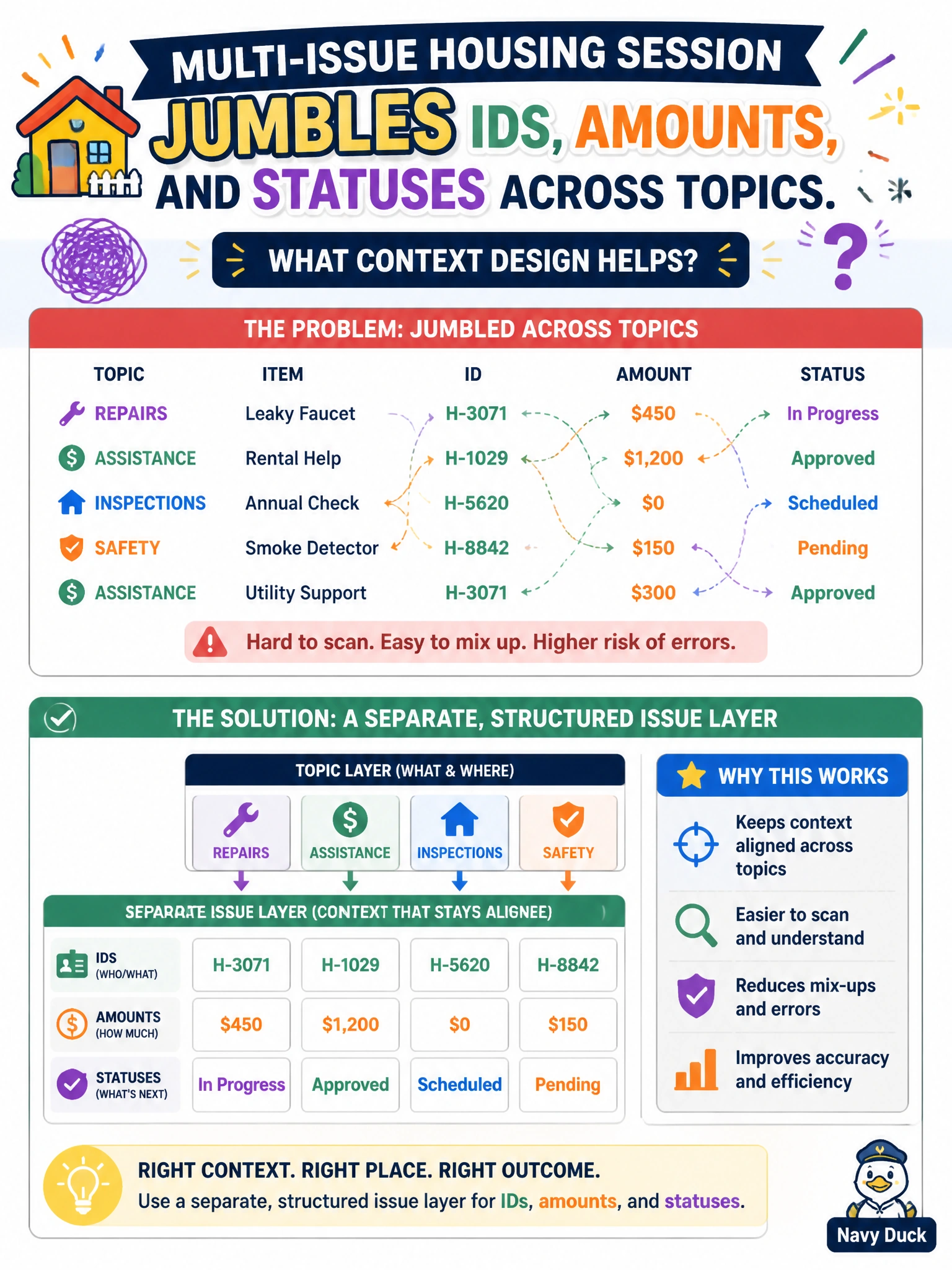
Treat each housing issue like its own folder—IDs, dollars, status—not one messy scrap pile. A structured issue layer keeps multi-issue sessions straight.
Full Explanation
A multi-issue housing session that jumbles IDs, amounts, and statuses across topics needs a separate structured issue layer so each issue keeps its own identifiers and state. Chat prose alone intertwines eviction, repair, and subsidy threads until the agent updates the wrong case or quotes the wrong balance to a resident. Structured per-issue records restore trackability for housing casework and support clean handoffs. One free-form paragraph mixing every issue without structure recreates the jumble the question warns about and defeats audit trails. Dropping issue IDs so statuses cannot be tracked removes the primary join key for municipal systems of record and makes later reconciliation guesswork. Relying only on chat memory with no separate issue records depends on fragile attention across a long dialogue and fails as issues multiply within one resident conversation. Exam caveat: the structured layer must stay synchronized when residents correct an amount or close an issue mid-session. Operational check: in a scripted multi-issue housing dialogue, assert that updates to issue A's amount never mutate issue B, that statuses remain addressable by ID after summarization, and that handoff packets to clerks export the structured layer rather than only the chat transcript.