
A school district's data engineer is asking Claude Code to update a transformation that reads the student-enrollment feed. The engineer's first attempts described the feed's column layout from memory, and the model produced code against fields that no longer exist. The authoritative schema lives in a file in the repository. What is the most reliable way to get that schema into the prompt?
Select an answer to reveal the explanation.
Short Explanation
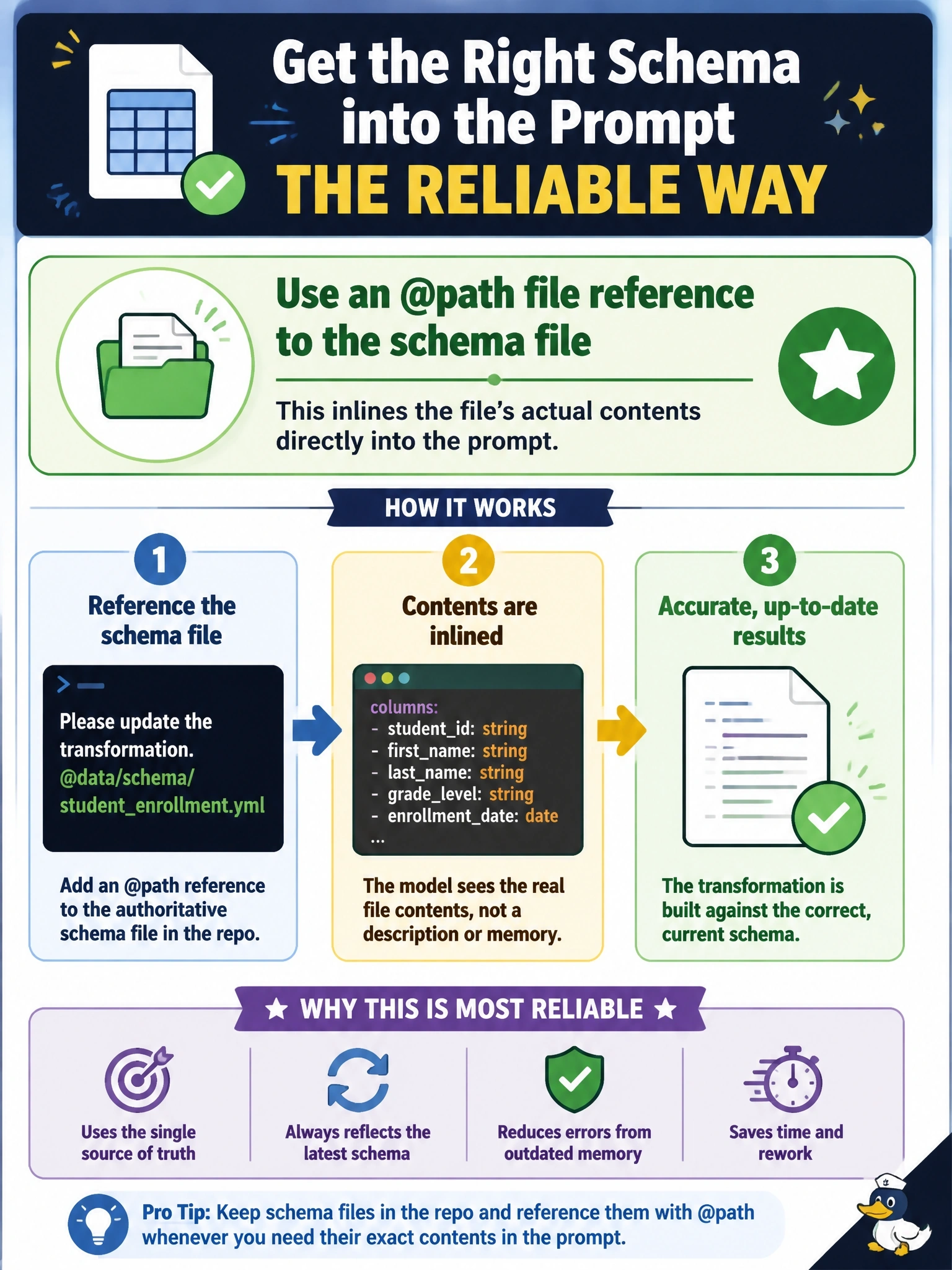
Typing @ and a path hands over the actual spec sheet instead of what you remember it saying. The schema file's real contents land in the prompt, so the model sees this year's enrollment columns rather than last year's.
Full Explanation
Prompt-quality problems are often context-assembly problems in disguise. Here the engineer's description of the student-enrollment feed had already drifted from the file, so no amount of careful wording could recover fields the human no longer remembered correctly. What the prompt needed was ground truth, not a better summary of it.
An @path reference reads the named file and places its contents directly into the prompt, so the model reasons over the repository's authoritative schema rather than a recollection of it. The reference also keeps the workflow durable, because it resolves to whatever the file says at the moment of invocation, which means the same prompt stays correct the next time the district changes the feed.
Paraphrasing more carefully still routes the schema through the memory that was already shown to be wrong, and it goes stale again on the next feed change; recording the file's path in CLAUDE.md tells the model the file exists without placing its contents in context, leaving it to go look or to guess; and renaming the schema file to match the transformation script creates a naming coincidence rather than a data dependency, giving the model no access to the columns at all.
Exam caveat: inlining spends context in proportion to file size, so referencing a very large schema or a whole directory can crowd out the task itself. Operational check: reference the schema file, ask the model to list the feed's columns back, and compare that list against the file before letting it write a line of the transformation.