
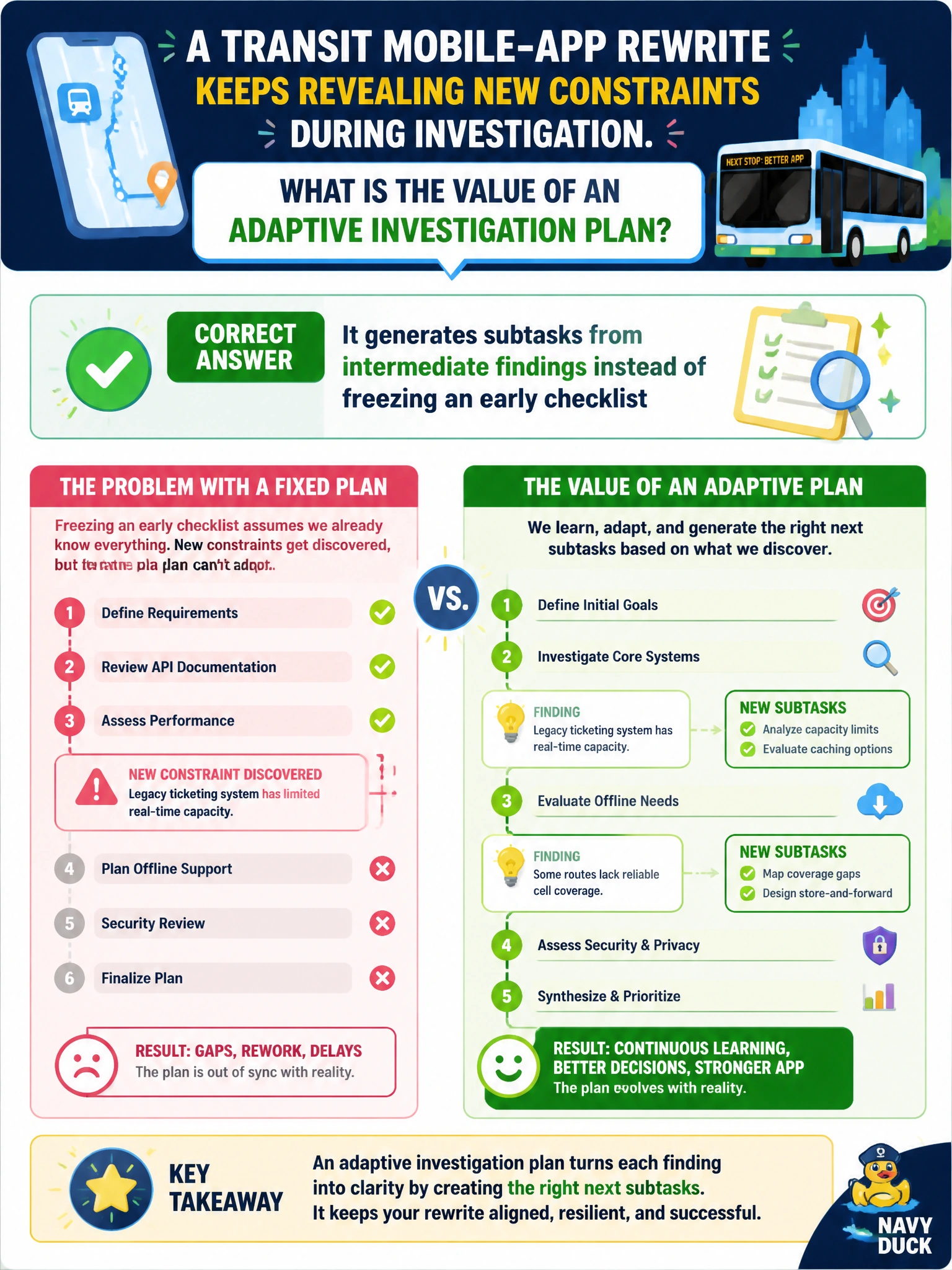
A transit mobile-app rewrite keeps revealing new constraints during investigation. What is the value of an adaptive investigation plan?
Select an answer to reveal the explanation.
Short Explanation
Transit app rewrites are discovery missions. An adaptive plan lets each finding mint the next subtask—unlike a checklist carved in stone on day one.
Full Explanation
An adaptive investigation plan for a transit mobile-app rewrite that keeps revealing new constraints generates subtasks from intermediate findings instead of freezing an early checklist. Its value is epistemic honesty: each discovery can mint the next concrete investigation or design task so the modernization tracks reality rather than the kickoff brainstorm.
Locking the first brainstorm forever even when findings contradict it fails because outdated assumptions poison architecture choices for riders and operations staff. Forbidding new subtasks after kickoff fails conceptually—it converts investigation into theater when constraints emerge from SDKs, offline maps, fare backends, or accessibility requirements. Replacing all analysis with a single unscoped implementation burst fails because coding without discovery-driven tasking recreates the same unknown-constraint failures mid-build.
Exam caveat: adaptive plans need consolidation checkpoints so finding-driven subtasks do not fragment ownership across the transit engineering team. Operational check: after each investigation milestone, publish new subtasks with acceptance criteria linked to the finding that created them, and retire checklist items disproven by evidence.