
After an uncomplicated elective total knee arthroplasty, a surgeon orders three additional intravenous doses of cefazolin over the next 24 hours because a closed-suction surgical drain remains in place. Which recommendation aligns with CDC surgical site infection prevention guidelines for clean and clean-contaminated procedures?
Select an answer to reveal the explanation.
Short Explanation
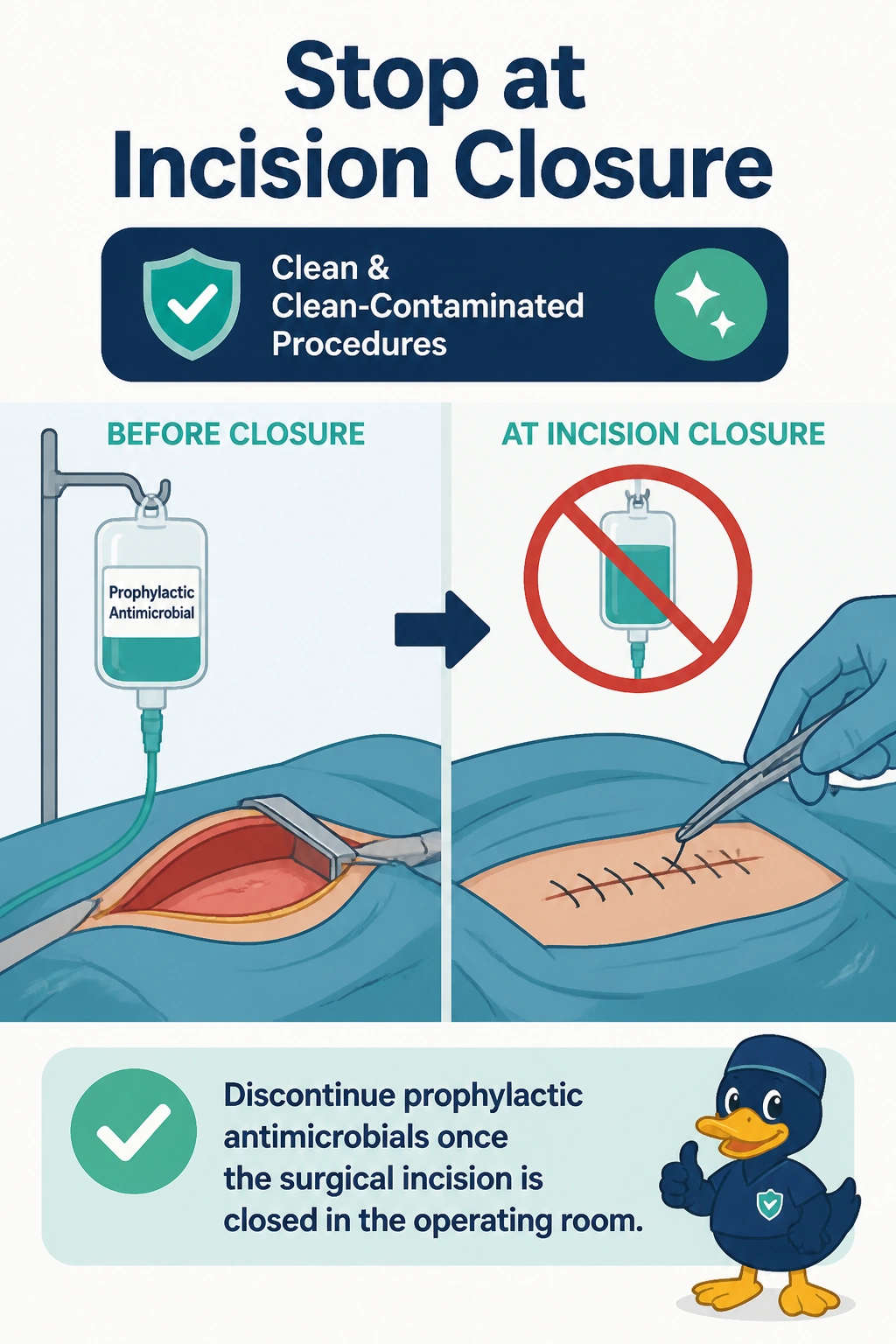
Once the surgical incision is sealed, extra antibiotic doses do not protect the wound any better—they just raise the odds of Clostridioides difficile and resistance. Your target in clean and clean-contaminated surgery is maintaining tissue levels during the operation, not afterward. The trap is letting a surgical drain or implant convince you to extend prophylaxis.
Full Explanation
CDC surgical site infection prevention guidelines strongly recommend that clinicians Discontinue prophylactic antimicrobials once the surgical incision is closed in the operating room for clean and clean-contaminated procedures, even when a drain is present. Adequate preoperative dosing and intraoperative redosing maintain bactericidal tissue concentrations while the wound is open, while additional postoperative doses add toxicity and selective pressure. The practice to Continue intravenous cefazolin every eight hours until the closed-suction surgical drain is removed increases adverse events and Clostridioides difficile risk without CDC-supported added prevention. Similarly, the directive to Administer postoperative prophylactic doses for 24 hours whenever prosthetic joint hardware is implanted is incorrect for the CDC recommendation asked here. CDC recommends no additional prophylactic doses after closure, even with a drain. Some orthopedic professional guidance has supported up to 24 hours after arthroplasty; that differs from the CDC recommendation asked here, so do not portray it as a universally abandoned practice. Choosing to Switch from intravenous cefazolin to an oral cephalosporin for 48 hours after surgical wound closure is prolonged prophylaxis after closure rather than CDC-based prevention.
Prefer to study offline? Printable PDF study book + test engine ($7.50, unofficial). These questions stay free here.