
A medical intensive care unit aims to reduce its ventilator-associated event rate by shortening the total duration of invasive mechanical ventilation among eligible adult patients. Which daily bundle intervention directly targets this goal?
Select an answer to reveal the explanation.
Short Explanation
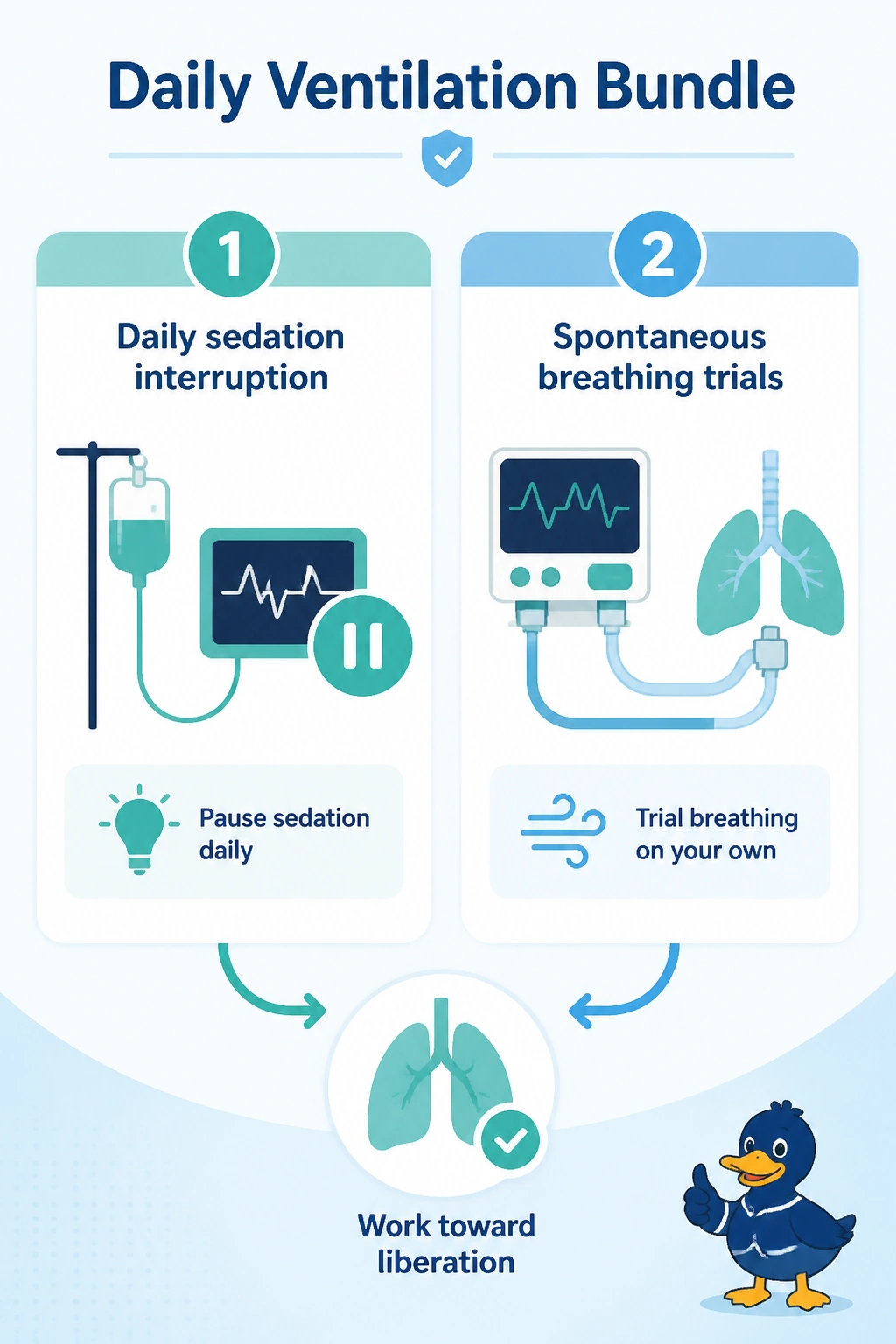
The fastest way to dodge ventilator complications is to get the breathing tube out as soon as the patient is ready, and daily wake-up and breathing trials are how you test that readiness. The trap is thinking deeper sedation or routine tube swaps protect the airway when they actually prolong risk.
Full Explanation
Because duration of mechanical ventilation is an important modifiable exposure contributing to ventilator-associated complications, CDC and SHEA/IDSA prevention guidance emphasizes Performing daily sedation interruption and spontaneous breathing trials in eligible patients to accelerate safe liberation from the ventilator. Replacing endotracheal tubes routinely after every seven days of intubation increases airway trauma, aspiration risk, and reintubation-associated pneumonia without reducing infections. Administering systemic prophylactic antibiotics upon intubation is not recommended because it promotes multidrug-resistant organism colonization and Clostridioides difficile infection without preventing ventilator-associated events. Maintaining deep continuous sedation until final extubation readiness delays weaning assessments, prolongs mechanical ventilation, and increases immobility-related complications. As a caveat, spontaneous awakening and breathing trials require safety screening to exclude patients with active hemodynamic instability, elevated intracranial pressure, or paralytic infusions. As an operational check, audit daily multidisciplinary ICU rounds to verify documented sedation-vacation and breathing-trial screening for every ventilated patient.
Prefer to study offline? Printable PDF study book + test engine ($7.50, unofficial). These questions stay free here.