
An intensive care nurse places a sterile gauze dressing over a patient's non-tunneled central venous catheter insertion site because the site is oozing slightly, and asks how often the intact, dry gauze dressing must be routinely replaced. What interval aligns with CDC intravascular catheter guidelines?
Select an answer to reveal the explanation.
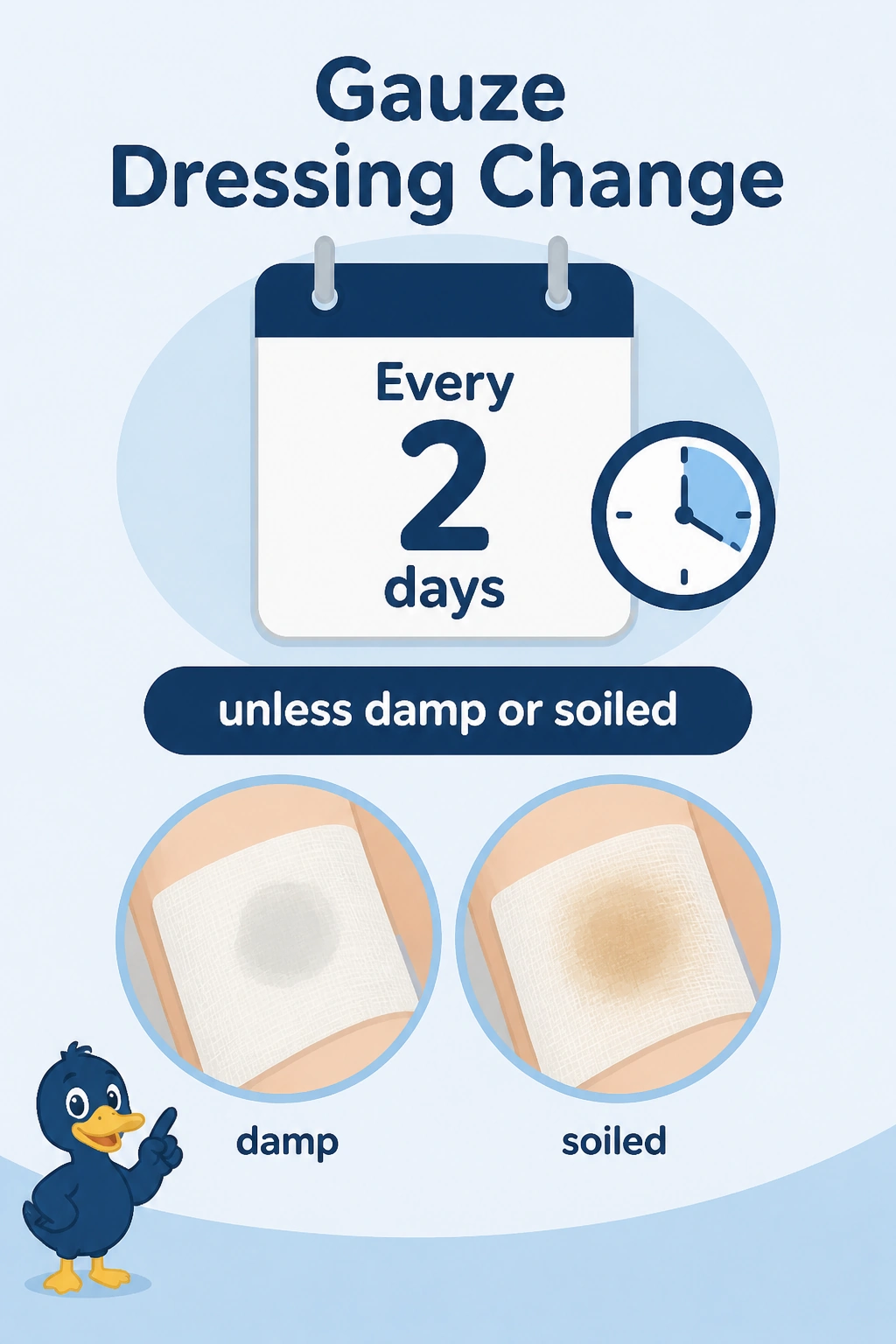
Short Explanation
You’re right to use every 2 days unless damp or soiled for an intact, dry gauze dressing. Gauze hides the insertion site, so the seven-day schedule for a transparent dressing does not apply.
Full Explanation
Under CDC guidelines for preventing intravascular catheter-related infections, gauze dressings on short-term central venous catheter sites must be replaced every 2 days unless damp or soiled. Gauze is opaque, so you cannot inspect the insertion site for erythema, tenderness, or purulence without removing it; it also absorbs moisture more readily. Replacing the dressing every 7 days unless damp or soiled uses the standard interval for transparent semipermeable dressings, which allow continuous visual inspection, rather than the interval for gauze. Replacing it every 10 days unless damp or soiled exceeds CDC maximum intervals for both dressing types and increases colonization risk. Replacing it only when the catheter is replaced fails to provide routine dressing maintenance: functioning central venous catheters are not replaced on a fixed schedule, while their dressings require regular renewal. One caveat: when gauze is used solely to manage active bleeding or oozing, switch back to a transparent dressing once hemostasis is achieved, unless patient factors prohibit it. As a practical check, audit central line dressing labels during unit rounds to confirm that the placement date and dressing type match the required replacement interval.
Prefer to study offline? Printable PDF study book + test engine ($7.50, unofficial). These questions stay free here.