
A four-month-old infant is admitted to a pediatric unit with bronchiolitis, and a nasopharyngeal swab confirms respiratory syncytial virus (RSV) infection. Under CDC isolation precautions guidelines, which transmission-based precautions must staff implement?
Select an answer to reveal the explanation.
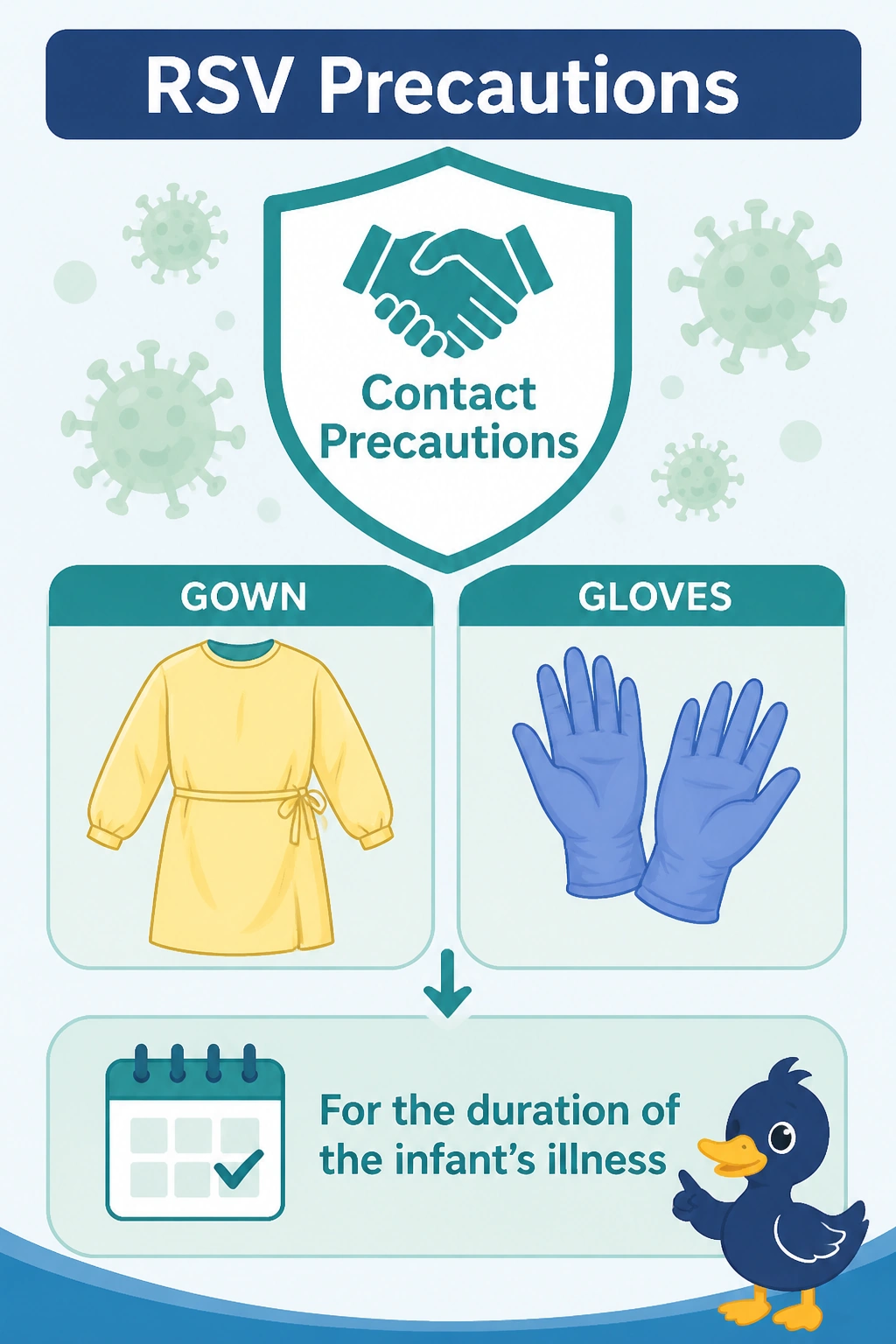
Short Explanation
RSV spreads through infectious respiratory particles and direct/indirect secretion contact; routine CDC isolation for this infant uses Contact plus Standard Precautions, with mask/eye protection for anticipated splashes and additional measures per risk assessment. You protect your unit by using Contact Precautions with gown and gloves, and you avoid the trap of reaching for Airborne Precautions just because the infection sits in the lungs.
Full Explanation
RSV spreads through infectious respiratory particles and direct/indirect secretion contact; routine CDC isolation for this infant uses Contact plus Standard Precautions, with mask/eye protection for anticipated splashes and additional measures per risk assessment. CDC guidelines specify Contact Precautions with gown and gloves for the duration of the infant's illness to limit secretion transfer on hands, toys, and surfaces during close care. Placing the patient under Airborne Precautions in a negative-pressure isolation room until fever resolves is not the routine requirement, as routine care centers on Contact plus Standard Precautions. Using Protective Environment precautions with positive air pressure and HEPA filtration is designed to shield severely immunocompromised transplant recipients from environmental molds, not to contain a contagious viral pathogen. Relying on Standard Precautions alone without gown or gloves unless blood exposure is anticipated fails to block high-volume fomite and secretion transfer during close infant care such as diapering and suctioning. Caveat: while Contact Precautions are the core transmission-based requirement for RSV, staff should also wear a mask and eye protection under Standard Precautions during suctioning or other splash-generating care. Operational check: verify dedicated stethoscopes and blood pressure cuffs are stocked in the room and audit gown-and-glove donning before room entry.
Prefer to study offline? Printable PDF study book + test engine ($7.50, unofficial). These questions stay free here.