
On a busy medical-surgical unit with no Clostridioides difficile or norovirus cases, hand hygiene compliance drops because staff spend extra minutes walking to distant sinks to wash with soap and water between routine patient checks. Which practice should the infection preventionist recommend per CDC hand hygiene guidelines?
Select an answer to reveal the explanation.
Short Explanation
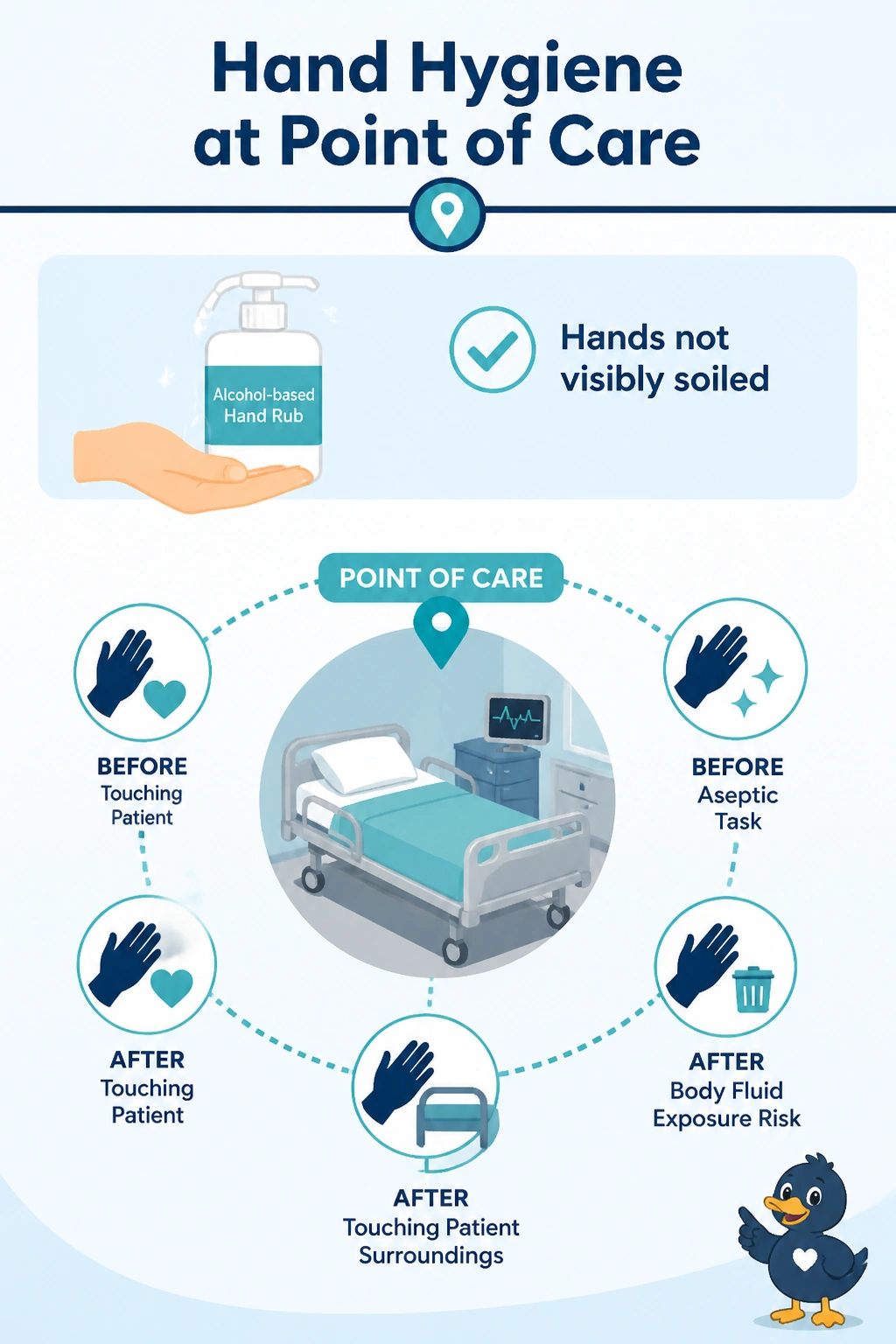
You can keep routine hand hygiene timely by using alcohol-based hand rub at the point of care when your hands are not visibly soiled. Soap and water are not needed for every routine contact, and a brief water rinse or double gloves cannot replace hand hygiene. With dispensers nearby, you can clean your hands without an unnecessary trip to a distant sink.
Full Explanation
Using an alcohol-based hand rub at the point of care when hands are not visibly soiled is the CDC-preferred method for routine hand antisepsis. It takes less time, causes less skin irritation, has superior antimicrobial activity against most vegetative bacteria and enveloped viruses, and improves adherence when dispensers are mounted at room entrances. Using soap and water for every patient contact regardless of visible soil is unnecessary outside spore-forming or non-enveloped enteric clusters and creates workflow barriers that can lower compliance. Wearing double gloves between patients does not reduce the need for hand hygiene: gloves can have microscopic defects and can contaminate hands during removal, so this practice violates Standard Precautions. Rinsing hands briefly with plain water at the nearest sink lacks antimicrobial action and does not effectively remove transient flora. A key caveat is to use soap and water when hands are visibly soiled, before eating, and after restroom use; particularly encourage it after C. difficile care during outbreaks. Suspected C. difficile alone does not universally prohibit alcohol-based hand rub or justify removing access. During unit rounds, verify that alcohol-based dispensers are full and positioned within arm’s reach at every point of care.
Prefer to study offline? Printable PDF study book + test engine ($7.50, unofficial). These questions stay free here.