
During an operating room observation before an elective abdominal procedure, an infection preventionist watches the circulating nurse prepare the patient's intact skin with an alcohol-containing chlorhexidine gluconate applicator. Which practice is essential to maximize antimicrobial efficacy and prevent surgical fire?
Select an answer to reveal the explanation.
Short Explanation
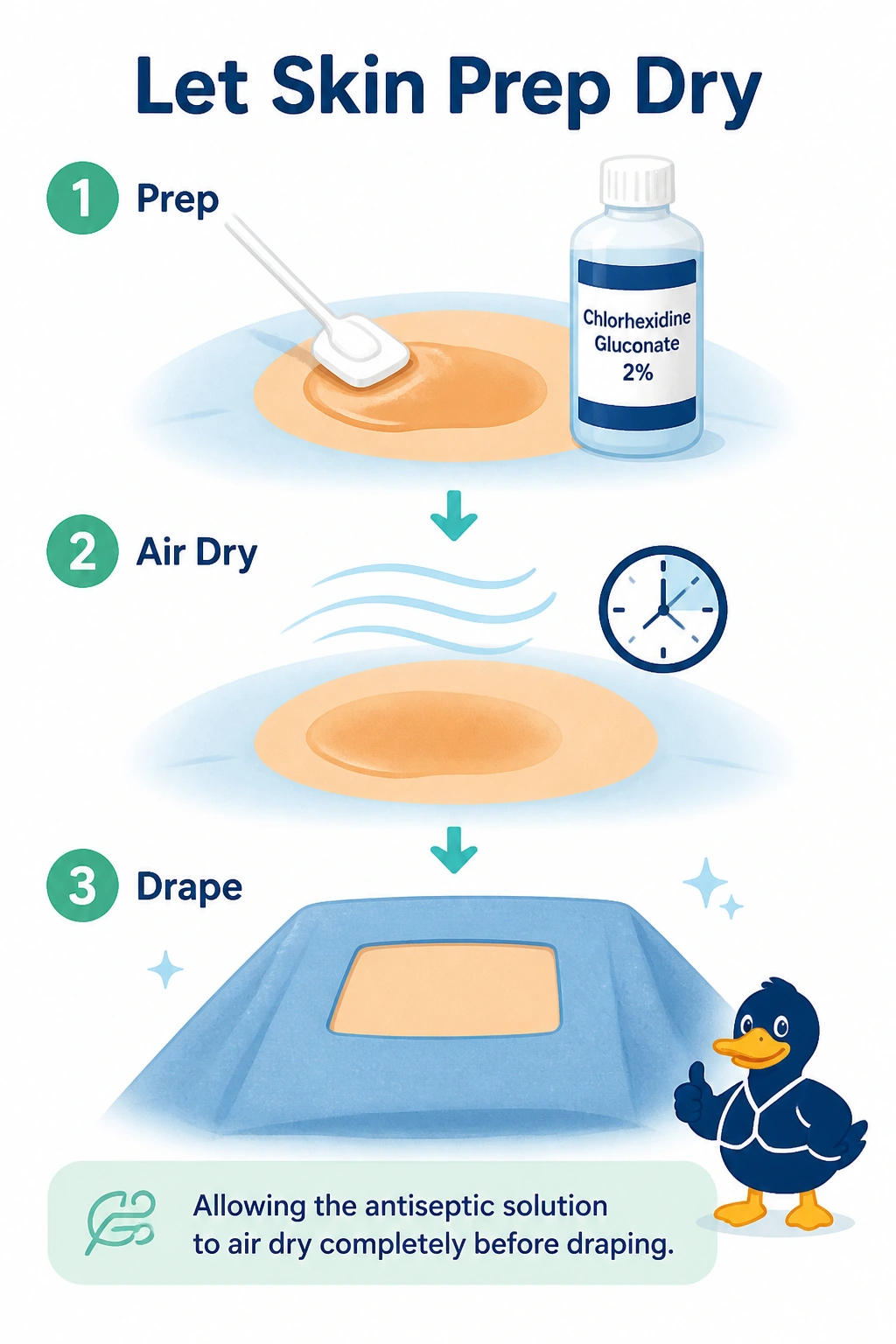
You’re right to let the prep dry fully—wet alcohol beneath drapes can create a serious fire risk. Complete air drying supports antisepsis and lets flammable alcohol vapors dissipate; wiping the prep away or draping while it is wet undermines safe preparation.
Full Explanation
Allowing the antiseptic solution to air dry completely before draping is recommended by CDC surgical site infection prevention guidelines. Follow validated application, contact, and drying times to achieve antisepsis and reduce flammable residue. Wiping the antiseptic off with sterile saline immediately before incision removes chlorhexidine gluconate’s persistent antimicrobial film and reduces ongoing skin antisepsis during the operation. Applying sterile drapes while the skin still glistens wet can trap alcohol vapors beneath the drapes, creating a severe fire hazard, and can prevent adhesive incise drapes from sealing properly. Scrubbing with plain povidone-iodine soap without allowing air drying omits the dual-agent alcohol-based preparation preferred for intact skin and still compromises antisepsis when it is not allowed to dry. As a caveat, prevent alcohol-based prep from pooling beneath the patient or in skin folds, and remove soaked materials before draping; dry-looking skin alone does not guarantee that hidden alcohol has dissipated. During perioperative audits, check adherence to prep drying times and confirm that the team waits the full manufacturer-specified period before placing drapes or activating energy devices.
Prefer to study offline? Printable PDF study book + test engine ($7.50, unofficial). These questions stay free here.