
An adult patient on mechanical ventilation in a medical intensive care unit has no medical contraindications to semi-recumbent positioning, yet the bed flat-angle indicator reads 10 degrees during morning rounds. Which intervention should the infection preventionist recommend to reduce the risk of ventilator-associated pneumonia?
Select an answer to reveal the explanation.
Short Explanation
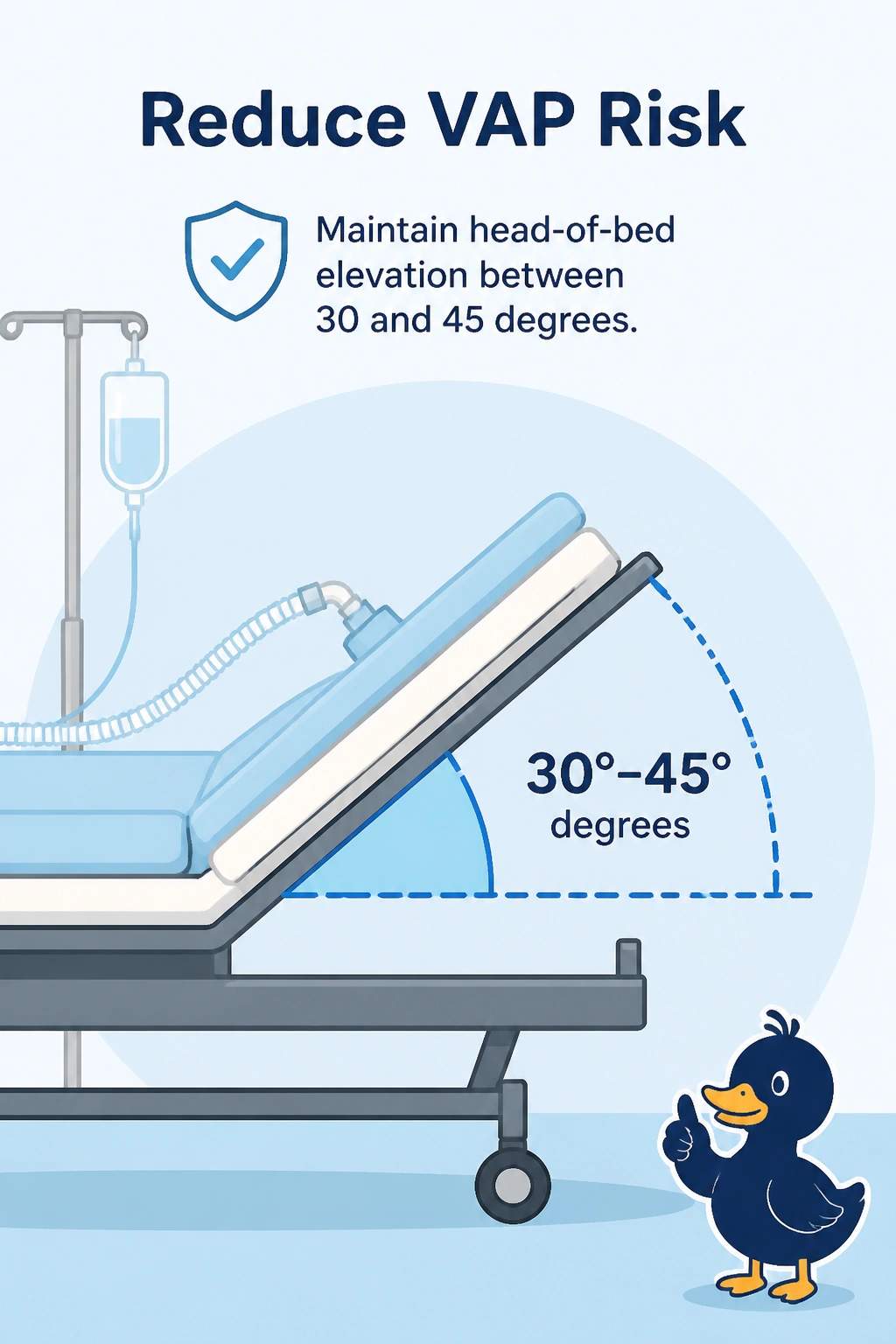
You can use gravity as a quiet ally against aspiration in ventilated patients. Elevation of the head of the bed to 30–45 degrees reduces reflux and microaspiration of oropharyngeal secretions, while fixed-schedule circuit changes, routine antibiotics, and saline before every suction pass are not the recommended measure.
Full Explanation
Semi-recumbent positioning works mechanically: gravity reduces gastroesophageal reflux and the pooling of contaminated oropharyngeal secretions above the endotracheal tube cuff. Under CDC/HICPAC guidance for preventing healthcare-associated pneumonia, maintaining head-of-bed elevation between 30 and 45 degrees is a core evidence-based measure when no medical contraindication exists. Replacing ventilator circuit tubing on a fixed 48-hour schedule increases circuit manipulation and may allow condensation to drain into the airway, without lowering pneumonia rates. Routine prophylactic systemic antibiotics are not indicated for unselected ventilated patients; evidence-based indications for antibiotics are separate from this positioning measure. Instilling sterile normal saline before every endotracheal suction pass can dislodge biofilm from the endotracheal tube and flush bacteria deeper into the lower respiratory tract. As an exam caveat, the recommendation applies when medical contraindications are absent; some trauma or neurosurgical patients may require modified positioning because of spinal precautions or other concerns. For a practical check, verify the bed-angle indicator during daily multidisciplinary rounds and document any medical contraindication to elevation.
Prefer to study offline? Printable PDF study book + test engine ($7.50, unofficial). These questions stay free here.