
A perioperative quality team reviews modifiable intraoperative risk factors after a cluster of colon surgical site infections, noting that several patients arrived in the post-anesthesia care unit with core temperatures below 35.5 degrees Celsius. Which evidence-based CDC recommendation addresses this finding?
Select an answer to reveal the explanation.
Short Explanation
Cold patients do not heal well, and if you let core body temperature drop in the operating room, you handicap the immune cells guarding the incision. The trap is reaching for extra postoperative antibiotics or topical ointments when CDC guidelines prioritize maintaining perioperative normothermia.
Full Explanation
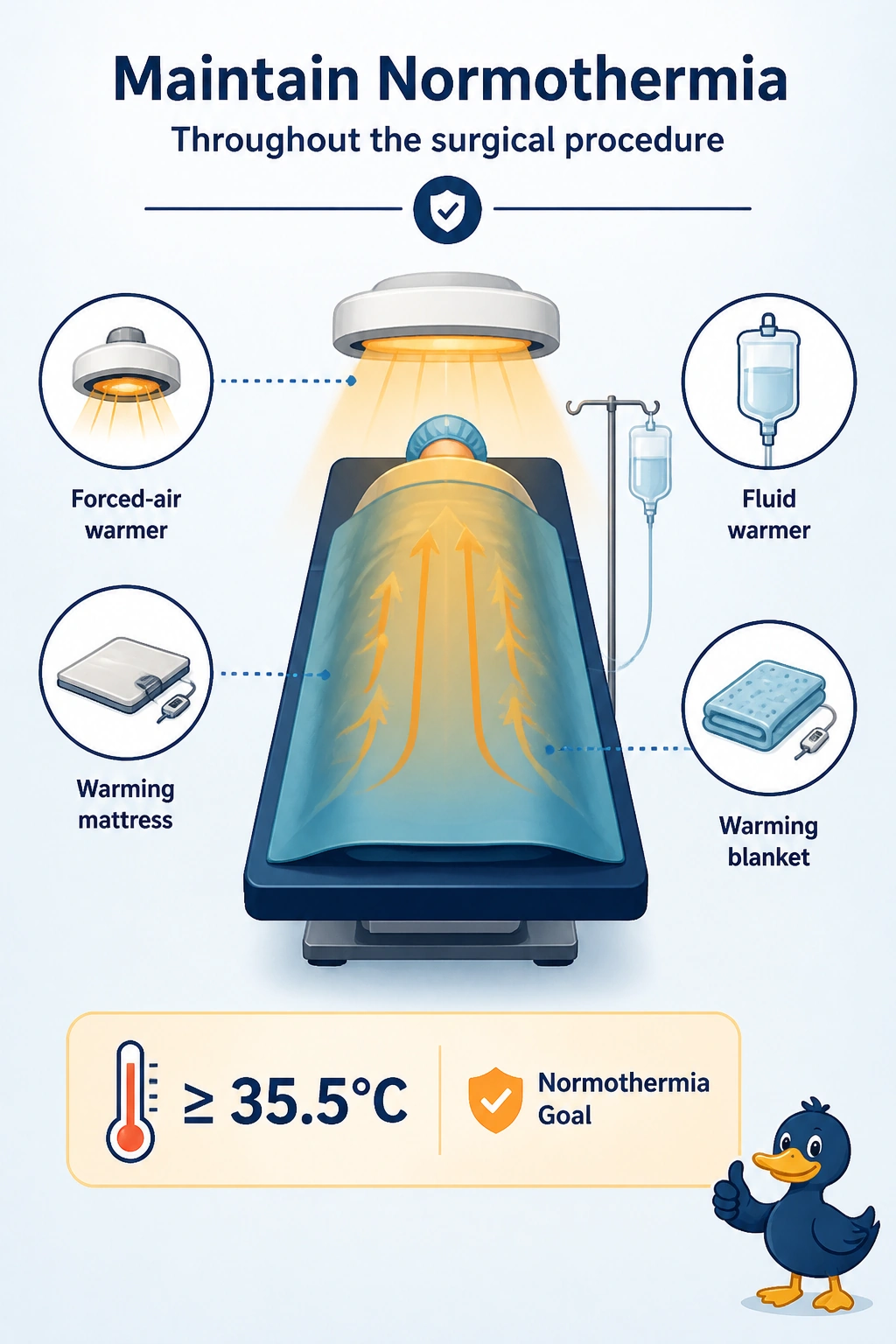
Intraoperative hypothermia impairs neutrophil oxidative killing, induces peripheral vasoconstriction, and reduces subcutaneous oxygen tension at the surgical wound, significantly increasing surgical site infection risk. Accordingly, CDC surgical site infection prevention guidelines strongly recommend that teams Maintain perioperative normothermia throughout the surgical procedure using active warming such as forced-air warming blankets and warmed intravenous fluids. Deciding to Administer postoperative prophylactic antibiotics for 72 hours after wound closure violates CDC recommendations against extending surgical prophylaxis after incision closure in clean and clean-contaminated procedures, increasing Clostridioides difficile and resistance risks. Choosing to Apply topical antimicrobial ointment to the closed surgical incision in recovery is not recommended by CDC guidelines and does not reverse tissue hypoxia caused by hypothermia. Attempting to Increase operating room ambient humidity above 70% during abdominal procedures exceeds standard operating room environmental parameters, risks condensation on sterile supplies, and fails to warm the patient's core. As a caveat, warming should begin preoperatively when feasible and continue through the immediate postoperative period. Operational check: audit anesthesia records monthly for documented end-of-case core temperatures and verify active warming protocols for all procedures.
Prefer to study offline? Printable PDF study book + test engine ($7.50, unofficial). These questions stay free here.