
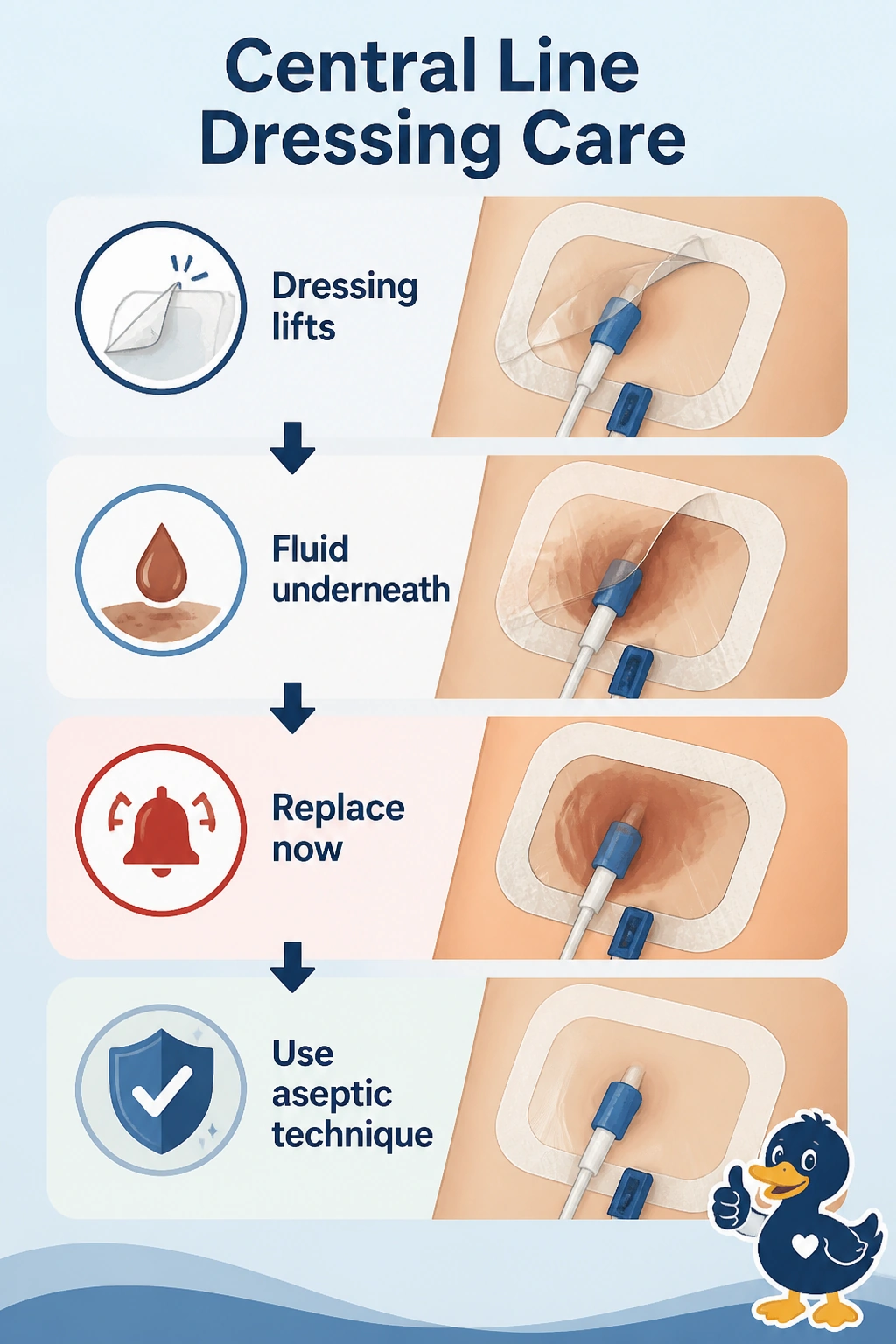
During clinical rounds on an oncology unit, an infection preventionist observes a patient's transparent semipermeable central venous catheter dressing lifting at the corner with dried serosanguinous fluid underneath, though the dressing was changed three days ago. What action should the nurse take?
Select an answer to reveal the explanation.
Short Explanation
A compromised central line dressing is like a broken seal on a sterile package: moisture or air can reach the site, so the original schedule no longer protects it. You should replace the transparent dressing right away using aseptic technique, rather than reinforce its loose edges or remove a functioning catheter.
Full Explanation
CDC HICPAC guidance for preventing intravascular catheter-related infections calls for replacing a transparent dressing immediately using aseptic technique whenever it becomes damp, loosened, or visibly soiled, regardless of how many days have passed since the last change. For short-term CVC sites, transparent dressings are changed at least every seven days and sooner if compromised; other catheter and site situations have specific guidance. Reinforcing the loose edges with sterile tape and waiting for the scheduled seventh day leaves moisture and skin flora trapped against the insertion site, increasing the risk of extraluminal colonization. Removing the central venous catheter and inserting a new line at a fresh site exposes the patient to unnecessary mechanical and infectious complications when the catheter is functioning and there are no signs of bloodstream infection. Applying topical antimicrobial ointment around the insertion site over the dressing is ineffective because ointment cannot penetrate an intact film; routine antibiotic ointments are also discouraged on non-dialysis central venous catheters because of fungal colonization and resistance risks. As a caveat, before applying the new dressing, use CHG in alcohol when appropriate, or a recommended alternative if contraindicated, and allow it to dry. As a practical check, inspect central line dressings during daily shift assessments and document immediate replacement whenever integrity is lost.
Prefer to study offline? Printable PDF study book + test engine ($7.50, unofficial). These questions stay free here.