
An unvaccinated resident in a long-term care facility develops sudden fever, myalgia, and cough, and a nasopharyngeal swab confirms influenza A. Which transmission-based precautions should staff implement immediately upon entering the resident's room?
Select an answer to reveal the explanation.
Short Explanation
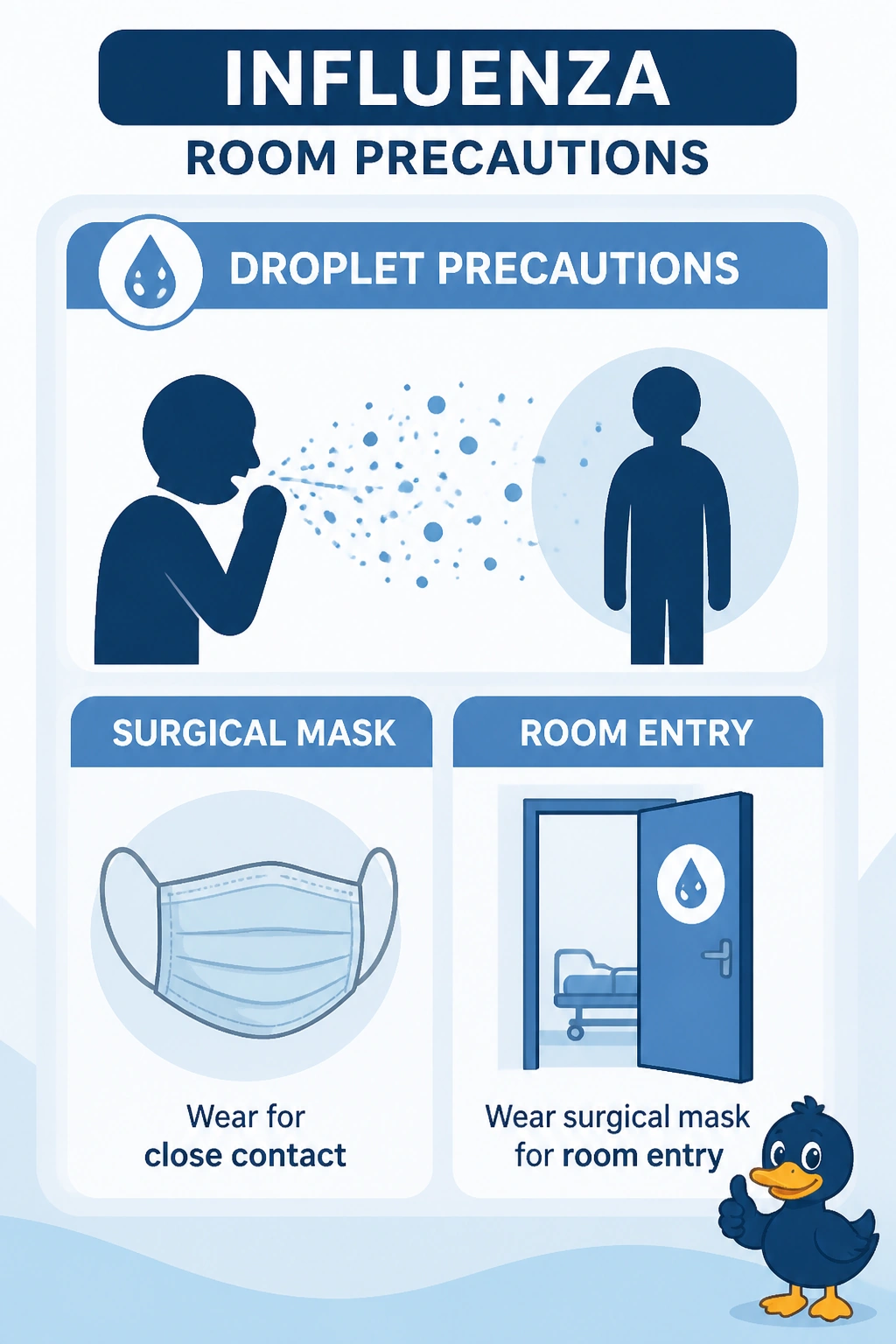
Influenza travels in large respiratory droplets generated by coughing and sneezing. Routine influenza precautions target respiratory spread; smaller airborne particles can contribute, and aerosol-generating procedures require additional controls. When you put on a surgical mask at the doorway you block those droplets right where you work, so don't jump to negative-pressure airborne isolation for routine flu care.
Full Explanation
Under CDC Guideline for Isolation Precautions and seasonal influenza prevention guidance, influenza spreads primarily through large respiratory droplets, so staff should Implement Droplet Precautions with a surgical mask for close contact and room entry. Wearing a surgical or procedure mask upon entering the resident's room protects mucous membranes from infectious respiratory secretions, and placing the resident in a single room or cohorting confirmed influenza cases limits spread to vulnerable roommates. Choosing to Require fit-tested N95 respirators and negative-pressure airborne isolation for all staff entries reserves airborne engineering controls unnecessarily when aerosol-generating procedures are not being performed. Electing to Use Standard Precautions alone unless the resident requires mechanical ventilation in a hospital leaves staff and other residents unprotected during high-shedding acute illness. Deciding to Place the resident on protective environment isolation with positive-pressure HEPA filtration is meant to shield severely immunocompromised patients such as allogeneic stem cell recipients, not to contain a contagious respiratory virus. A caveat is that aerosol-generating procedures such as open suctioning warrant upgrading respiratory protection to an N95 respirator. Operational check: confirm Droplet Precautions signage and masks are stocked outside the room and notify roommates' care teams for symptom monitoring.
Prefer to study offline? Printable PDF study book + test engine ($7.50, unofficial). These questions stay free here.