
During an inpatient neurology consult, a physician prepares to perform a diagnostic lumbar puncture at the bedside using a sterile tray and sterile gloves. Which additional Standard Precautions measure is required to prevent iatrogenic bacterial meningitis from the operator's oral flora?
Select an answer to reveal the explanation.
Short Explanation
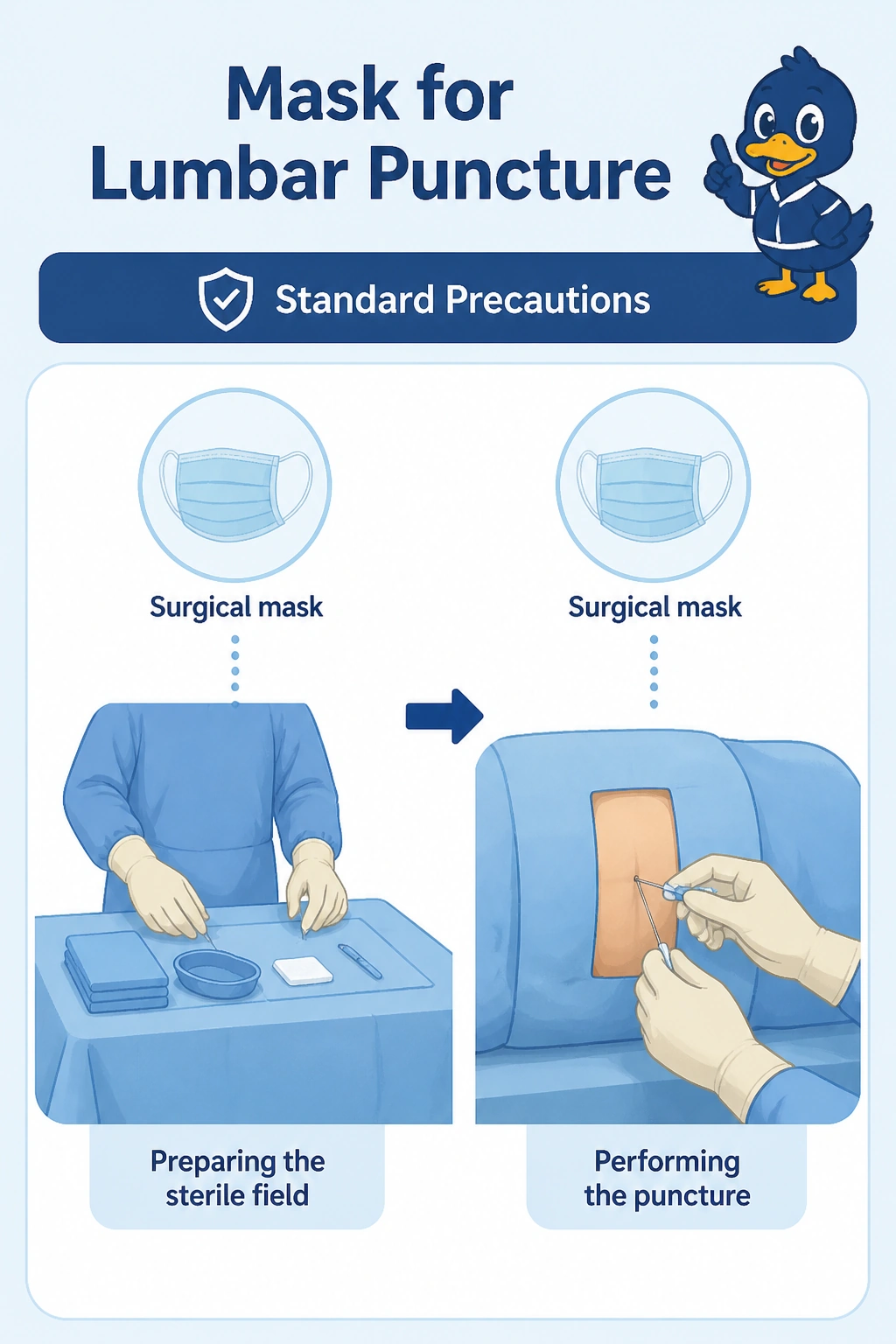
You protect the patient’s spinal canal by wearing a surgical mask while preparing the sterile field and performing the puncture. Sterile gloves do not block oral droplets, and neither masking the patient nor wearing an N95 solely for this procedure addresses the risk as needed.
Full Explanation
CDC/HICPAC Standard Precautions require you to wear a surgical mask while preparing the sterile field and performing a lumbar puncture. Speaking or breathing over an open tray can deposit droplets containing oropharyngeal flora, such as viridans streptococci, onto needles or skin and cause iatrogenic bacterial meningitis. Placing a surgical mask on the patient does not address this risk: contamination comes from the proceduralist leaning over the sterile field, not the patient. Requiring a fit-tested N95 solely for airborne protection during every lumbar puncture is unnecessary; a surgical mask provides the source control needed for routine procedural protection. Double-gloving with sterile gloves after a surgical hand scrub may address glove tears, but it does not stop respiratory droplets from an unmasked face. The key principle is that the mask protects the sterile field from the operator’s oral flora, while gloves address hand contact. One caveat is that this rule applies when accessing the spinal canal or subdural space even if the patient has no known infection. As a practical check, verify that surgical masks are stocked on lumbar puncture carts and included in procedure checklists.
Prefer to study offline? Printable PDF study book + test engine ($7.50, unofficial). These questions stay free here.