
An adult patient is admitted to a medical intensive care unit with suspected meningococcal meningitis caused by Neisseria meningitidis and begins appropriate intravenous antimicrobial therapy. Which transmission-based precautions should the infection preventionist recommend?
Select an answer to reveal the explanation.
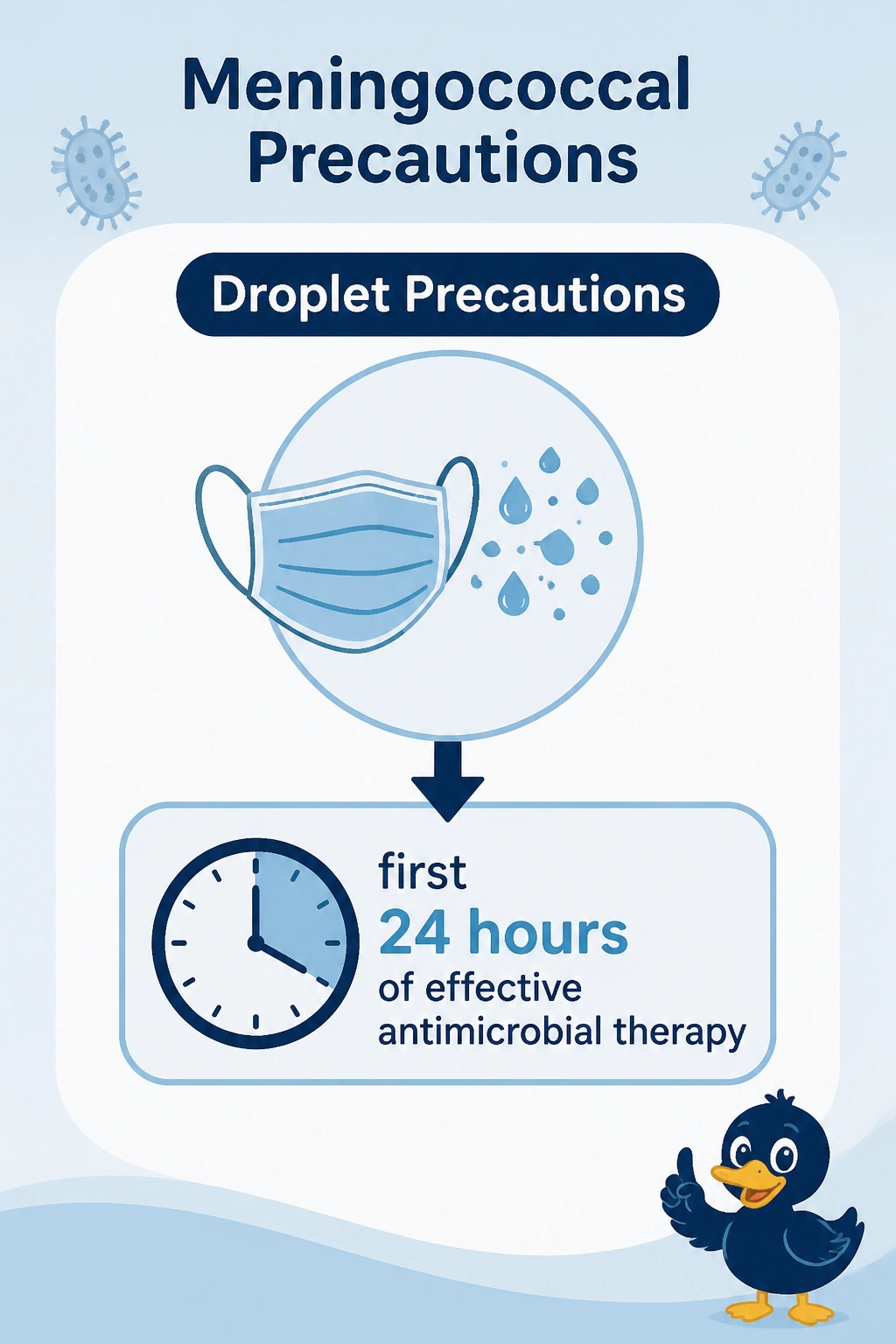
Short Explanation
You can picture large respiratory droplets, like a sneeze, falling within a few feet rather than floating down the hall. Droplet Precautions protect you during the first 24 hours of effective treatment; airborne isolation for the whole admission, prolonged gown-and-glove precautions, or no isolation misses the right level or duration of protection.
Full Explanation
Droplet Precautions for the first 24 hours of effective antimicrobial therapy are recommended for suspected or confirmed Neisseria meningitidis infection because the organism spreads through large respiratory droplets generated by coughing, sneezing, or suctioning, and effective antibiotics rapidly clear nasopharyngeal carriage. Airborne Precautions in an Airborne Infection Isolation Room for the entire hospital admission are unnecessary: meningococci do not remain suspended as small-particle aerosols over long distances. Contact Precautions with a gown and gloves for all room entries until discharge home target indirect surface transmission rather than respiratory droplet exposure and extend isolation beyond the infectious window. Standard Precautions alone are unsafe because meningococci do spread through respiratory secretions and require surgical-mask protection at close range. For suctioning or intubation, use a mask, eye protection, and other PPE appropriate to splash risk; add a respirator when pathogen-specific guidance or the procedure risk assessment requires it. Meningococcal disease alone does not universally require N95-level airborne protection for every procedure. As a practical check, verify surgical masks are stocked outside the room, document the exact time effective antibiotics began, and identify close contacts for public health post-exposure prophylaxis.
Prefer to study offline? Printable PDF study book + test engine ($7.50, unofficial). These questions stay free here.