
During a hospital-wide outbreak of Legionnaires' disease, an infection preventionist designs a case-control study to identify contaminated water exposures among hospitalized cases. Which control group selection strategy minimizes selection bias?
Select an answer to reveal the explanation.
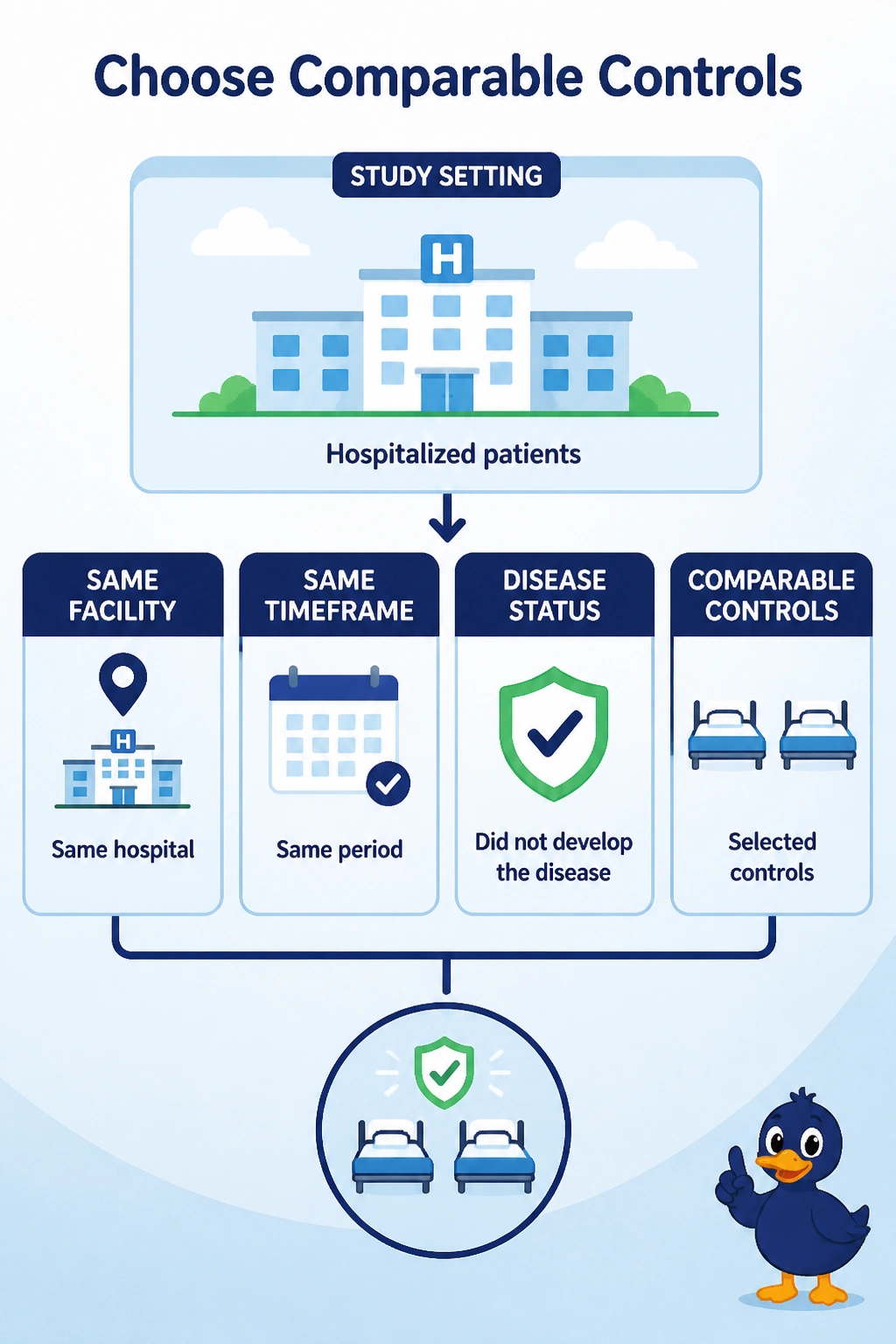
Short Explanation
You minimize selection bias by choosing hospitalized patients from the same facility and timeframe who did not develop the disease, so they represent people who could have become cases and shared the hospital exposure opportunity. Source population is the key: community residents who never visited the hospital lacked that opportunity, while matching everyone to the same unit and shower room can overmatch on the exposure you need to assess.
Full Explanation
To minimize selection bias, choose hospitalized patients from the same facility and timeframe who did not develop the disease. They come from the same source population at risk as the cases, so their exposure prevalence reflects hospitalized patients’ opportunity to encounter the water fixtures, units, or procedures under study. Healthy community residents from the county voter registry who never visited the hospital had no opportunity for inpatient water exposures, so they are not an appropriate comparison group. Hospitalized patients who tested positive for Legionella without pneumonia should not be selected on that test result: their status must be assessed under the actual Legionnaires’ disease case definition, or exposure frequencies may be biased. Restricting controls to patients on the same unit who used the same shower room as the cases overmatches on the suspected exposure and can obscure whether that unit or shower contributed to the outbreak. A key caveat is that controls need an opportunity for exposure during the relevant incubation period without developing the disease. As a practical check, apply the case definition and exposure window consistently, and assess possible unrecognized cases among symptomatic controls rather than automatically excluding patients with unrelated respiratory symptoms.
Prefer to study offline? Printable PDF study book + test engine ($7.50, unofficial). These questions stay free here.