
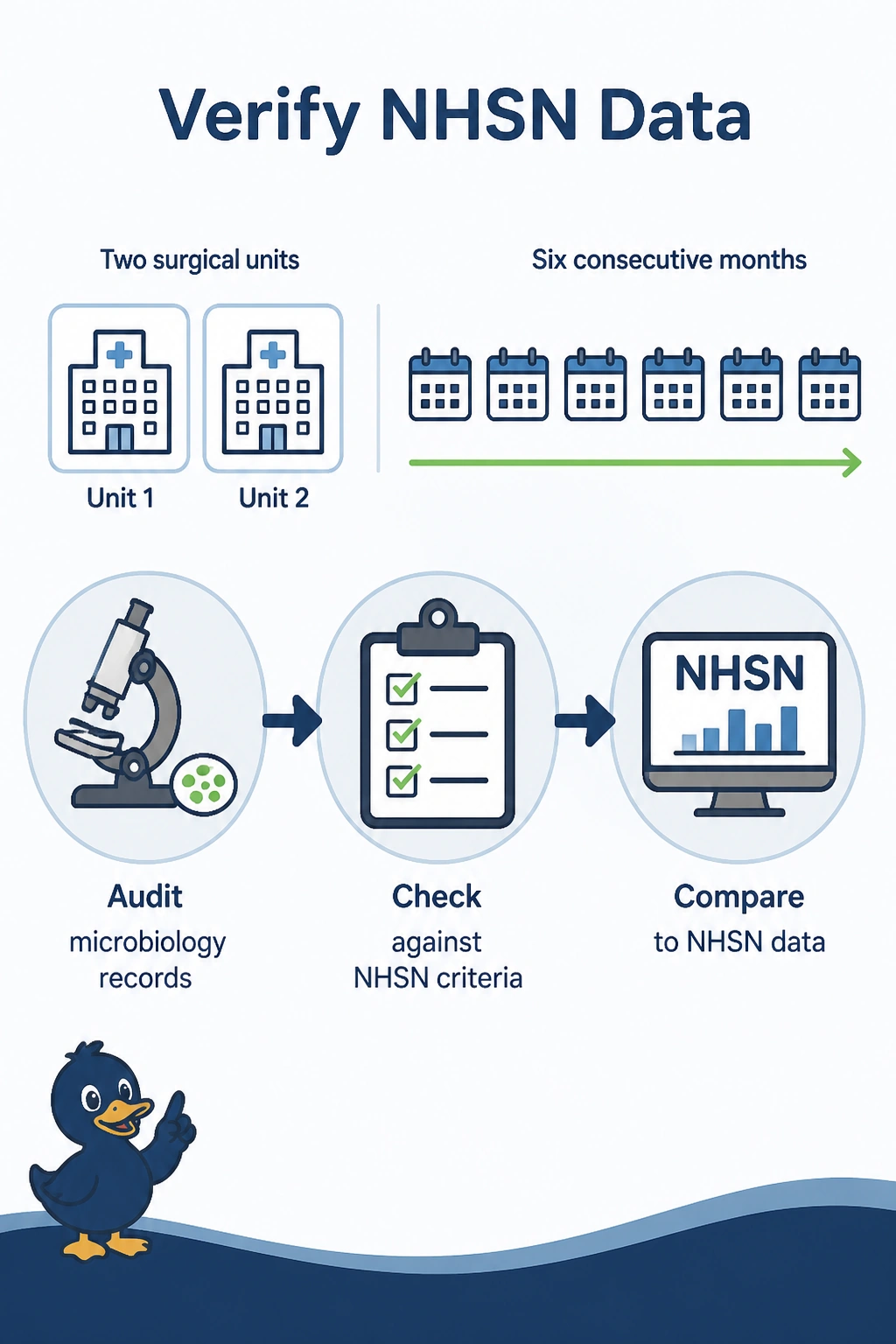
An infection preventionist notices that two surgical units have reported zero healthcare-associated infections for six consecutive months despite stable surgical volumes. Which surveillance quality activity best verifies the accuracy and completeness of the facility's NHSN data?
Select an answer to reveal the explanation.
Short Explanation
A long streak of zero infections can reflect great care—or a broken surveillance net. Before you celebrate, validate your case finding against lab records and charts instead of trusting passive reports or raw counts.
Full Explanation
Surveillance data integrity depends on periodic internal validation, so the infection preventionist should Audit a sample of microbiology records and charts against NHSN criteria to assess case-finding sensitivity and consistent application of definitions. Choosing to Rely exclusively on clinician self-reports without reviewing microbiology logs introduces passive-reporting bias and misses infections diagnosed after discharge or managed without formal notification. To Validate only already-reported infection events, without looking for missed cases fails as validation. Reviewing reported events checks classification but cannot establish case-finding completeness; sample potential missed cases independently. Similarly, to Compare raw infection counts across hospitals without adjusting for patient days or procedure volume ignores differences in population size and exposure risk and cannot confirm whether local cases were missed. As a surveillance caveat, internal validation should include both positive microbiology isolates and a targeted review of patients who received prolonged antimicrobial therapy or readmission for wound complications. For an operational check, perform a quarterly validation audit comparing a random sample of positive sterile-site cultures and post-discharge readmissions against submitted NHSN event records.
Prefer to study offline? Printable PDF study book + test engine ($7.50, unofficial). These questions stay free here.