
A central sterile processing technician completes an ethylene oxide sterilization cycle for heat-sensitive neurosurgical catheters and sees that the physical cycle printout and chemical indicator have passed. What step must occur before releasing these catheters to the operating room?
Select an answer to reveal the explanation.
Short Explanation
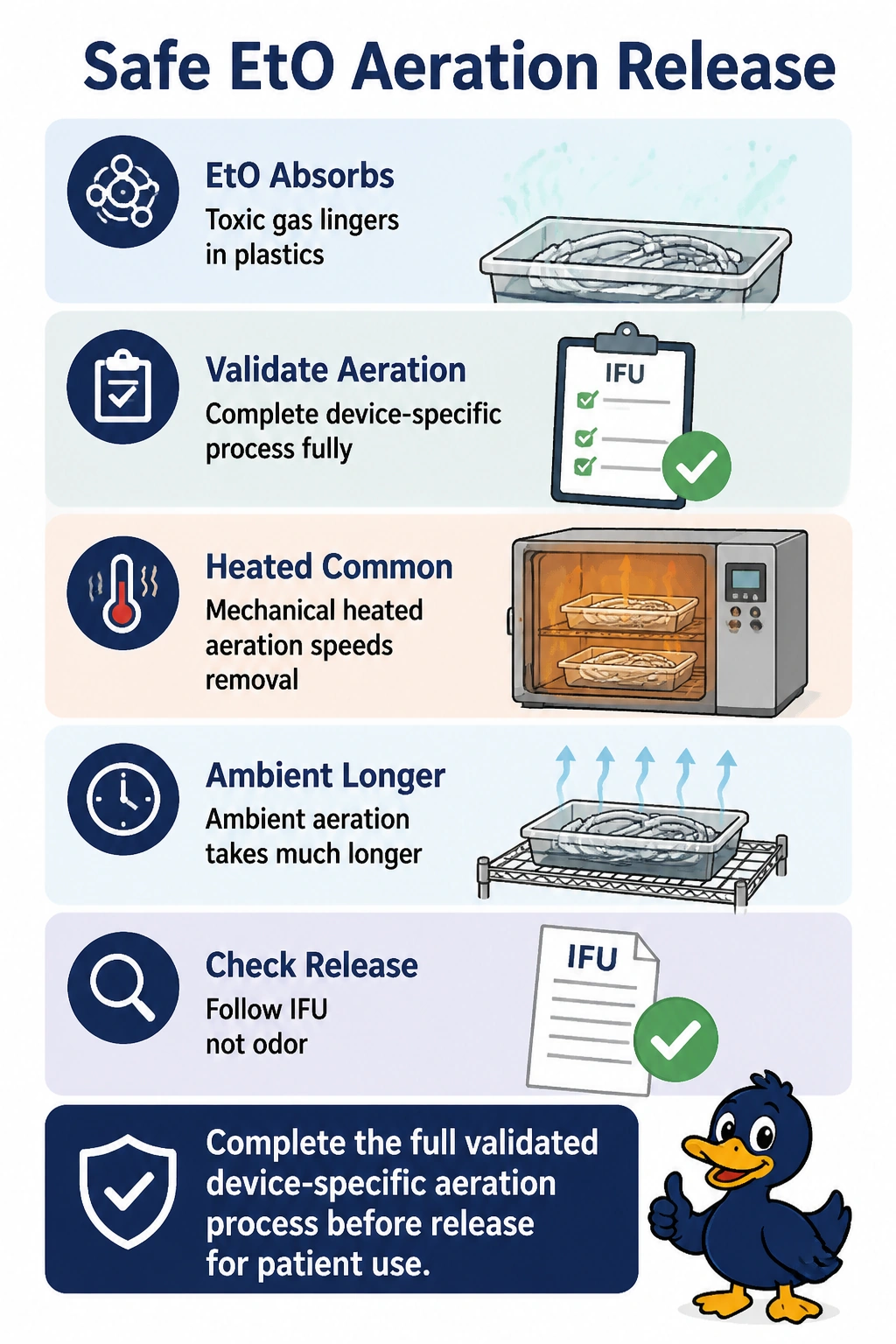
Think of ethylene oxide like paint fumes that linger long after the brush stops moving—even when the cycle finishes, toxic gas remains trapped inside porous devices. The trap is trusting a passing chemical indicator as a green light for immediate patient use. You must complete the full validated device-specific aeration process before release for patient use — mechanical heated aeration is commonly used; CDC also describes much longer ambient aeration, so follow the device/sterilizer IFU and release controls, not odor alone.
Full Explanation
Ethylene oxide (EtO) is an effective low-temperature sterilant for heat- and moisture-sensitive devices, but the gas is toxic, irritating, and carcinogenic, and it absorbs into plastics and elastomers during the cycle. Therefore, completing the full validated device-specific aeration process before release for patient use is mandatory under CDC and AAMI guidelines so residual EtO is removed to safe levels. Mechanical heated aeration is commonly used; CDC also describes much longer ambient aeration. Follow the device/sterilizer IFU and release controls, not odor alone. Transferring the wrapped trays directly to the operating room once the physical cycle printout shows completion is unsafe because physical parameters and chemical indicators only confirm exposure conditions, not gas dissipation. Rinsing the sterilized catheters with sterile water immediately after opening the chamber door fails to remove absorbed gas from polymer lumens and risks contaminating the sterile package. Storing the unwrapped trays on an open wire rack in the sterile core until the odor dissipates violates sterility by unwrapping items and exposes staff to hazardous off-gassing. As a caveat, follow the device manufacturer's instructions for use, since elastomeric materials require longer aeration than metal. For an operational check, review the aeration log to confirm uninterrupted time and temperature before moving loads to sterile storage.
Prefer to study offline? Printable PDF study book + test engine ($7.50, unofficial). These questions stay free here.