
A newly hired central sterile processing technician asks why the department must run biological indicators in steam sterilizers when every load already produces a physical temperature-time printout and includes chemical indicator strips. How should the infection preventionist explain the unique role of biological indicators?
Select an answer to reveal the explanation.
Short Explanation
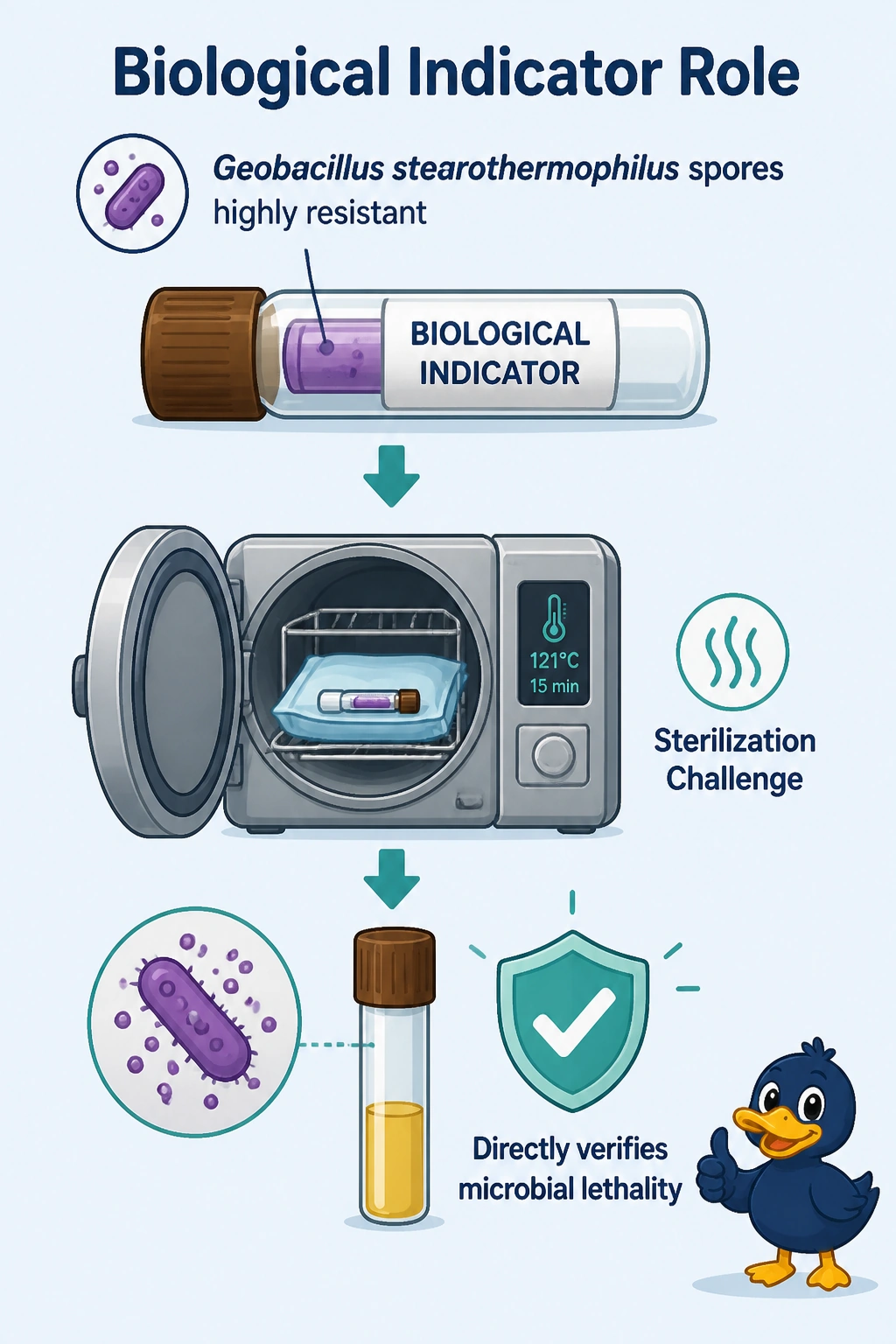
Physical gauges and chemical strips tell you the oven got hot, while a biological indicator proves the germs actually died. The trap is assuming printouts or color-changing tape guarantee sterility on their own. Using spore-based biological indicators gives you direct proof of microbial lethality under CDC sterilization guidelines.
Full Explanation
They contain highly resistant Geobacillus stearothermophilus spores to directly verify microbial lethality explains the essential function of biological indicators in steam sterilization. Because bacterial endospores are among the most heat-resistant microorganisms, demonstrating their inactivation provides the only direct measure of a sterilizer's ability to kill microbes, whereas physical printouts and chemical indicators only reflect exposure conditions. They measure chamber vacuum pressure leaks before the first morning load describes the daily Bowie-Dick air-removal test in prevacuum sterilizers, not routine biological spore testing. They replace the need for internal chemical indicators inside surgical trays is false because CDC guidelines require an internal chemical indicator inside every package to verify sterilant penetration at the point of use. They confirm that steam-sterilized wraps remained dry during cooling storage is also incorrect because moisture and wet-pack integrity are assessed by visual inspection and event-related handling, not spore vials. As a caveat, biological indicators must be run at least weekly and with every load containing implantable devices, which are quarantined until results are negative. Operationally, log each biological indicator lot number, sterilizer ID, and matched control vial result in the sterilization quality record.
Prefer to study offline? Printable PDF study book + test engine ($7.50, unofficial). These questions stay free here.