
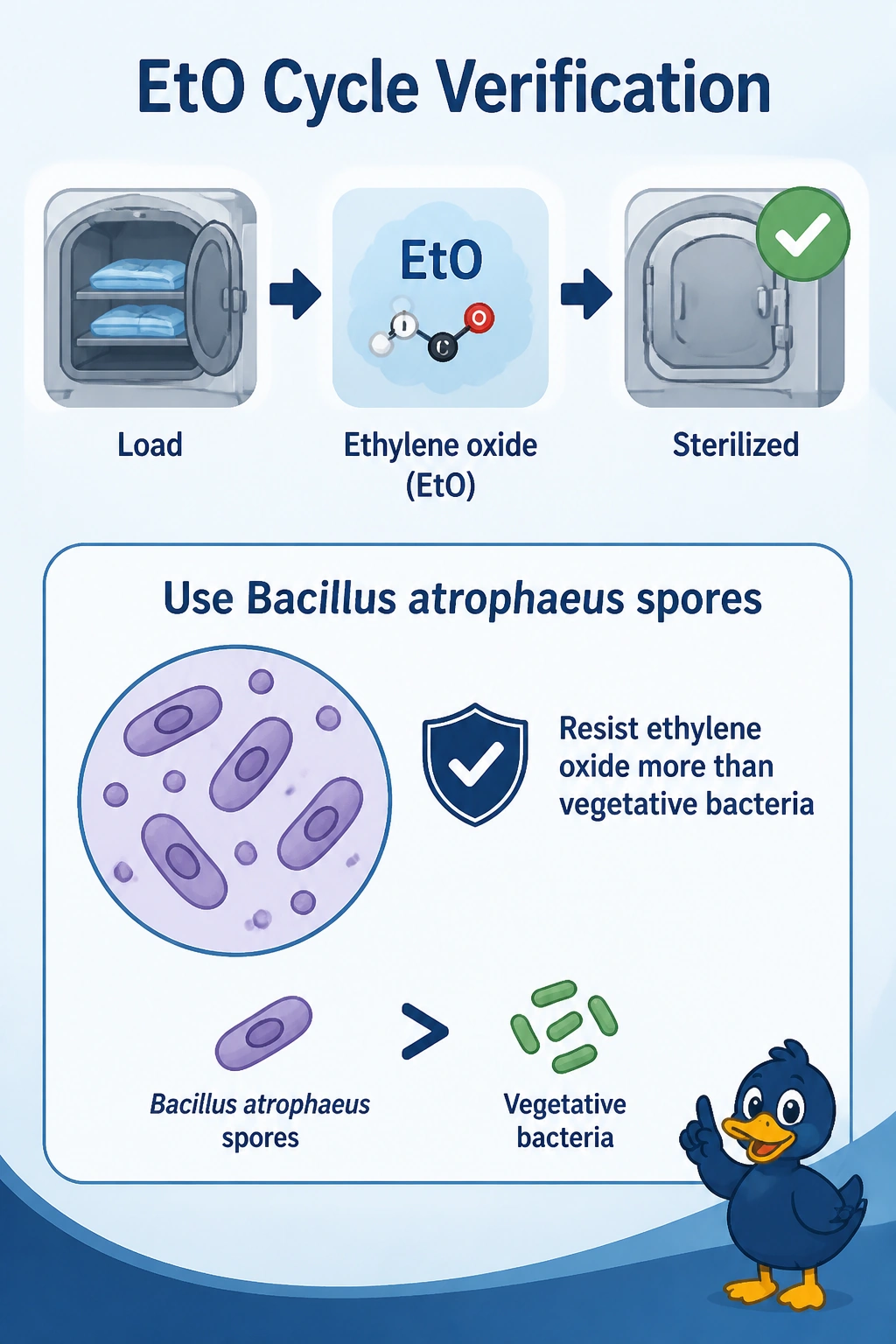
A central sterile processing department uses an ethylene oxide (EtO) sterilizer for heat- and moisture-sensitive surgical instruments. Which biological indicator organism is required to verify lethality of the EtO sterilization cycle?
Select an answer to reveal the explanation.
Short Explanation
Every sterilizer has its own toughest opponent, and for ethylene oxide gas that opponent is not the steam-testing spore. The trap is grabbing the Geobacillus vial you use on your steam autoclaves out of habit.
Full Explanation
Biological indicators challenge a sterilization process with standardized, nonpathogenic bacterial spores that exhibit higher resistance to that specific sterilant than common clinical microorganisms. Under CDC and AAMI standards, ethylene oxide sterilization cycles are monitored using Bacillus atrophaeus spores because they resist ethylene oxide more than vegetative bacteria and provide a reliable margin of safety when killed. Selecting Geobacillus stearothermophilus spores because they are the universal indicator for all sterilizers is incorrect because G. stearothermophilus is the standard biological indicator for steam and hydrogen peroxide gas plasma sterilization, not ethylene oxide. Selecting Clostridioides difficile spores because they represent the most common healthcare-associated pathogen is wrong because C. difficile is an anaerobic pathogen not used in commercial sterilization test packs. Selecting Staphylococcus aureus vegetative cells because they verify both cleaning and chemical penetration fails because vegetative bacteria are far easier to kill than bacterial endospores and would not confirm sterilization-level lethality. Use an EtO-compatible BI/process challenge device and follow the applicable EtO standard and sterilizer/BI instructions for monitoring frequency and load release. Operational check: verify the biological indicator lot, expiration date, and Bacillus atrophaeus labeling before loading the EtO chamber.
Prefer to study offline? Printable PDF study book + test engine ($7.50, unofficial). These questions stay free here.