
Immediately after a steam sterilizer door opens at the end of a cycle, a sterile processing technician plans to transfer warm, freshly sterilized wrapped instrument trays onto cool stainless-steel storage carts using bare hands. Why must the infection preventionist instruct the technician to leave the trays undisturbed on the sterilizer rack until cooled?
Select an answer to reveal the explanation.
Short Explanation
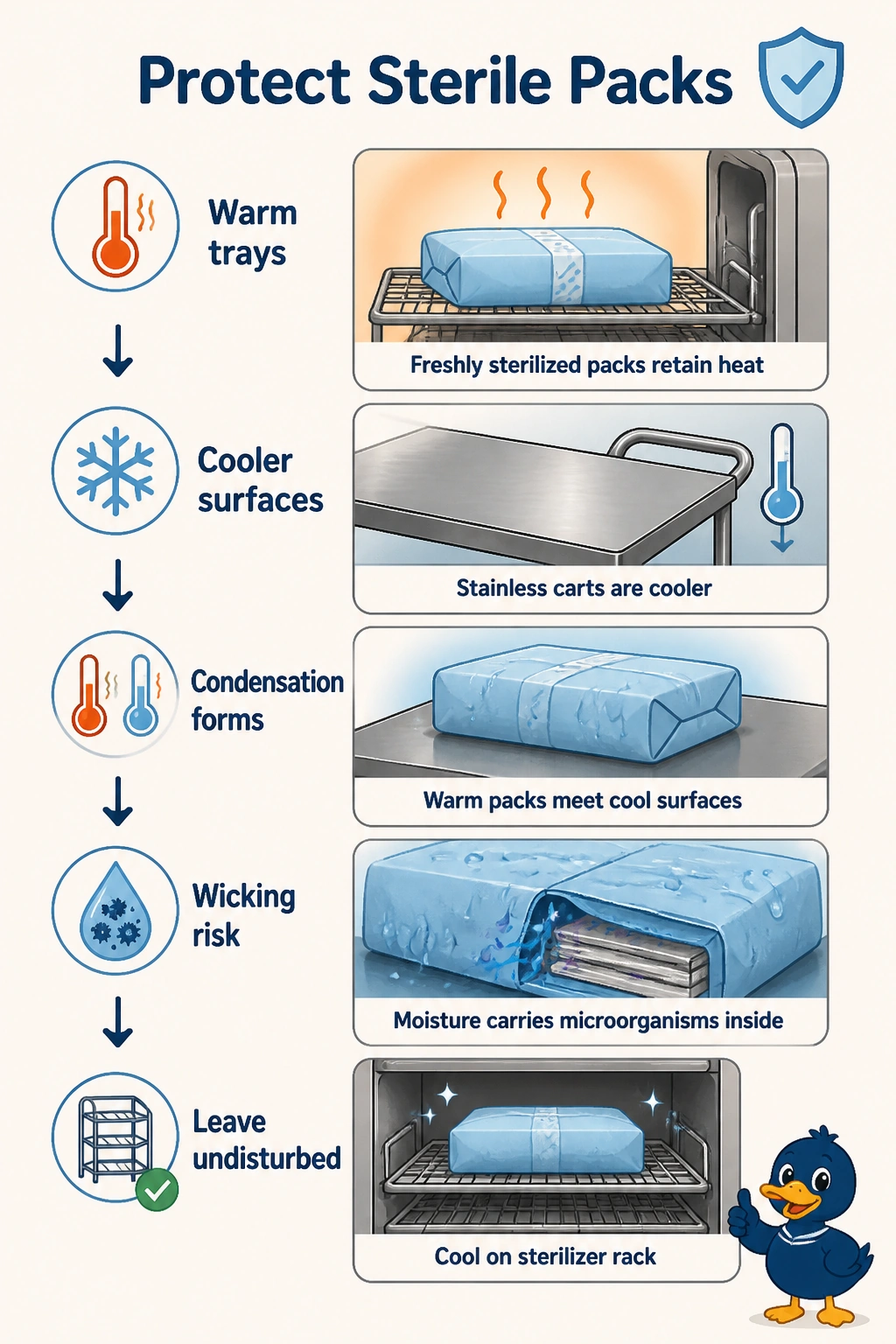
Fresh out of the autoclave, you need to let that hot tray sit because moving it onto a cool cart can create condensation and a moisture pathway that pulls microbes through the wrap. Let it cool undisturbed on the rack to room temperature before you touch or transport it.
Full Explanation
Handling warm packs against cooler surfaces remains the correct concern because warm steam vapor inside a newly sterilized tray can create condensation and a moisture pathway when the hot pack contacts cold metal carts or hands, allowing strike-through that compromises the microbial barrier. Indicators and sterilizing exposure must already meet cycle criteria; a wet pack is compromised and must not simply be dried for use. The idea that cooling is needed primarily so external chemical indicators can complete their exposure endpoint is incorrect because chemical indicator endpoint color must be achieved during exposure and verified at unload, not created by cooling. The idea that cooling completes the sterilant exposure needed to kill residual spores is incorrect because lethality is achieved during the time-temperature exposure phase, and cooling does not add sterilant kill. The idea that cooling makes a visibly wet pack acceptable once its outside surface dries is unsafe because moisture compromise means reprocessing, not air-drying for use. Allow trays to cool away from vents and drafts on the sterilizer cart until room temperature before transport to sterile storage.
Prefer to study offline? Printable PDF study book + test engine ($7.50, unofficial). These questions stay free here.