
In the decontamination area of central sterile processing, a technician holds a soiled, lumened suction tip under a running faucet and scrubs the channel vigorously above the waterline, creating visible mist and droplets. Which manual cleaning practice should the technician use instead?
Select an answer to reveal the explanation.
Short Explanation
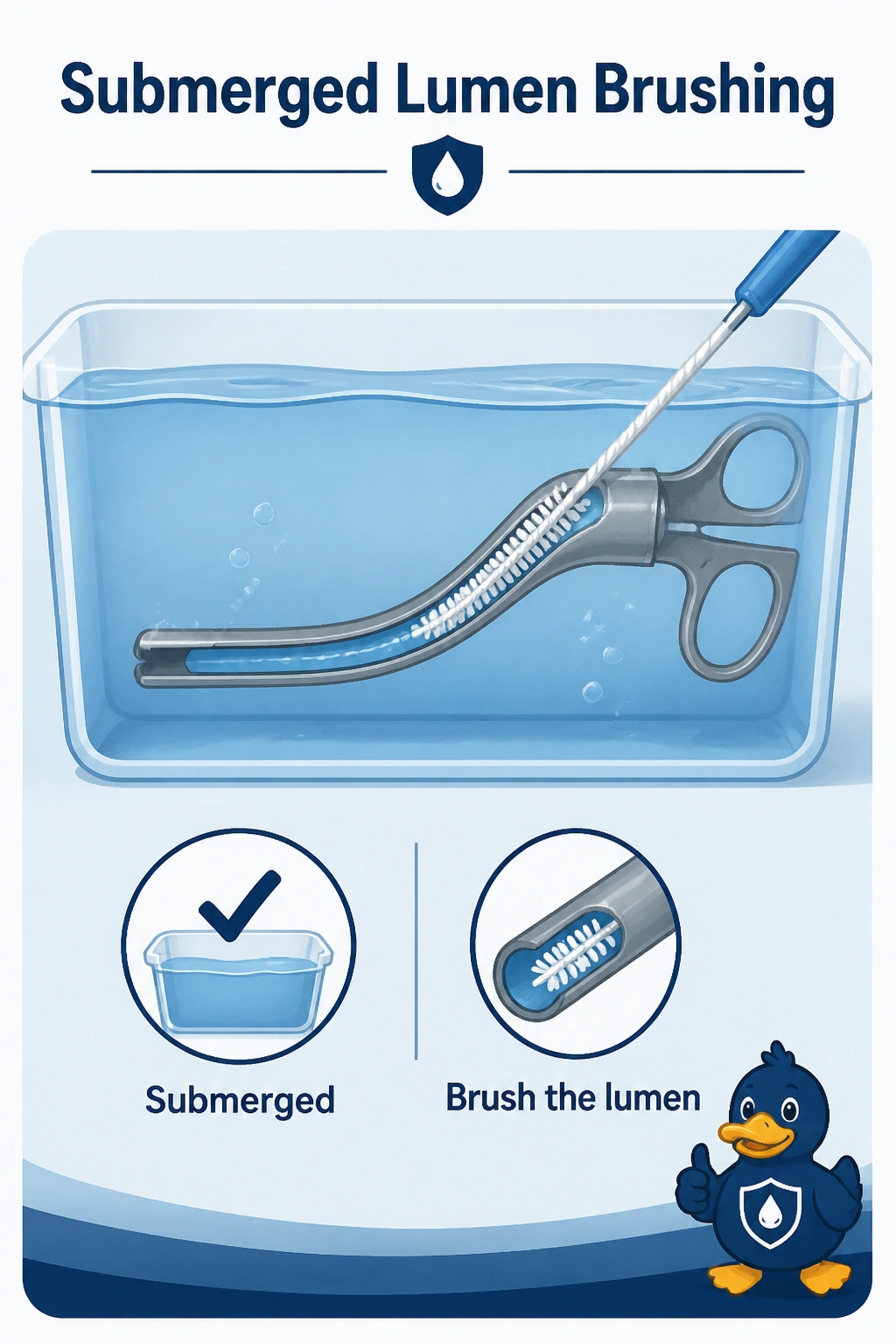
Scrubbing a dirty lumen above the waterline turns your sink into a tiny sprinkler system for bloodborne pathogens. The trap is thinking running water alone rinses debris away safely when vigorous brushing in open air actually aerosolizes bioburden right toward your face. Keeping the instrument submerged traps droplets beneath the surface.
Full Explanation
Manual cleaning of narrow-lumened instruments removes organic soil and bioburden that would otherwise shield microorganisms from disinfection or sterilization, but brushing in open air generates infectious splashes and aerosols. Selecting Brush the lumen while keeping the instrument submerged beneath the water follows CDC disinfection and sterilization principles and occupational safety practices by containing droplets and contaminated debris inside the detergent basin. The other choices create safety or reprocessing failures. Choosing Brush the lumen dry over an open sink before rinsing with warm tap water still disperses dried particulate matter and fails to loosen soil effectively with detergent. Choosing Place the unbrushed suction tip directly into a steam sterilizer cycle violates the fundamental rule that sterilization cannot succeed over retained organic soil inside a lumen. Choosing Spray the exterior with high-level disinfectant and skip internal brushing leaves blood and tissue trapped inside the channel and misuses a high-level disinfectant on an uncleaned device. As a caveat, technicians must still wear full personal protective equipment—including fluid-resistant gown, gloves, mask, and eye protection—throughout decontamination. For an operational check, inspect decontamination sinks during rounds to confirm basins are deep enough for full submersion and appropriate lumen brushes are stocked.
Prefer to study offline? Printable PDF study book + test engine ($7.50, unofficial). These questions stay free here.