
An infection preventionist joins a community hospital's emergency management committee to update the facility's annual preparedness plan for infectious disease surges and utility failures. Which structured planning step should the committee complete first to prioritize mitigation resources?
Select an answer to reveal the explanation.
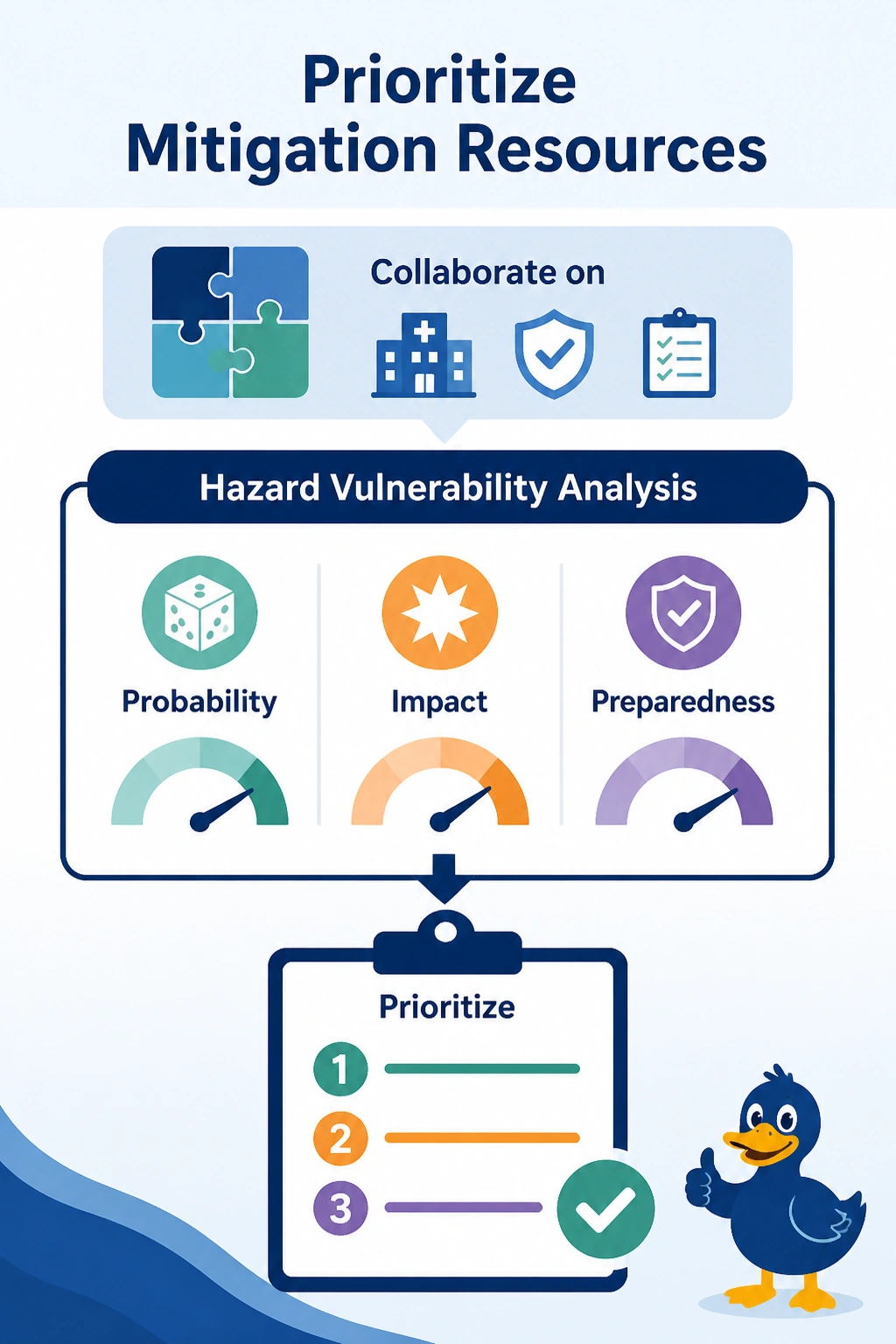
Short Explanation
Think of a Hazard Vulnerability Analysis as your emergency compass—it tells you which storms are most likely to hit and where your ship leaks most. The trap is buying expensive gear or borrowing someone else's plan before scoring your own facility's actual risks.
Full Explanation
Effective emergency management begins with a systematic, facility-specific assessment of potential threats so limited resources target the highest-priority gaps. The committee should Collaborate on a Hazard Vulnerability Analysis scoring probability, impact, and preparedness because quantifying the likelihood of events such as respiratory pathogen surges or water loss alongside human, property, and business impact establishes an objective risk ranking. Choosing to Submit a capital budget request for additional negative-pressure rooms without assessing threat probability fails because expensive infrastructure investments may address low-probability hazards while leaving higher-risk vulnerabilities unmitigated. Opting to Adopt the neighboring trauma center's emergency plan verbatim without modifying facility-specific risks fails because patient populations, physical plant capabilities, and local community hazards differ across facilities. Attempting to Delegate all infectious disease disaster planning solely to the local public health department fails because hospitals remain responsible for internal surge, staffing, and supply continuity. Review at the interval required by applicable regulation/accreditation and facility policy, and after significant incidents or changes; CMS hospital emergency plans require review/update at least every two years, while a facility may choose annual HVA review. Operationally, partner with facilities engineering, nursing, supply chain, and local public health to score each hazard and assign action owners to the top-ranked risks.
Prefer to study offline? Printable PDF study book + test engine ($7.50, unofficial). These questions stay free here.