
During an annual review of occupational bloodborne pathogen records at a community hospital, an infection preventionist finds that percutaneous injuries from contaminated sharps are documented only inside individual employee medical files. Under the OSHA Bloodborne Pathogens Standard (29 CFR 1910.1030), what must the facility also maintain?
Select an answer to reveal the explanation.
Short Explanation
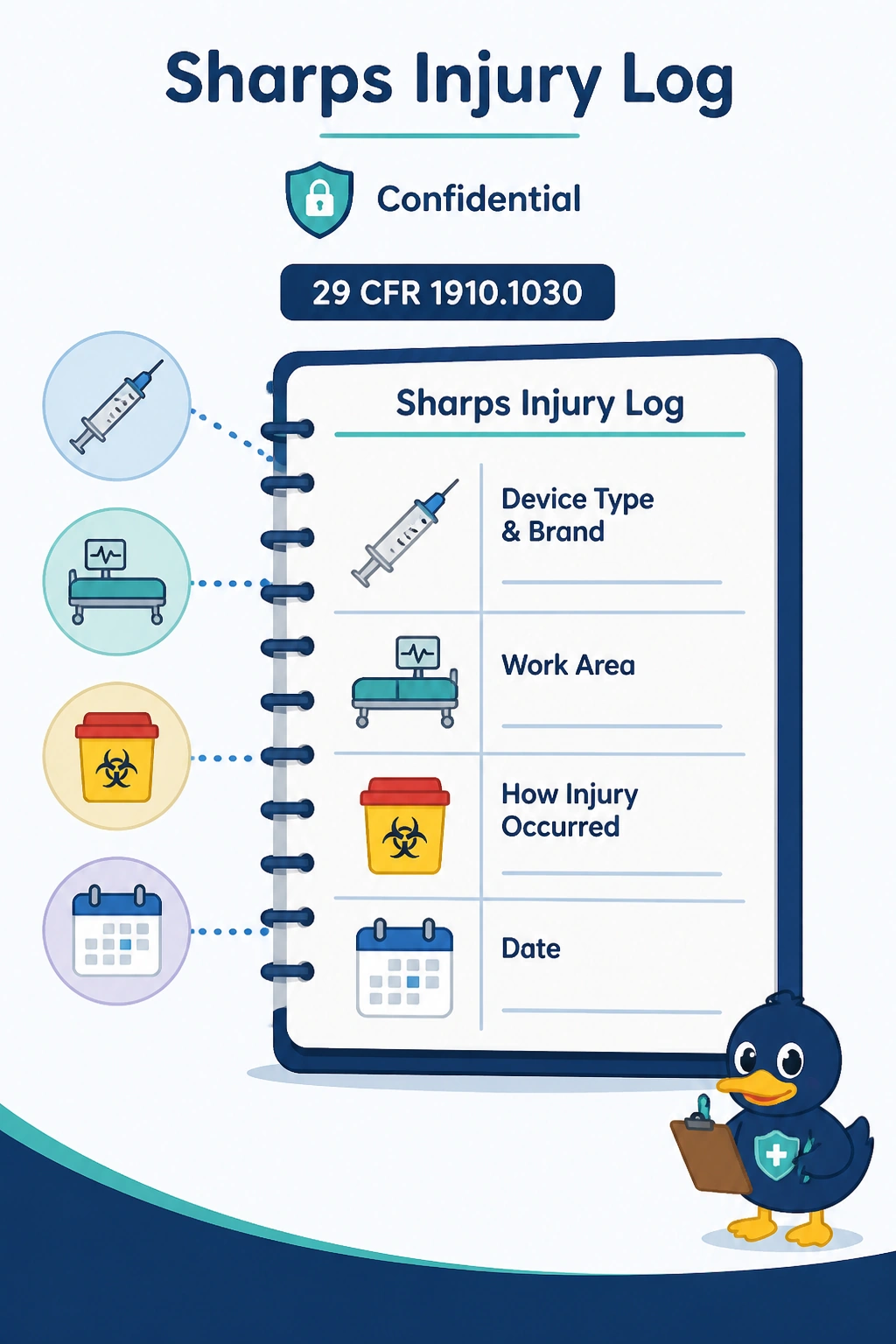
Think of a sharps injury log as your hospital's radar for spotting hazardous devices before another worker gets hurt. Under OSHA 29 CFR 1910.1030, you must keep a confidential log recording the device type and brand, the work area, and how the injury occurred. The trap is logging employee names or only immune status, which violates privacy and misses the device data needed for prevention.
Full Explanation
Under the OSHA Bloodborne Pathogens Standard (29 CFR 1910.1030), covered employers must maintain the following: A confidential log recording the device type and brand, work area, and how the injury occurred. This separates device-safety surveillance from private employee charts so teams can identify which sharps fail in particular areas. A confidential log tracking only the injured employee's job title and hepatitis B vaccine status misses the device brand, work area, and incident mechanism required to evaluate safer engineering controls. An unredacted incident ledger listing each injured worker's full name, badge ID, and clinical unit fails because surveillance must focus on device and area patterns, not personal identifiers. Maintain the sharps log in a manner that protects employee confidentiality; avoid unnecessary identifiers in shared surveillance records and keep any identity linkage restricted. Required disclosure/access procedures must preserve privacy. A quarterly summary report submitted to the device manufacturer detailing all needle stick claims confuses internal OSHA recordkeeping with external device reporting. Caveat: 29 CFR 1904 exemptions can affect general logs, though Exposure Control Plan duties still apply. Operational check: cross-check exposure records against the log each quarter for device type and brand, work area, and mechanism.
Prefer to study offline? Printable PDF study book + test engine ($7.50, unofficial). These questions stay free here.