
An adult inpatient with a long-term tunneled hemodialysis catheter develops recurrent Enterococcus faecalis bacteremia despite completing two weeks of intravenous antibiotics to which the isolate tests susceptible in vitro. What microbial factor best explains why the bacteremia relapses until the catheter is removed?
Select an answer to reveal the explanation.
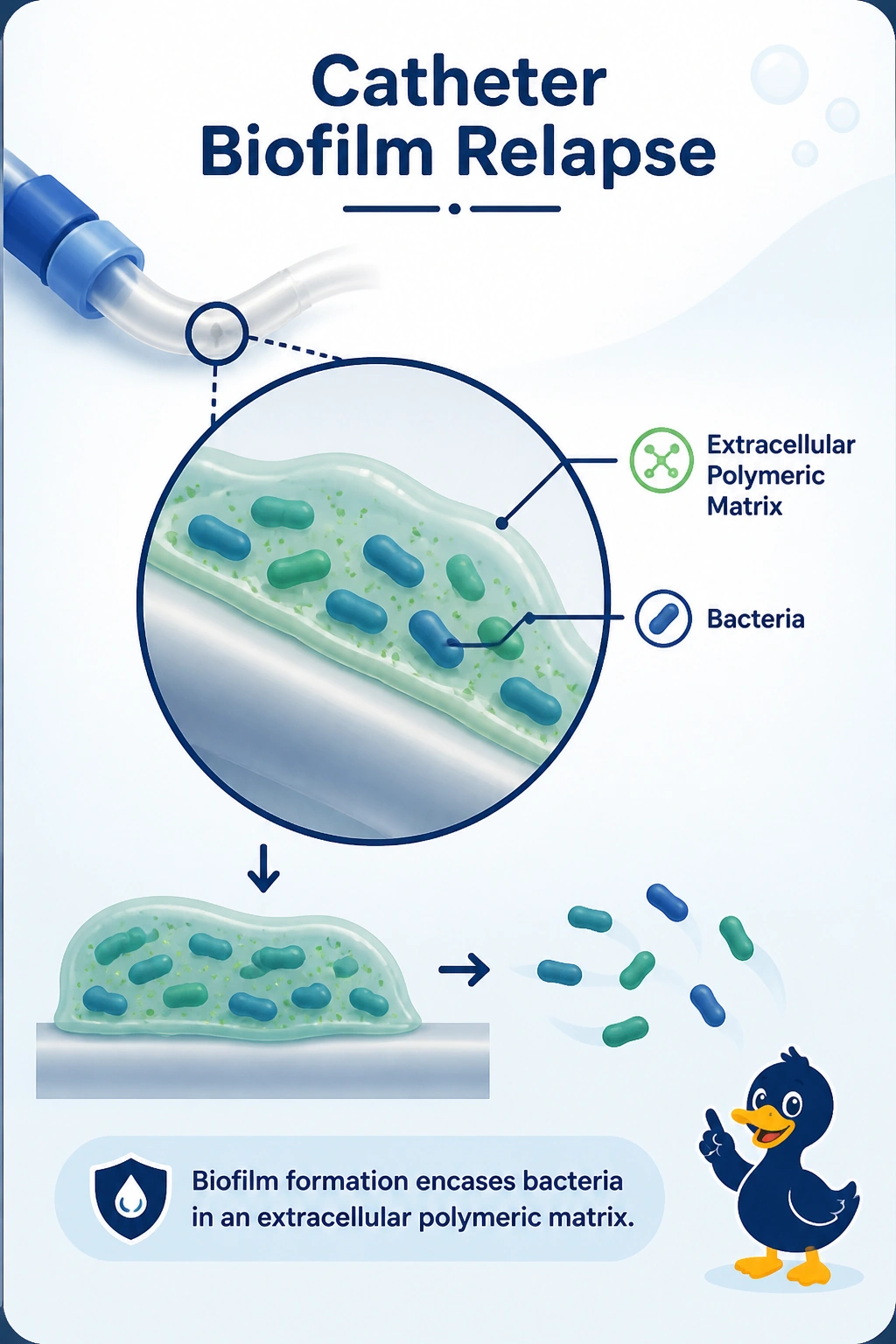
Short Explanation
Think of a biofilm as a microscopic fortress with a slimy moat that keeps antibiotics from reaching the bacteria inside. The trap is blaming drug resistance or dosing when the lab already showed susceptibility, missing that the catheter surface itself is shielding your patient's infection.
Full Explanation
When bacteria colonize an indwelling intravascular device, they adhere to the polymer surface and form a structured community. Biofilm formation encasing bacteria in an extracellular polymeric matrix explains relapsing bacteremia because the dense glycocalyx slows antimicrobial diffusion, harbors metabolically dormant persister cells, and shields organisms from host phagocytes despite in vitro susceptibility. Attributing relapse to Spontaneous chromosomal mutation conferring high-level aminoglycoside resistance fails because the clinical isolate already tested susceptible, and biofilm tolerance is phenotypic rather than a new genetic mutation. Blaming Incomplete renal clearance of the antibiotic during intermittent hemodialysis fails because reduced clearance would raise rather than lower serum drug levels and would not explain persistence localized to the catheter. Assuming Inactivation of the antibiotic by beta-lactamase enzymes in the bloodstream fails because Rare enterococcal beta-lactamase production may require specific testing and is not excluded by every routine panel. Systemic therapy alone may fail; selected catheter-salvage approaches use systemic plus lock therapy, while recurrent/persistent bacteremia warrants source-control reassessment and often removal. Operationally, monitor recurrent bacteremia as a trigger to review catheter removal timing.
Prefer to study offline? Printable PDF study book + test engine ($7.50, unofficial). These questions stay free here.