
An immunocompetent adult receiving mechanical ventilation for trauma has a routine endotracheal aspirate culture that grows moderate Candida albicans, while chest radiographs show no new infiltrates and the patient is afebrile. How should the infection preventionist interpret this laboratory finding?
Select an answer to reveal the explanation.
Short Explanation
Finding yeast in a ventilated patient's sputum is a lot like finding seaweed on a boat hull—it is usually just along for the ride, not sinking the ship, and your job is to separate colonization from infection. The trap is treating every positive respiratory culture as pneumonia, when Candida in the airway of an immunocompetent patient rarely causes lung disease.
Full Explanation
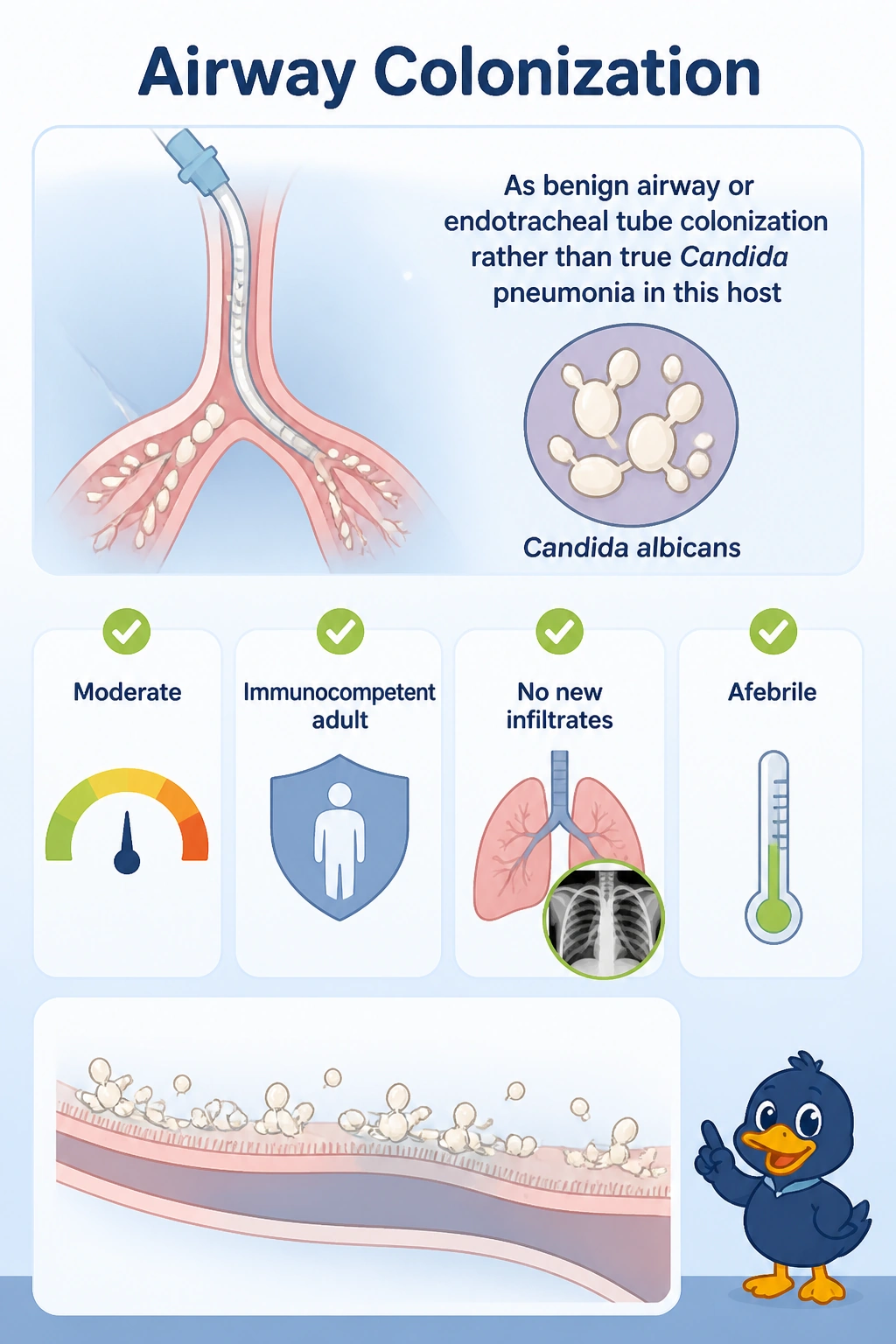
Candida species frequently colonize the oropharynx and endotracheal tubes of mechanically ventilated patients, especially after broad-spectrum antibiotic exposure. Therefore, the infection preventionist should interpret the culture As benign airway or endotracheal tube colonization rather than true Candida pneumonia in this host. Viewing it As ventilator-associated fungal pneumonia requiring systemic antifungal therapy leads to unnecessary antifungal exposure, toxicity, and resistance because true Candida pneumonia is exceedingly rare in immunocompetent adults and requires histopathologic confirmation. Interpreting the result As laboratory specimen contamination requiring immediate repeat bronchoscopy mischaracterizes true mucosal colonization of the upper respiratory tract and subjects the patient to an unnecessary invasive procedure. Treating it As invasive candidiasis indicating hematogenous seeding of the lower airway confuses localized respiratory tract colonization with systemic bloodstream or deep-tissue infection. As a caveat, NHSN surveillance definitions also exclude Candida species from ventilator-associated pneumonia and lower respiratory tract infection criteria in immunocompetent patients. Operational check: review respiratory culture results alongside fever trends, radiographic findings, and NHSN pathogen exclusions before classifying a ventilator-associated event or advising antimicrobial stewardship.
Prefer to study offline? Printable PDF study book + test engine ($7.50, unofficial). These questions stay free here.