
During peak winter influenza activity in the community, an adult inpatient develops acute fever, cough, and myalgia, and a rapid influenza antigen detection test returns negative. Which action is most appropriate?
Select an answer to reveal the explanation.
Short Explanation
A rapid flu antigen test is like a quick glance through a foggy window: when community flu is surging, a negative result cannot clear the view on its own. The trap is dropping isolation right away when you see a negative rapid test, even though antigen assays miss many true cases.
Full Explanation
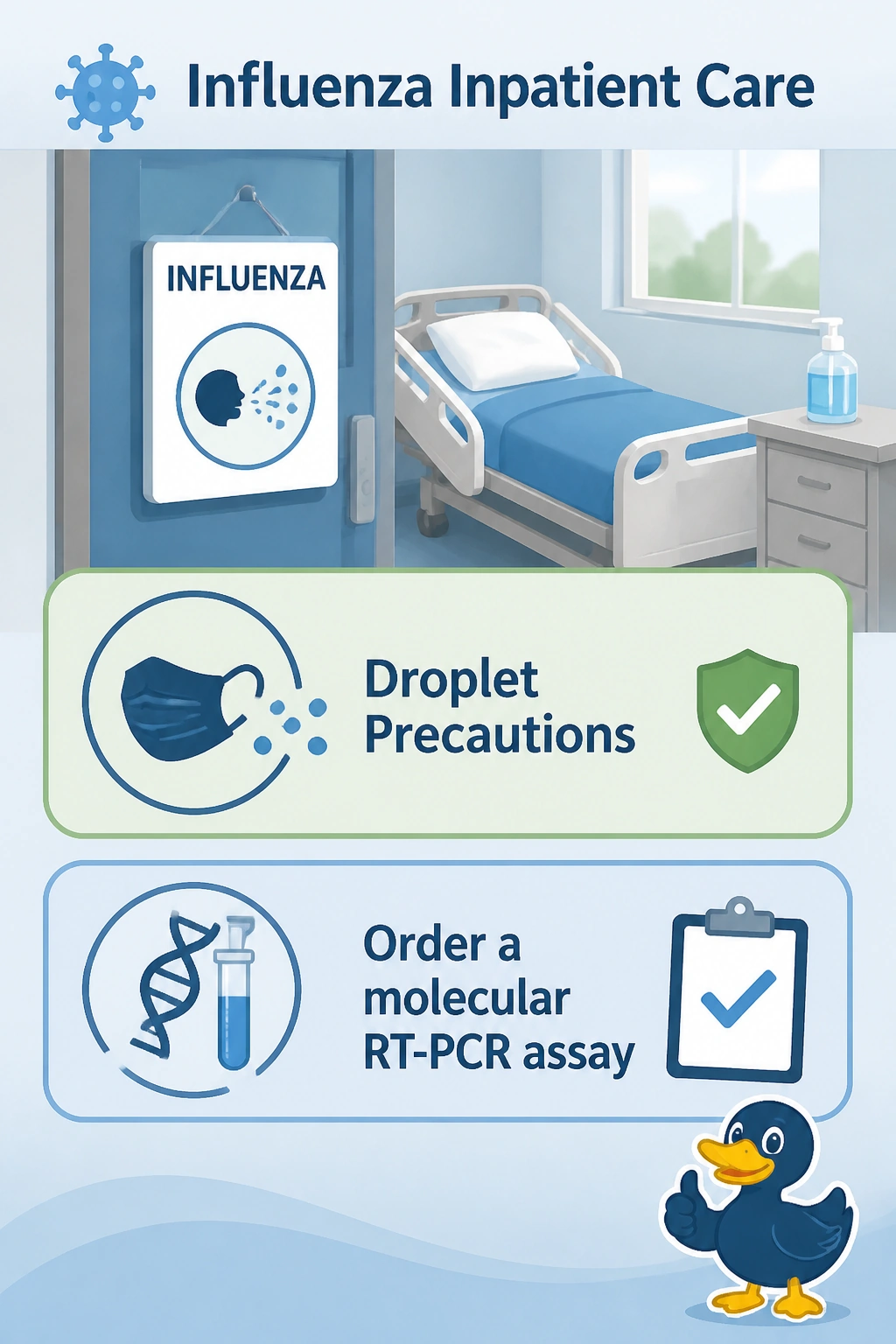
Rapid influenza antigen detection tests have substantially lower sensitivity than molecular assays, so false-negative results are common when community prevalence is high. Choosing to Maintain Droplet Precautions and order a molecular RT-PCR assay to confirm diagnosis prevents nosocomial transmission while using a high-sensitivity nucleic acid test to guide clinical and isolation management. Choosing to Discontinue Droplet Precautions immediately because rapid antigen tests exclude influenza relies on a low-sensitivity screen to rule out infection in a symptomatic patient. Choosing to Repeat the identical rapid antigen swab every four hours until a positive result appears wastes supplies and delays accurate diagnosis without overcoming the assay's sensitivity limit. Choosing to Order paired acute and convalescent serology titers to guide immediate isolation decisions is unhelpful because convalescent titers require weeks to rise and serve epidemiologic rather than acute care purposes. As a caveat, even while awaiting molecular results, empiric antiviral therapy and isolation decisions should follow clinical presentation and local prevalence. For an operational check, review microbiology order sets to verify that negative rapid antigen screens in hospitalized patients reflex or prompt molecular confirmation during respiratory season.
Prefer to study offline? Printable PDF study book + test engine ($7.50, unofficial). These questions stay free here.