
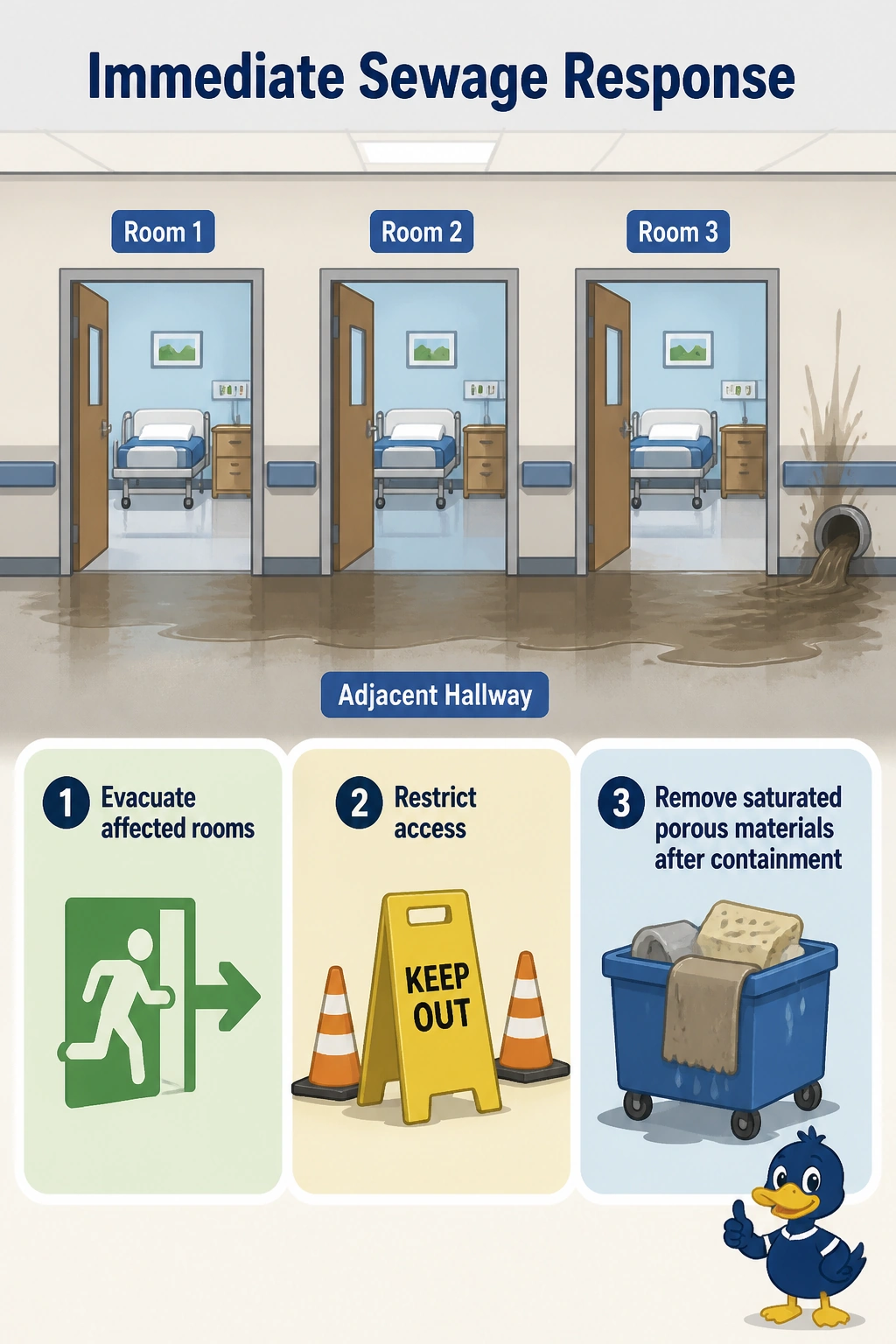
A clogged main drain causes raw sewage to back up onto the floor of three occupied patient rooms and an adjacent hallway on a medical-surgical unit. Facilities engineering is en route to repair the plumbing line. What immediate infection prevention action should the infection preventionist coordinate with unit leadership?
Select an answer to reveal the explanation.
Short Explanation
Sewage on a clinical floor is an immediate biohazard, not a routine spill you can mop around. The trap is leaving patients in the room or delaying cleanup until shift change while pathogens soak into baseboards and porous items. You must evacuate the affected rooms, contain the zone, and discard saturated porous materials before disinfecting.
Full Explanation
Under CDC Environmental Infection Control Guidelines, sewage backups introduce high concentrations of enteric bacteria, viruses, and parasites into patient-care areas and require rapid containment. The appropriate immediate response is to "Evacuate affected rooms, restrict access, and remove saturated porous materials after containment" so patients and staff are protected while contaminated drywall, ceiling tiles, or soft furnishings that cannot be reliably disinfected are discarded. Attempting to "Mop up standing liquid with standard detergent and leave patients in place during repair" exposes vulnerable patients to aerosols, splashes, and residual contamination. Choosing to "Cover the wet flooring with absorbent pads and schedule terminal disinfection at shift change" allows sewage to wick into baseboards and spread via foot traffic. Trying to "Spray phenolic disinfectant over the standing sewage before facilities clears the blockage" is ineffective because heavy organic matter inactivates chemical disinfectants and fails to address ongoing backup. As a caveat, workers performing sewage remediation require appropriate personal protective equipment, including fluid-resistant gowns, gloves, and eye protection. Operationally, verify complete drying, EPA-registered disinfection of nonporous surfaces, and moisture-meter checks before reopening the rooms.
Prefer to study offline? Printable PDF study book + test engine ($7.50, unofficial). These questions stay free here.