
During morning pre-operative checks, facilities engineering notifies the infection preventionist that an operating room's HVAC system has malfunctioned, causing loss of positive air pressure and relative humidity rising to 75%. What immediate action should the infection preventionist recommend?
Select an answer to reveal the explanation.
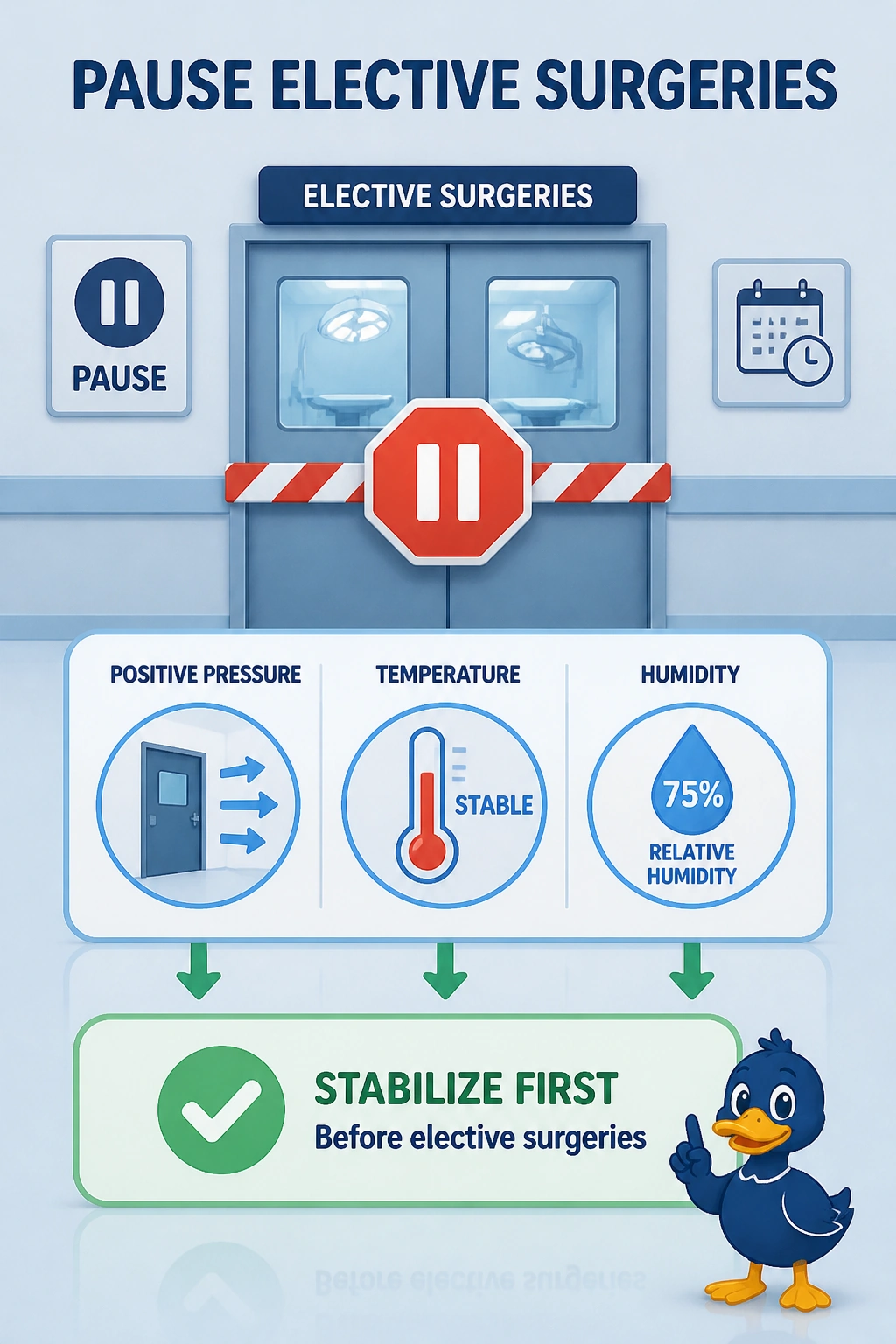
Short Explanation
You protect patients by postponing elective surgeries until positive pressure, temperature, and humidity stabilize; these controls help keep contaminated air out and sterile supplies dry. Propping doors open, using fans, or switching to negative pressure may seem like quick fixes, but they disrupt airflow and can put patients at risk.
Full Explanation
Operating rooms require continuous positive pressure relative to adjacent corridors and controlled temperature and relative humidity (typically 20% to 60% under ASHRAE standards) to prevent airborne contaminants from entering and to protect sterile barrier packaging from moisture. Postpone elective surgeries until positive pressure, temperature, and humidity stabilize: without environmental controls, surgical site infection risk rises and condensation may form on sterile supplies. Continuing scheduled elective surgeries while propping the operating room doors open fails because open doors eliminate pressure differentials and allow unfiltered corridor air into the sterile field. Placing portable oscillating fans inside the operating room to lower ambient moisture levels fails because fans do not reliably control humidity and create turbulent airflow that aerosolizes settled dust and skin squames over open wounds. Switching the operating room to negative pressure and proceeding with clean orthopedic implants fails because negative pressure draws non-sterile corridor air directly into the room during high-risk implant surgery. As an exam caveat, if an emergent life-saving case must proceed during an outage, relocate to an unaffected operating room whenever possible. As a practical check, inspect sterile supplies stored inside the affected room for dampness or package compromise before returning the room to service.
Prefer to study offline? Printable PDF study book + test engine ($7.50, unofficial). These questions stay free here.