
During a renovation planning meeting for a new bone marrow transplant unit and adjacent intensive care unit, an interior designer proposes installing antimicrobial-treated commercial carpeting in patient rooms to reduce noise. What should the infection preventionist recommend under CDC environmental infection control guidelines?
Select an answer to reveal the explanation.
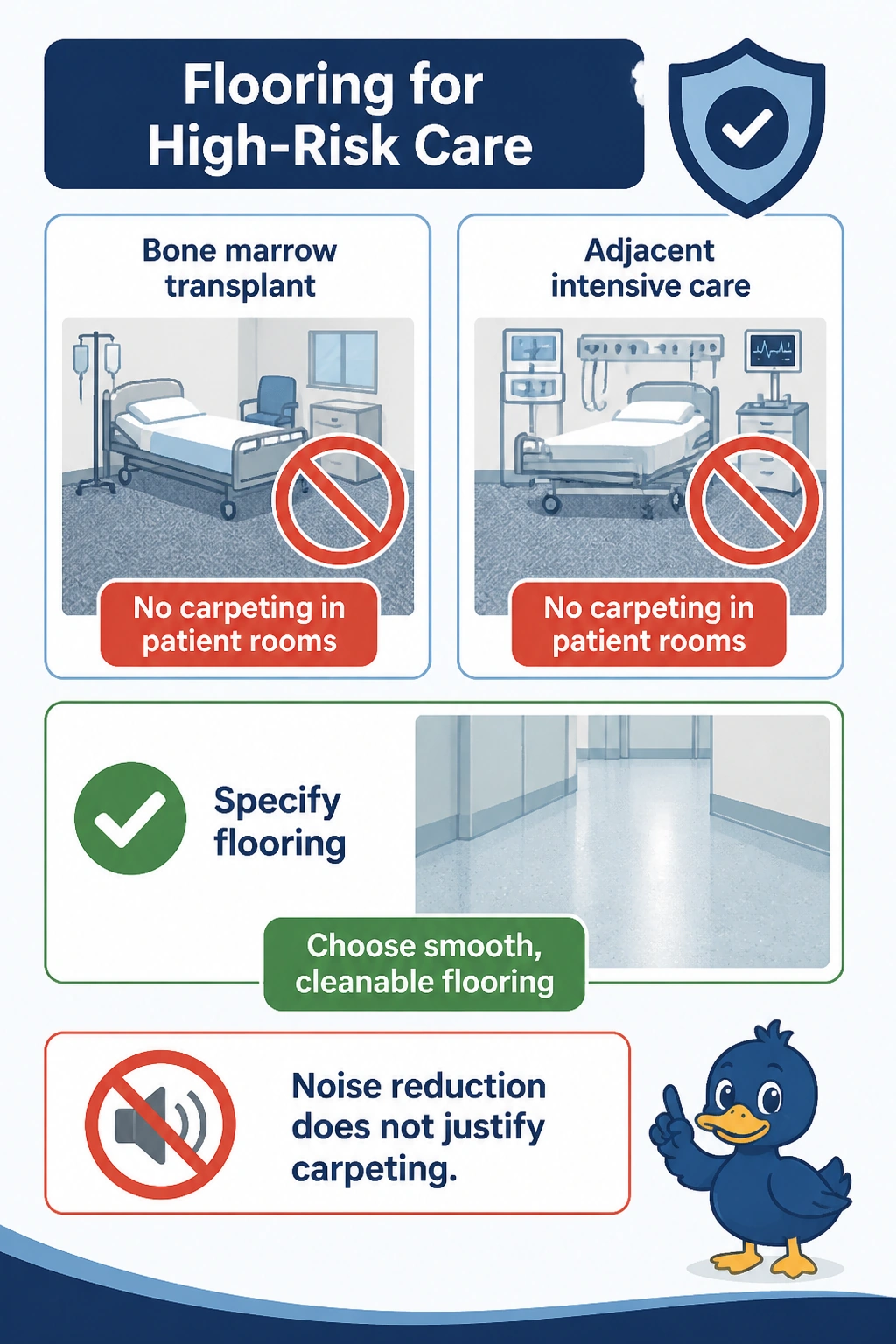
Short Explanation
Carpet in an intensive care or transplant room can retain spills, moisture, and fungal spores, even when it is labeled antimicrobial. You need smooth, cleanable flooring that can be wet-mopped and disinfected without trapping dust or moisture. Daily vacuuming, corridor-only placement, or annual replacement does not make carpeting appropriate in these high-risk areas.
Full Explanation
Under CDC environmental infection control guidelines, prohibit carpeting in the bone marrow transplant and adjacent intensive care areas and specify smooth, cleanable flooring, such as seamless vinyl or welded sheet flooring. Carpet can retain moisture, organic spills, and fungal or bacterial reservoirs that cannot be reliably removed or disinfected, creating an avoidable risk for severely immunocompromised patients. Approving carpeting with daily HEPA-filter vacuuming does not solve the problem: vacuuming cannot remove embedded liquids or disinfect carpet backing, and it may stir up settled particulates. Installing carpet only in corridors outside patient rooms and treating it with quaternary spray is not an adequate alternative for this project; corridors still face equipment traffic and spills, and disinfectants are not designed to sterilize porous textiles. Allowing antimicrobial-treated carpet in transplant rooms with annual replacement also fails because antimicrobial claims do not make porous flooring reliably disinfectable, and replacement can disrupt settled dust. An exam caveat is that the recommendation is specific to high-risk clinical areas; do not assume antimicrobial treatment or a maintenance schedule overrides the need for cleanable flooring there. As a practical check, review the architectural finish schedule before construction and confirm that high-risk clinical units have smooth, non-porous flooring that can be cleaned and disinfected.
Prefer to study offline? Printable PDF study book + test engine ($7.50, unofficial). These questions stay free here.