
A patient with infectious pulmonary tuberculosis is discharged from an Airborne Infection Isolation Room (AIIR) that operates at 12 air changes per hour. Before environmental services staff enter the room without respiratory protection to perform terminal cleaning, what must occur?
Select an answer to reveal the explanation.
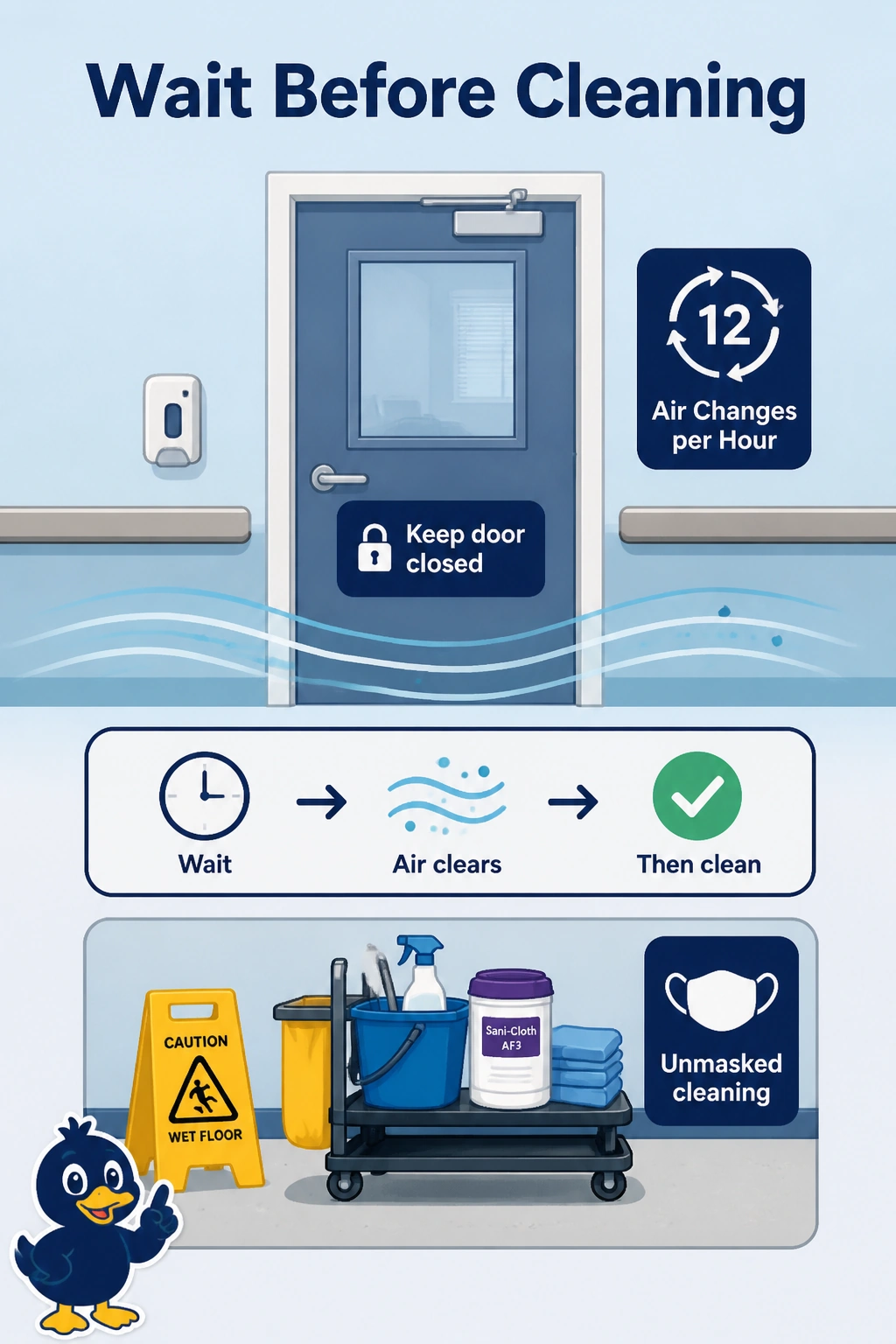
Short Explanation
You can picture infectious droplet nuclei lingering in the room like smoke after a candle is blown out. Keep the door closed and wait for the air-clearance time before unmasked cleaning; an empty room is not necessarily safe yet.
Full Explanation
Mycobacterium tuberculosis spreads in airborne droplet nuclei that may remain suspended after an infectious patient leaves. The time to remove 99% to 99.9% of airborne contaminants depends on the room’s air changes per hour (ACH), so keep the door closed and wait the ACH-based air-clearance time before unmasked terminal cleaning. Propping the isolation-room door open to mix air with the adjacent corridor can compromise negative pressure and carry infectious nuclei into public hallways. Starting unmasked cleaning as soon as the patient has left the inpatient unit exposes environmental services staff to suspended aerosols during the clearance period. Spraying aerosolized disinfectant into the air is not an effective or approved way to clear airborne tuberculosis and may introduce respiratory irritants. Caveat: if urgent room turnover requires entry before the clearance interval ends, staff must wear fit-tested N95 respirators and keep the door closed. Practical check: post the room’s calculated ACH clearance time on the AIIR door tag at discharge so housekeeping knows when unmasked entry is safe.
Prefer to study offline? Printable PDF study book + test engine ($7.50, unofficial). These questions stay free here.