
During an environmental rounds inspection of central sterile processing, an infection preventionist reviews the heating, ventilation, and air conditioning (HVAC) pressure monitors. Which airflow condition is required in the decontamination room where soiled surgical instruments are manually brushed?
Select an answer to reveal the explanation.
Short Explanation
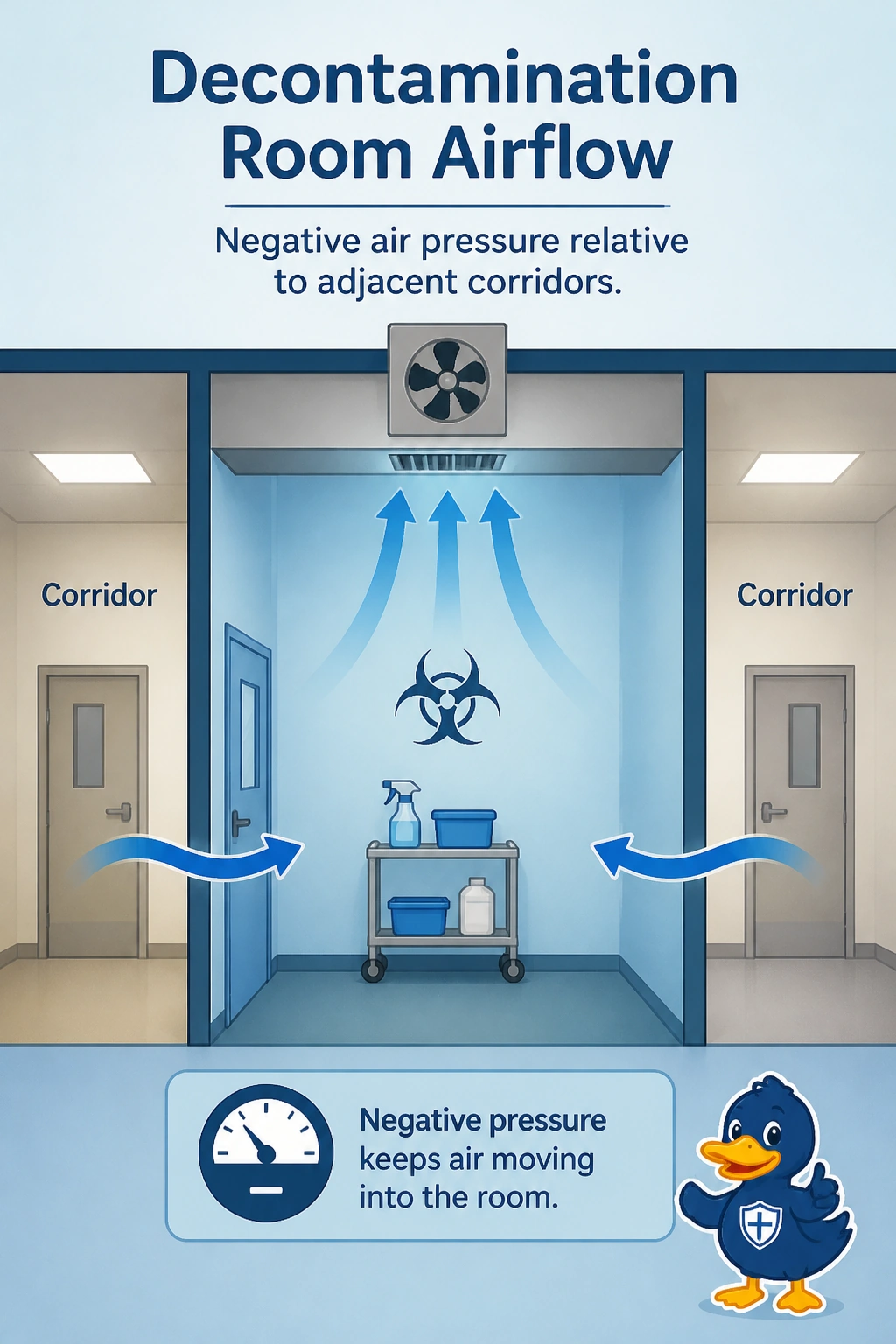
Think of the decontamination room as a dusty workshop next to a clean kitchen—you want air flowing inward so contaminants never drift out into clean zones. The trap is confusing decontamination with clean sterile storage, which needs the opposite pressure. You should verify negative air pressure in the decontamination room relative to adjacent corridors and clean assembly areas.
Full Explanation
Manual brushing and flushing of soiled instruments in central sterile processing generate aerosols and droplets containing blood, bioburden, and potential pathogens. Maintaining negative air pressure in the decontamination room relative to adjacent corridors ensures that air flows inward into the soiled zone and is exhausted outdoors, preventing airborne contaminants from migrating into clean assembly areas or public hallways. Maintaining positive air pressure in the decontamination room relative to the clean assembly area would push contaminated air directly toward clean instruments awaiting packaging and sterilization. Keeping the pass-through window between decontamination and clean assembly propped open for airflow defeats the physical barrier and disrupts pressure differentials between dirty and clean zones. Recirculating unfiltered exhaust air from the decontamination sinks back into the sterile storage violates CDC and AAMI ventilation standards by carrying bioaerosols into sterile inventory. As a caveat, clean assembly and sterile storage rooms require positive pressure relative to corridors to keep dust out. For an operational check, verify the daily differential pressure gauge reading and check that pass-through doors and windows remain closed except during active transfer.
Prefer to study offline? Printable PDF study book + test engine ($7.50, unofficial). These questions stay free here.