
During environmental rounds on a medical-surgical unit adjacent to an active hospital renovation zone, an infection preventionist observes an environmental services worker using a dry push broom and a dry feather duster to clean hallway floors and overhead ledges. Why should the infection preventionist intervene and require a different cleaning method?
Select an answer to reveal the explanation.
Short Explanation
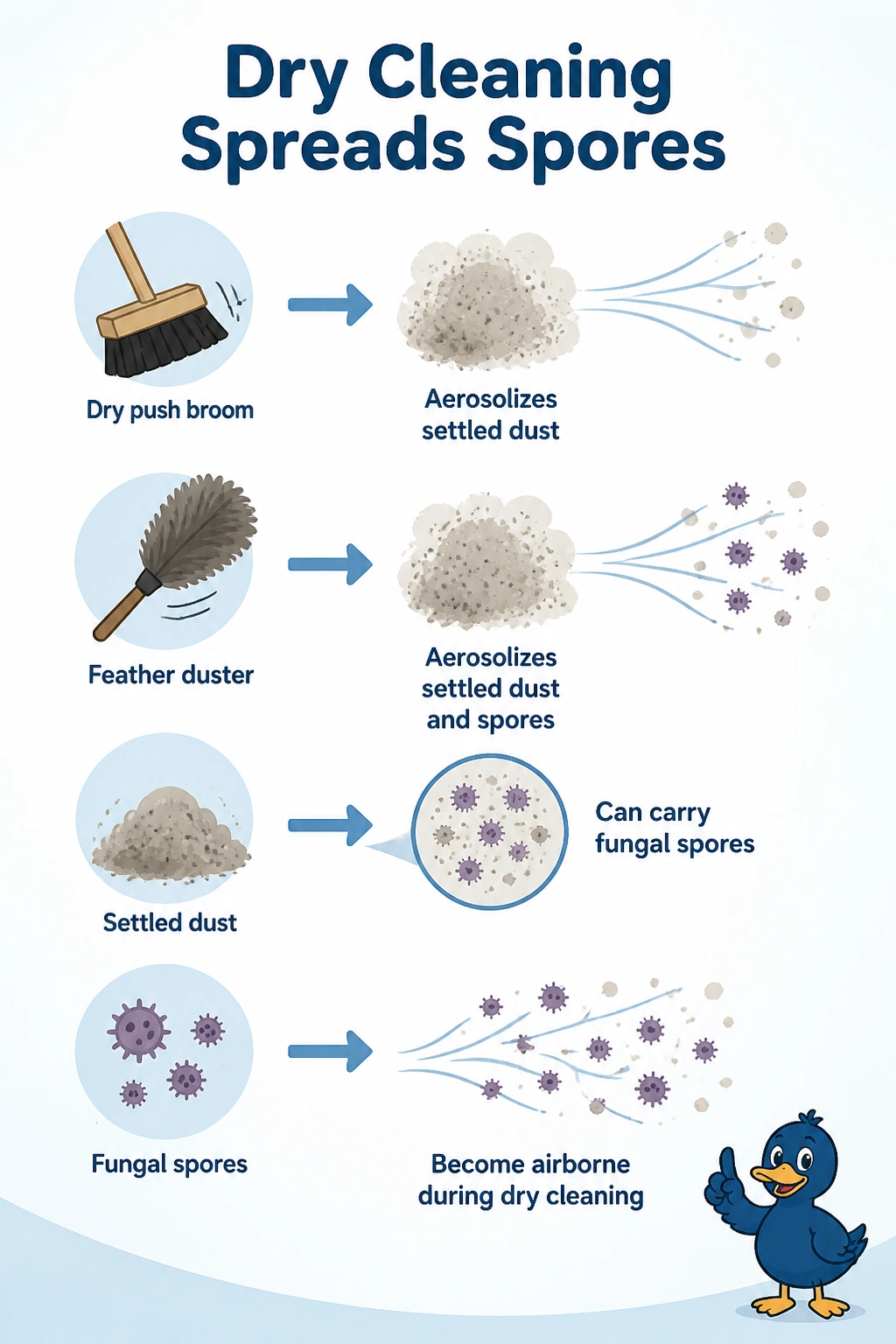
Picture a dry broom tossing settled dust and mold spores back into the air like shaking out a dusty rug right next to vulnerable patients. Use damp methods and well-maintained equipment designed to minimize dust dispersion; select HEPA filtration and construction-area controls according to the applicable risk assessment and guidance. You will avoid the trap when you focus on airborne spore resuspension instead of floor finish.
Full Explanation
CDC Environmental Infection Control Guidelines address dust control in patient-care areas because Dry sweeping aerosolizes settled dust and fungal spores such as Aspergillus species, allowing them to become airborne and potentially inhaled by susceptible or immunocompromised patients. Near renovation zones, construction dust can carry elevated fungal spore burdens that settle onto horizontal surfaces and floors, making containment during removal critical. Use damp methods and well-maintained equipment designed to minimize dust dispersion; select HEPA filtration and construction-area controls according to the applicable risk assessment and guidance. Claiming that Dry sweeping removes the factory wax finish from vinyl flooring focuses on cosmetic floor maintenance rather than the primary infection prevention hazard of resuspending infectious particulates. Asserting that Dry dusting neutralizes residual quaternary ammonium disinfectants is incorrect because dry mechanical agitation does not chemically inactivate dried surface residues, though it fails to capture particulates safely. Prior disinfection does not prevent physical resuspension of dust and spores. For an operational check, inspect environmental services carts during rounds to verify damp microfiber methods are available and used correctly.
Prefer to study offline? Printable PDF study book + test engine ($7.50, unofficial). These questions stay free here.