
During routine environmental rounds in a surgical suite, an infection preventionist notices that air flows from the main hallway into an unoccupied operating room when the door is cracked open, rather than outward into the corridor. Why must facilities engineering correct this airflow direction before surgical cases resume?
Select an answer to reveal the explanation.
Short Explanation
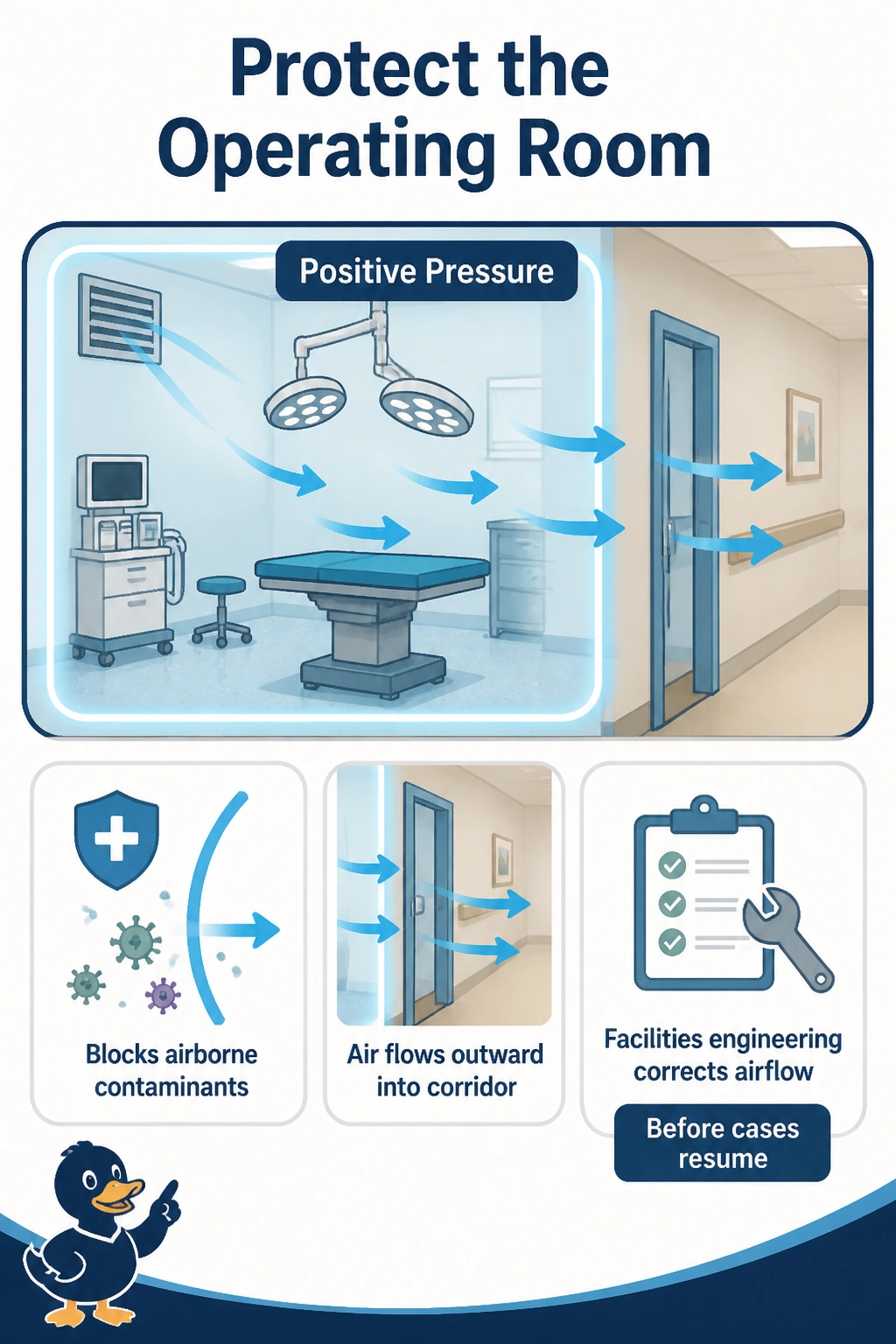
When your operating room door opens, air should push out like a gentle shield rather than pulling hallway air in. The trap is thinking airflow direction only matters for comfort or smoke evacuation. Operating rooms require positive pressure to keep airborne contaminants out to reduce entry of corridor contaminants.
Full Explanation
During surgical procedures, open sterile fields and exposed tissues are vulnerable to airborne skin squames, dust, and fungal spores carried from adjacent corridors. Under CDC/HICPAC Environmental Infection Control guidelines, Operating rooms require positive pressure to keep airborne contaminants out. Maintain the required differential with doors closed; door opening can disrupt directional airflow, so minimize traffic and opening duration. Claiming that Negative pressure inside the operating room increases anesthetic gas accumulation confuses room pressure differentials with dedicated waste anesthetic gas scavenging systems. Stating that Inward airflow prevents surgical smoke evacuation systems from functioning is incorrect because smoke evacuators use local high-efficiency suction at the surgical site rather than room pressurization. Suggesting that Outward airflow is needed to dry freshly mopped floors between procedures misunderstands infection control engineering, as floor drying depends on proper disinfectant wet contact time and general air exchanges rather than positive pressure. As an engineering caveat, positive pressure fails rapidly if operating room doors are propped open or if supply/exhaust balancing dampers drift out of calibration. Operational check: verify daily pressure-differential gauges or flutter strips and confirm with facilities engineering that positive pressure is restored before resuming surgical cases.
Prefer to study offline? Printable PDF study book + test engine ($7.50, unofficial). These questions stay free here.