
An infection preventionist evaluates a hand hygiene coaching intervention by measuring the monthly alcohol-based hand rub consumption in milliliters per patient-day across the same 18 hospital units during the month before coaching and the month after coaching. The 18 within-unit before–after differences are approximately normally distributed, without severe outliers, and units are independent. Which statistical test is most appropriate to compare the before-and-after unit values?
Select an answer to reveal the explanation.
Short Explanation
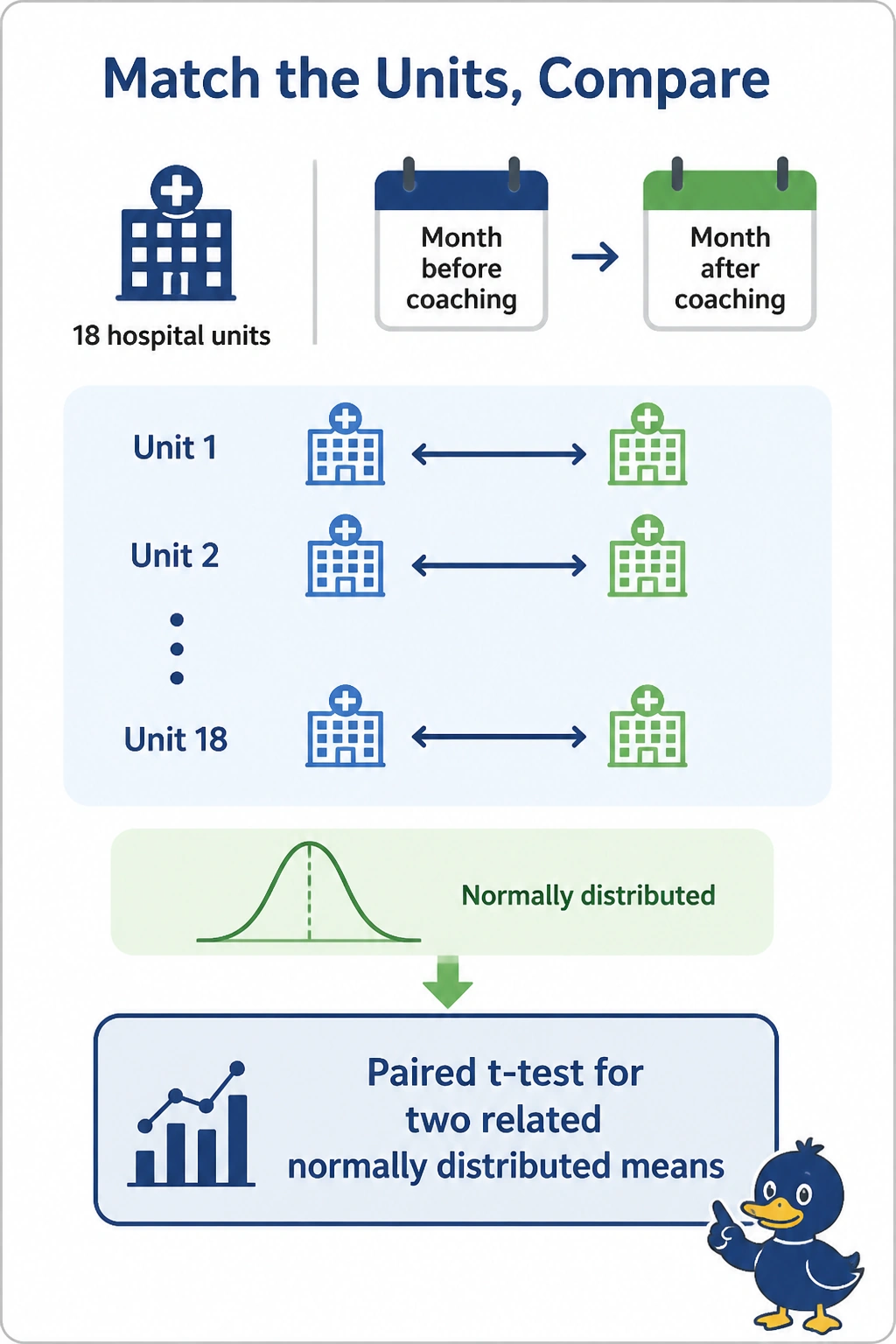
Because you measure the same 18 units twice, each unit serves as its own comparison, like a before-and-after fitness weigh-in. A paired t-test fits continuous, normally distributed matched measurements; independent-group and categorical or binary-outcome tests do not fit these data.
Full Explanation
A paired t-test for two related normally distributed means is appropriate because each of the 18 hospital units contributes a continuous measurement before coaching and another after coaching. The analysis compares the within-unit differences, accounting for baseline variation among units and helping detect a change in hand rub consumption. An independent-samples t-test for two unrelated group means does not fit because the before-and-after observations come from the same units, so they are not independent groups. A chi-square test for comparing categorical unit proportions is unsuitable because milliliters per patient-day is a continuous numerical rate, not a count of units in categories. McNemar's test for paired binary pass-or-fail outcomes also does not fit: it analyzes matched categorical outcomes, not continuous volume measurements. One exam caveat is that normality should be considered for the paired differences, not merely inferred from the two sets of measurements separately; severe skew or extreme outliers can make the parametric comparison inappropriate. As a practical check, inspect a histogram or conduct a normality check on the 18 paired differences before finalizing the result.
Prefer to study offline? Printable PDF study book + test engine ($7.50, unofficial). These questions stay free here.