
An infection preventionist conducts overt hand hygiene audits by standing visibly at the nurses' station with a clipboard, and unit compliance jumps from 55% to 92% during audit hours while alcohol-rub consumption remains unchanged. Which phenomenon best explains this discrepancy?
Select an answer to reveal the explanation.
Short Explanation
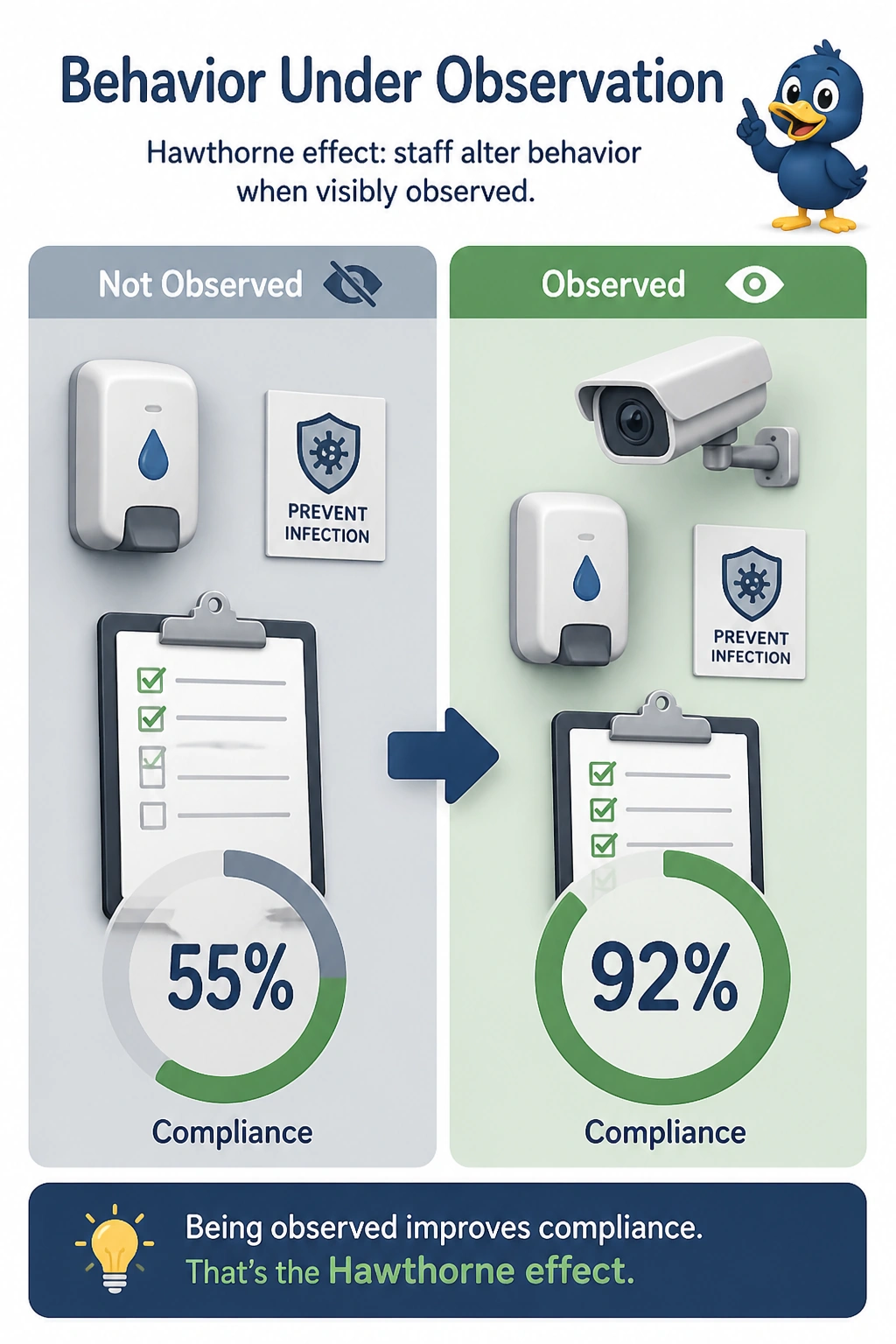
When you stand visibly with a clipboard, staff may temporarily improve their hand hygiene while you watch. The Hawthorne effect can make a 92% audit score look like real improvement, even though unchanged alcohol-rub use suggests otherwise.
Full Explanation
Direct observation can overestimate true hand hygiene compliance because of the Hawthorne effect: when clinicians notice you watching, they may temporarily improve their behavior, creating an artificial spike that fades when observation ends. That explains why observed compliance rose while alcohol-rub consumption stayed flat. Recall bias among nursing staff completing retrospective hygiene surveys does not explain the discrepancy, because the audit records actions in real time rather than relying on staff memories. Confounding caused by simultaneous installation of automated sink timers is not supported by the scenario, and it would not account for unchanged product use alongside the audit increase. Selection bias from auditing only the highest-acuity intensive care beds is also unsupported: the finding concerns a jump during visible audit hours, not unrepresentative bed sampling. An exam caveat is that covert or “secret shopper” observations may reduce the effect of being watched, but they must remain non-punitive. As a practical check, compare direct observations with monthly alcohol-based hand-rub volume per 1,000 patient-days to assess whether compliance is genuinely improving.
Prefer to study offline? Printable PDF study book + test engine ($7.50, unofficial). These questions stay free here.