
A 61-year-old man with type 2 diabetes and known autonomic neuropathy plans to start outdoor gardening and brisk walking during humid summer mornings. Which safety precaution should the diabetes care and education specialist emphasize?
Select an answer to reveal the explanation.
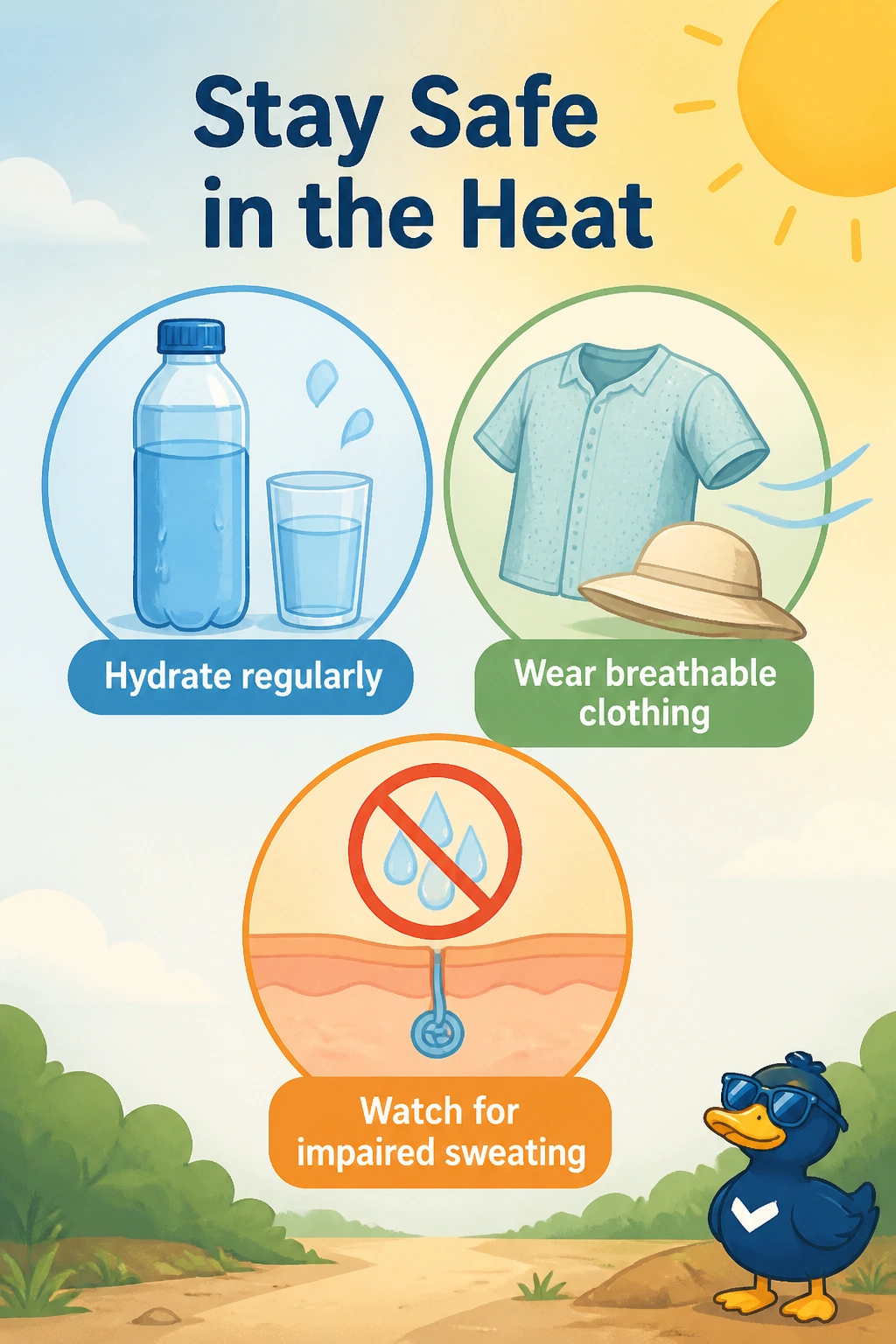
Short Explanation
When autonomic neuropathy affects your sweat glands, your body’s built-in radiator may not cool you efficiently in summer heat. You can stay safer by hydrating regularly, wearing breathable clothing, and watching for heat exhaustion rather than relying on thirst or visible sweat to warn you in time.
Full Explanation
Diabetic autonomic neuropathy can impair sudomotor function and thermoregulation, reducing the body’s ability to dissipate heat through sweating. Hydrating regularly, wearing breathable clothing, and watching for heat exhaustion due to impaired sweating directly address the risk of heat-related illness and dehydration. Dehydration can raise blood glucose and worsen renal perfusion. Using visible sweat as the main guide for rest and cooling is unsafe because impaired sweating means little or no visible sweat does not indicate adequate cooling, and overheating may progress without obvious warning. Using thirst alone to decide when to drink is risky because thirst can lag behind fluid loss, especially in older adults, so scheduled hydration is preferable to waiting until thirsty. Heart-rate targets alone are unreliable for judging exertion when autonomic neuropathy can blunt heart-rate responses and alter blood pressure regulation; perceived exertion, symptoms, and individualized guidance also matter. A caveat is that fluid advice must be individualized when heart or kidney disease imposes restrictions. As a practical check, confirm that the patient has a hydration plan, shaded rest breaks, and cool storage for diabetes supplies; extreme heat can also degrade insulin or affect CGM adhesive adhesion.
Prefer to study offline? Printable PDF study book + test engine ($7.50, unofficial). These questions stay free here.