
A primary care clinic is updating its clinical workflow to align with the National Standards for Diabetes Self-Management Education and Support (DSMES). Beyond initial diagnosis, which trigger should prompt a formal referral for ongoing DSMES?
Select an answer to reveal the explanation.
Short Explanation
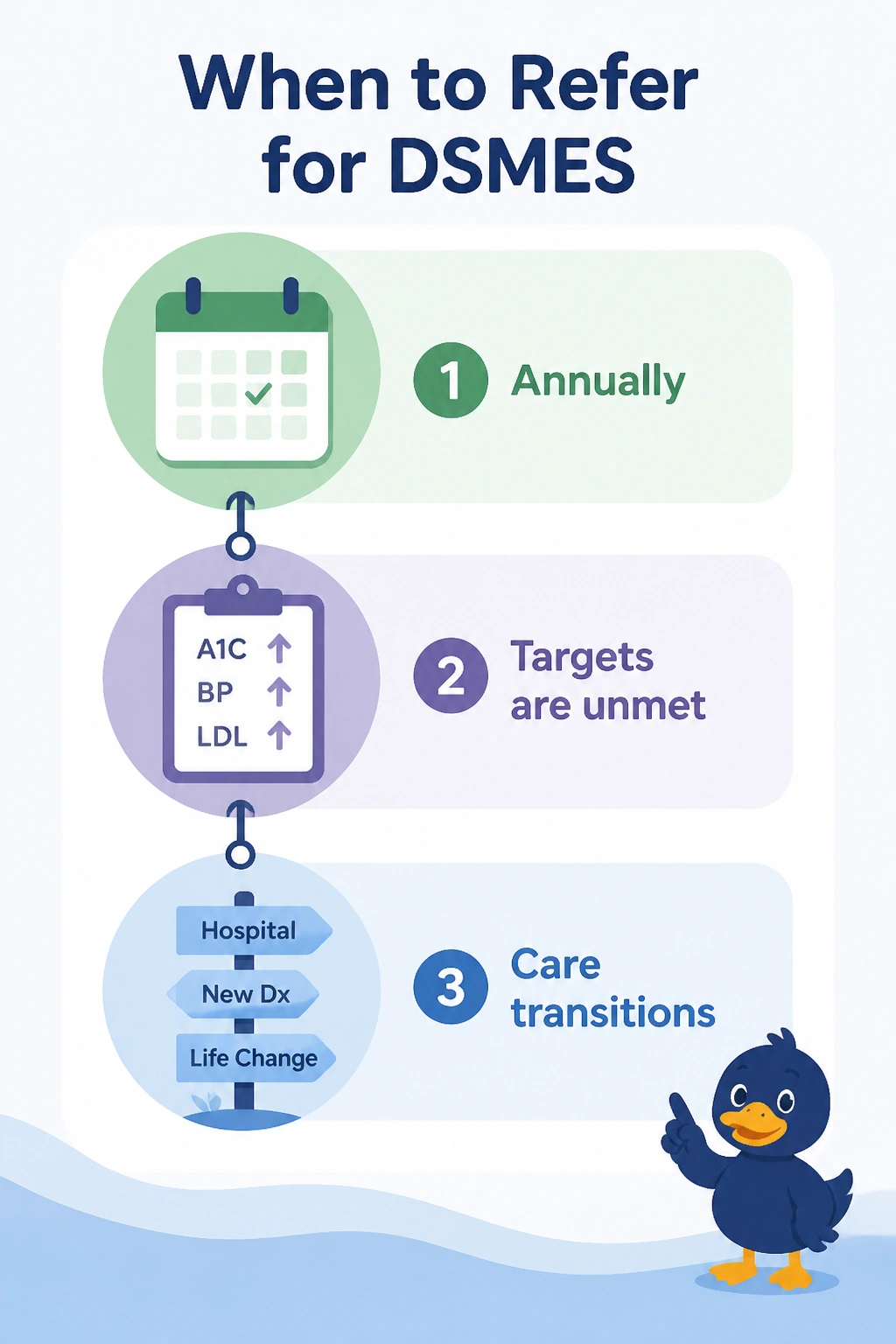
You can treat DSMES as ongoing support, not a one-time class at diagnosis: referral is appropriate annually, when targets are unmet, and during care transitions. Proactive referrals keep education and support in step with changing needs, rather than waiting for a device request or a crisis.
Full Explanation
Under the National Standards for DSMES and consensus guidance, referral is appropriate at four critical times: at diagnosis; annually, when targets are unmet, or during care transitions; and when new complicating medical, physical, or psychosocial factors develop. The listed annual, unmet-target, and transition triggers support timely education and behavioral help as regimens evolve, comorbidities emerge, or living situations change. Limiting referral to a request for an insulin pump upgrade restricts support to technology users and overlooks the many people who benefit from ongoing education. Waiting until an emergency department visit for ketoacidosis makes DSMES reactive, after preventable harm may already have occurred. Referring every five years only when laboratory results remain unchanged leaves too long a gap and can miss shifts in nutrition, distress, or aging-related barriers. Exam caveat: the listed triggers are not the only critical times; diagnosis and new complicating factors also warrant referral. Practical check: audit the clinic’s referral order set to confirm all four critical times are selectable indications. Pair electronic health record prompts with warm handoffs, since many referred people do not attend without clear clinician endorsement.
Prefer to study offline? Printable PDF study book + test engine ($7.50, unofficial). These questions stay free here.