
A 31-year-old woman with type 1 diabetes in her third trimester asks how her daily insulin needs will likely change immediately after she delivers her baby and the placenta. Which expectation should the diabetes care and education specialist explain?
Select an answer to reveal the explanation.
Short Explanation
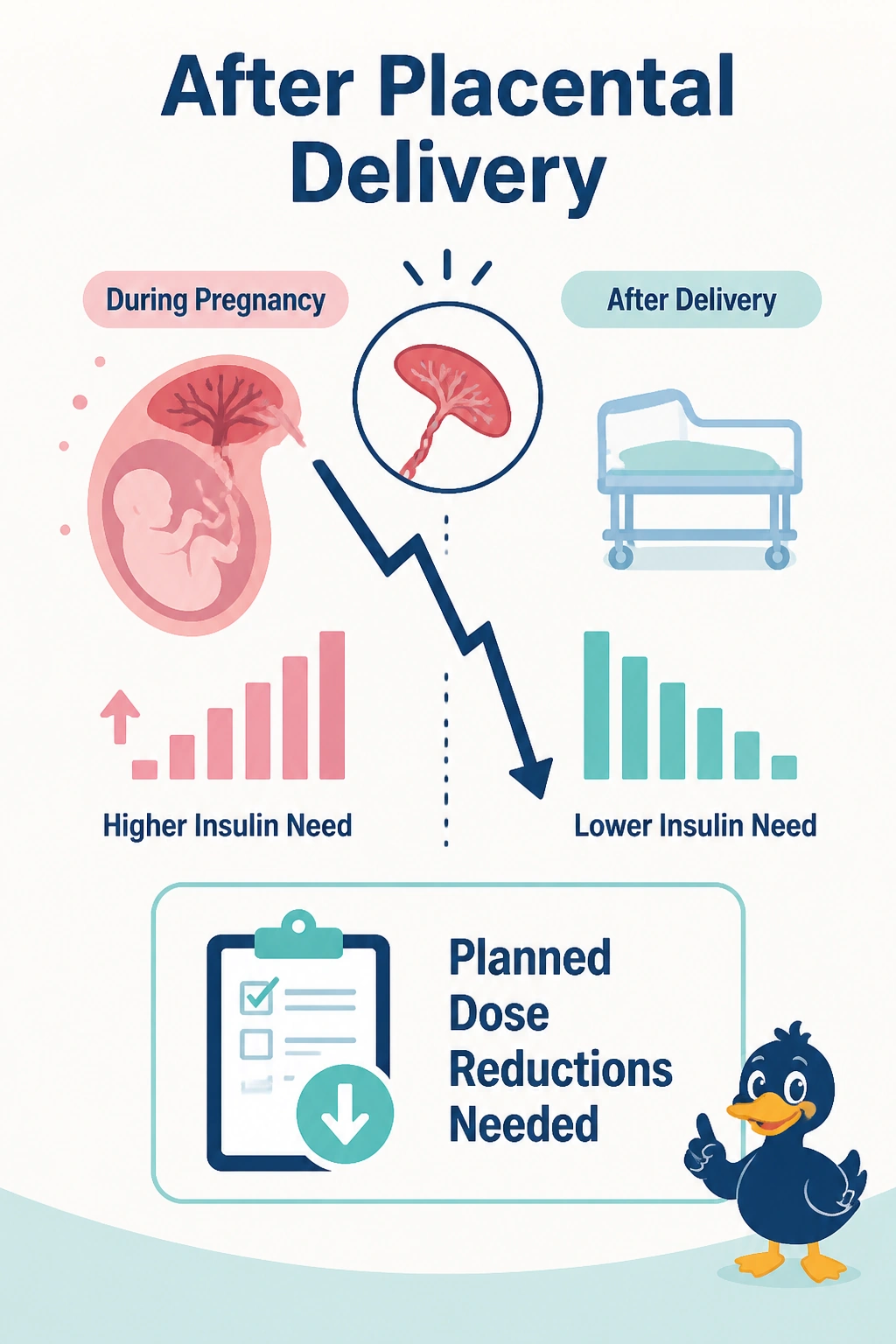
Think of the placenta as a hormone factory driving insulin resistance throughout late pregnancy, so once it is delivered, your insulin sensitivity rebounds fast. The classic trap is assuming postpartum stress keeps doses high, when continuing third-trimester doses can trigger severe hypoglycemia. Always help expectant parents plan ahead with their care team for an immediate postpartum dose reduction.
Full Explanation
During late pregnancy, placental hormones such as human placental lactogen and progesterone create marked insulin resistance that steadily increases insulin needs. Once the placenta is delivered, those hormones clear rapidly, so Insulin requirements typically drop abruptly after placental delivery, requiring planned dose reductions. Continuing late-pregnancy doses without adjustment places the new parent at high risk for severe hypoglycemia during hospital recovery and early newborn care. Insulin requirements usually rise sharply for several weeks after delivery because of postpartum stress hormones is incorrect because the loss of placental anti-insulin hormones far outweighs delivery-related stress. Insulin requirements generally stay unchanged until six weeks postpartum when menstrual cycles resume fails to account for the immediate physiologic shift that occurs within hours of birth. Insulin requirements usually double during the first three days postpartum to support early milk production is also wrong, as lactation actually consumes glucose and can further lower insulin needs. As a clinical caveat, insulin sensitivity can continue shifting during the first several weeks postpartum, especially with breastfeeding. For an operational check, verify before delivery that the patient has a written postpartum insulin adjustment plan from her obstetric or endocrine team and fast-acting carbohydrates at her bedside.
Prefer to study offline? Printable PDF study book + test engine ($7.50, unofficial). These questions stay free here.