
A 61-year-old man with type 2 diabetes prescribed repaglinide before meals mentions that he sometimes skips lunch during busy workdays yet still takes his midday tablet, resulting in afternoon shakiness. Which medication instruction should the diabetes care and education specialist emphasize?
Select an answer to reveal the explanation.
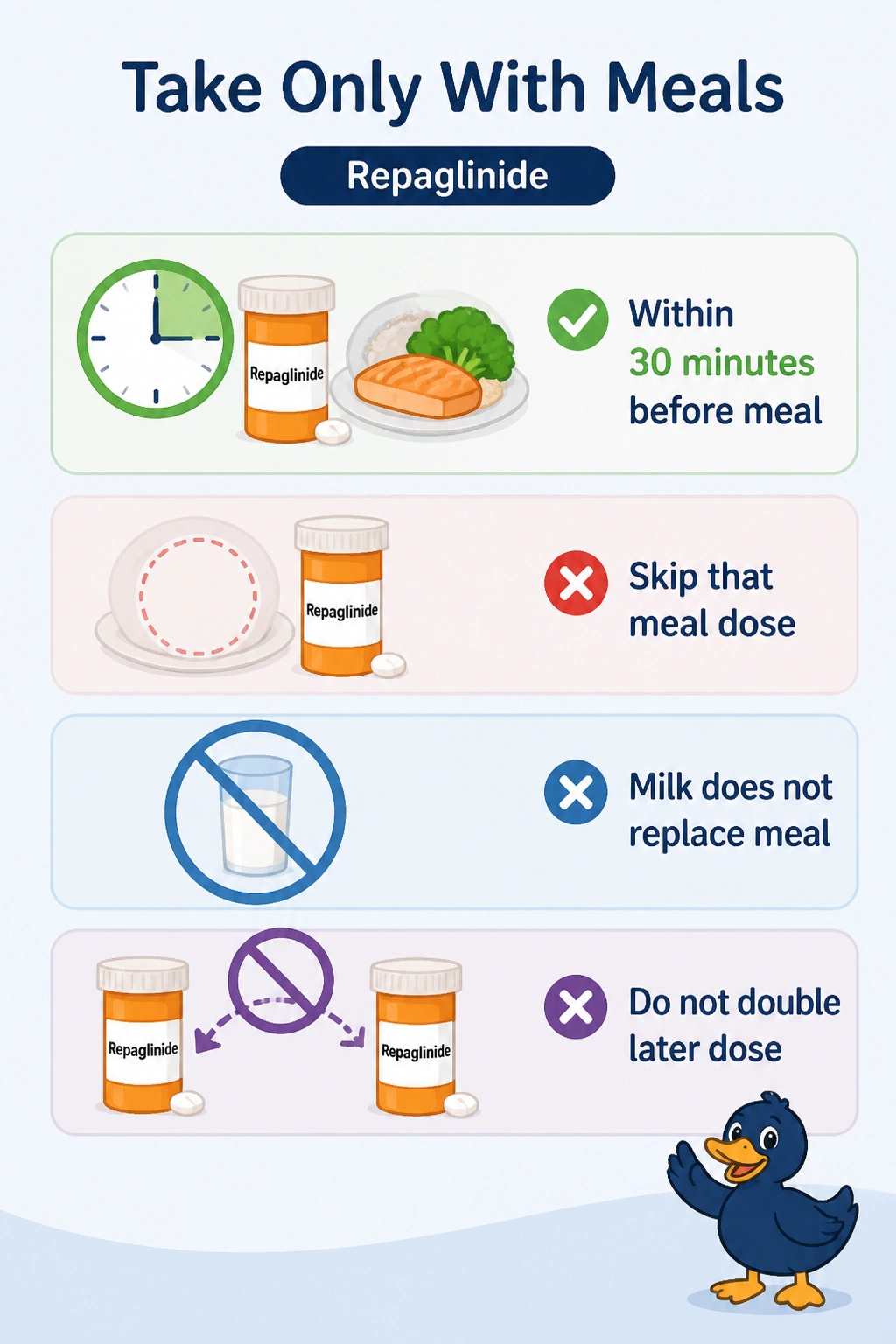
Short Explanation
Think of a meglitinide as a mealtime escort: if there is no meal on your calendar, the escort should stay home! The trap is taking repaglinide on a fixed clock schedule when you skip lunch, which drives blood glucose down without incoming food. Matching each dose to an actual meal helps you prevent lows.
Full Explanation
Repaglinide is a rapid-acting meglitinide insulin secretagogue with a short duration of action designed to cover postprandial glucose rises, so Take repaglinide within 30 minutes before a meal and skip the dose if a meal is skipped is the essential instruction. Without carbohydrate intake, stimulating insulin release precipitates hypoglycemia. Choosing Take the midday tablet with a glass of milk even when skipping lunch is incorrect because A glass of milk is not a substitute for following the prescribed meal-linked plan; do not take a skipped meal’s dose or automatically double a later dose. Choosing Double the dinner dose on days when the midday tablet is omitted sharply increases the risk of severe evening hypoglycemia without improving daytime control. Choosing Take all three daily tablets together at breakfast for convenience causes dangerous morning insulin excess and leaves later meals uncovered. As a clinical caveat, teach patients that meglitinides are typically taken within 30 minutes before a meal, and extra doses can be added only if an extra meal is eaten as advised by the prescriber. As an operational check, ask him to demonstrate using teach-back what he will do with his tablet on days he misses lunch.
Prefer to study offline? Printable PDF study book + test engine ($7.50, unofficial). These questions stay free here.