
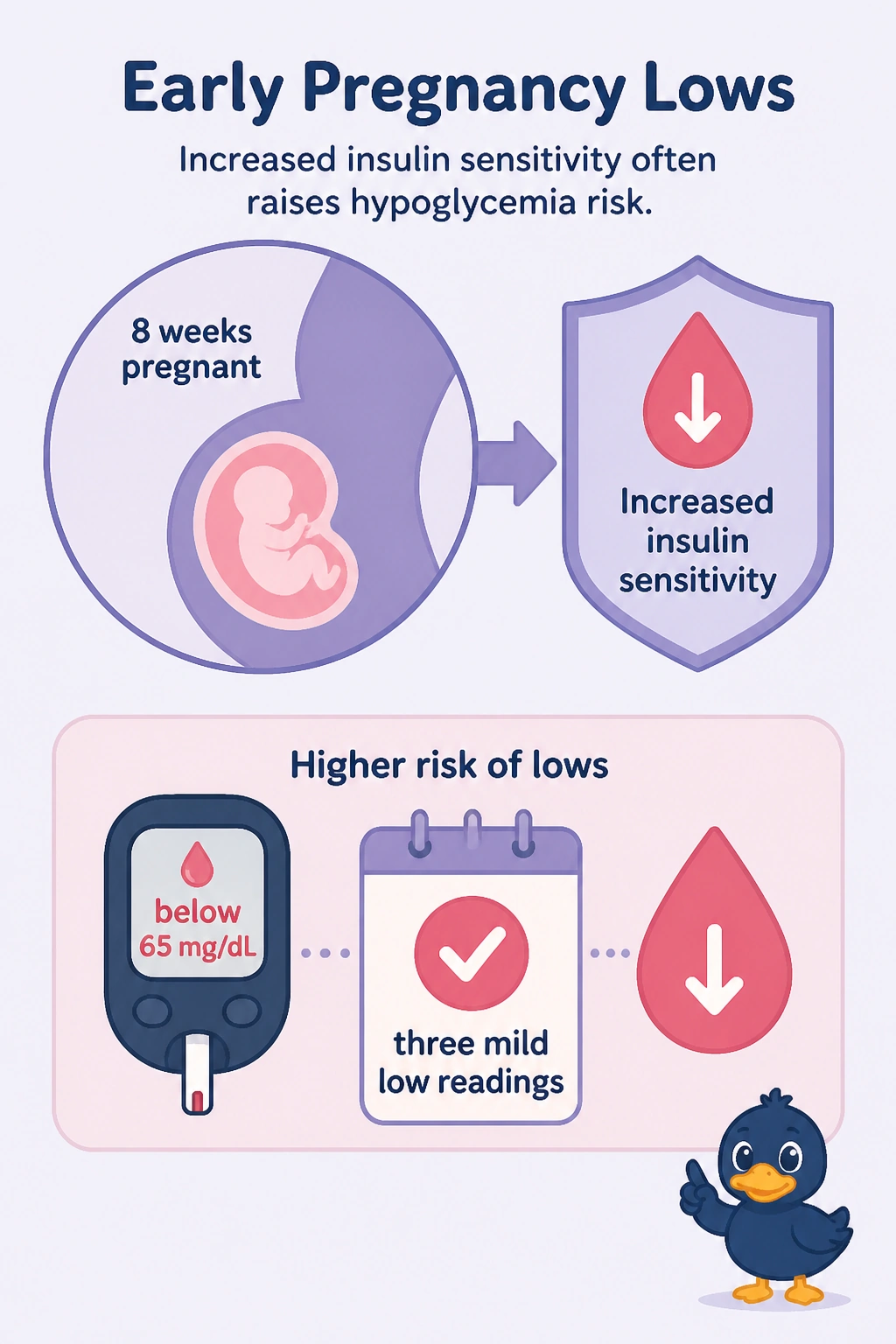
A 28-year-old woman with type 1 diabetes who is eight weeks pregnant calls the clinic because she has had three mild low blood glucose readings below 65 mg/dL this week despite following her usual pre-pregnancy routine. Which physiological explanation should the diabetes care and education specialist share while coordinating with her care team?
Select an answer to reveal the explanation.
Short Explanation
Pregnancy shifts your insulin needs like a changing tide, and the first trimester often brings a surprising dip before resistance climbs later. When you understand why early pregnancy boosts insulin sensitivity, you can spot lows sooner and partner with your care team on safe adjustments.
Full Explanation
Insulin needs often fall in early pregnancy; increased insulin sensitivity and reduced intake or nausea can increase hypoglycemia risk. Individual patterns vary and recurrent lows warrant prompt dose review. Explaining that increased insulin sensitivity in early pregnancy often raises hypoglycemia risk helps the patient recognize these lows as an expected physiological shift requiring prompt prescriber review rather than a personal mistake. Placental hormones cause severe insulin resistance immediately after conception is inaccurate because placental lactogen and progesterone-driven insulin resistance typically rise during the second and third trimesters. Fetal glucose uptake drops sharply during the first eight weeks of gestation is incorrect because the developing embryo and placenta continuously draw maternal glucose, which contributes to lower maternal fasting levels. Insulin requirements cannot change until fetal growth accelerates in the third trimester is incorrect because insulin needs fall in early pregnancy and then rise later. As a caveat, pregnancy hypoglycemia awareness can also become blunted, making frequent glucose checks or continuous glucose monitoring essential. As an operational check, review her recent glucose trends and nausea patterns and confirm she has fast-acting glucose and rescue glucagon accessible while awaiting prescriber dose updates.
Prefer to study offline? Printable PDF study book + test engine ($7.50, unofficial). These questions stay free here.