
A 52-year-old woman with type 1 diabetes using an insulin pump and continuous glucose monitor lives in a coastal area prone to hurricanes and asks how to prepare before storm season. Which emergency preparedness step should the diabetes care and education specialist prioritize?
Select an answer to reveal the explanation.
Short Explanation
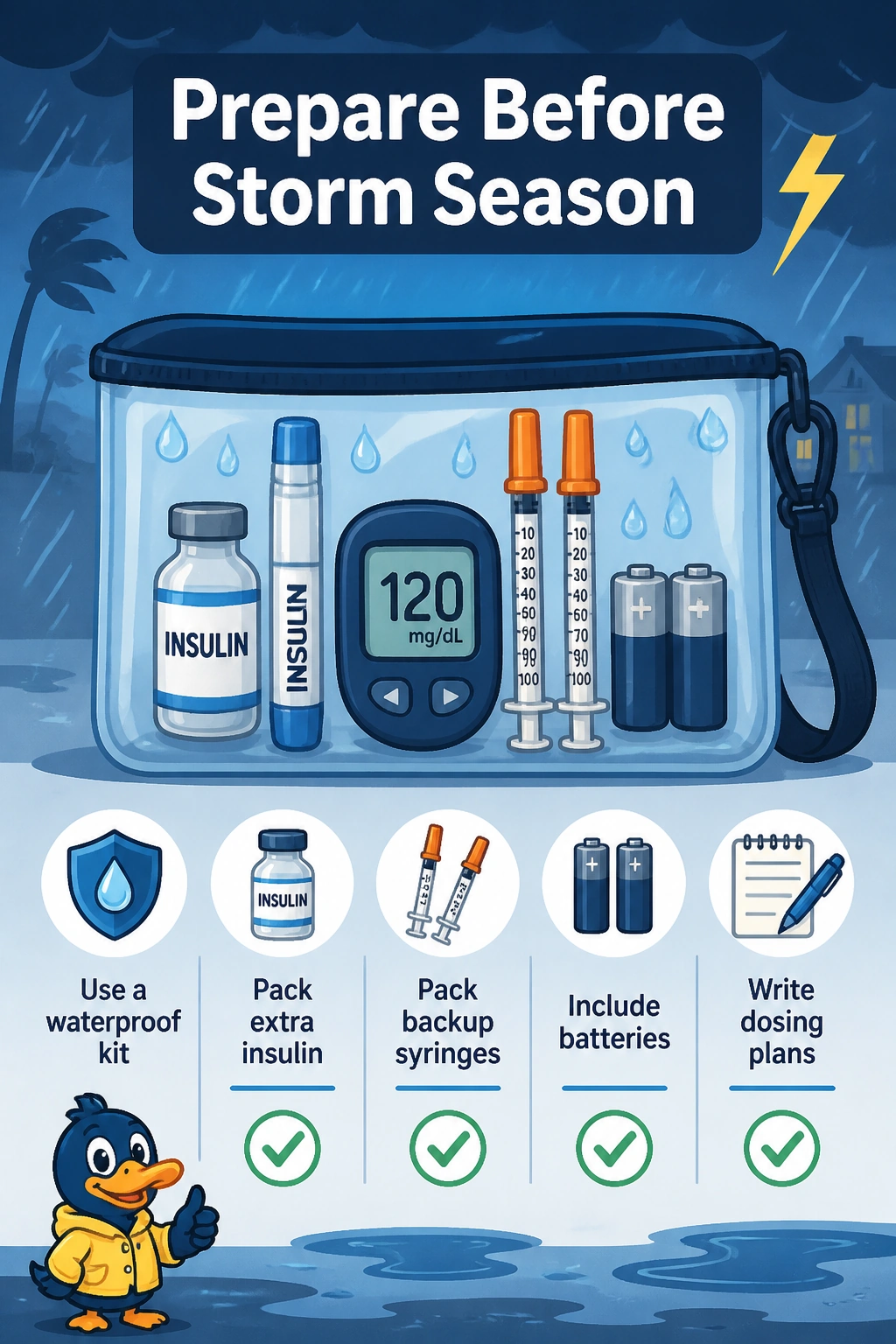
Before hurricane season, you want a grab-and-go waterproof kit with extra insulin, backup syringes, batteries, and written dosing plans. That preparation helps you manage power loss, spoiled supplies, or pump failure without relying on memory or a working phone.
Full Explanation
Natural disasters can disrupt electricity, refrigeration, pharmacy access, and cellular networks, so advance preparation is essential for someone who depends on insulin. A waterproof kit with extra insulin, backup syringes, batteries, and written dosing plans provides access to supplies and clear instructions if the pump fails or power is lost. Storing backup insulin vials in the home freezer is unsafe: freezing destroys insulin potency, even after thawing. Relying solely on smartphone cloud records for current pump settings may leave you without those records if the phone battery dies or cellular service fails during an evacuation. Preparing backup pump batteries but omitting injection supplies and a written insulin plan is incomplete, because pump loss, damage, or a prolonged outage still requires backup syringes and dosing instructions to maintain basal-bolus coverage and prevent diabetic ketoacidosis. An exam caveat is that emergency kits also need shelf-stable fast-acting carbohydrates, nonperishable snacks, bottled water, and an insulated cooling pouch that prevents ice packs from touching insulin directly. As a practical check, inspect expiration dates and update the written pump settings in the kit at the start of every storm season.
Prefer to study offline? Printable PDF study book + test engine ($7.50, unofficial). These questions stay free here.