
A 67-year-old man with type 2 diabetes and loss of protective sensation in both feet asks what everyday footwear and sock habits best protect his feet from unnoticed blisters and pressure injuries. Which self-care practice should the diabetes care and education specialist recommend?
Select an answer to reveal the explanation.
Short Explanation
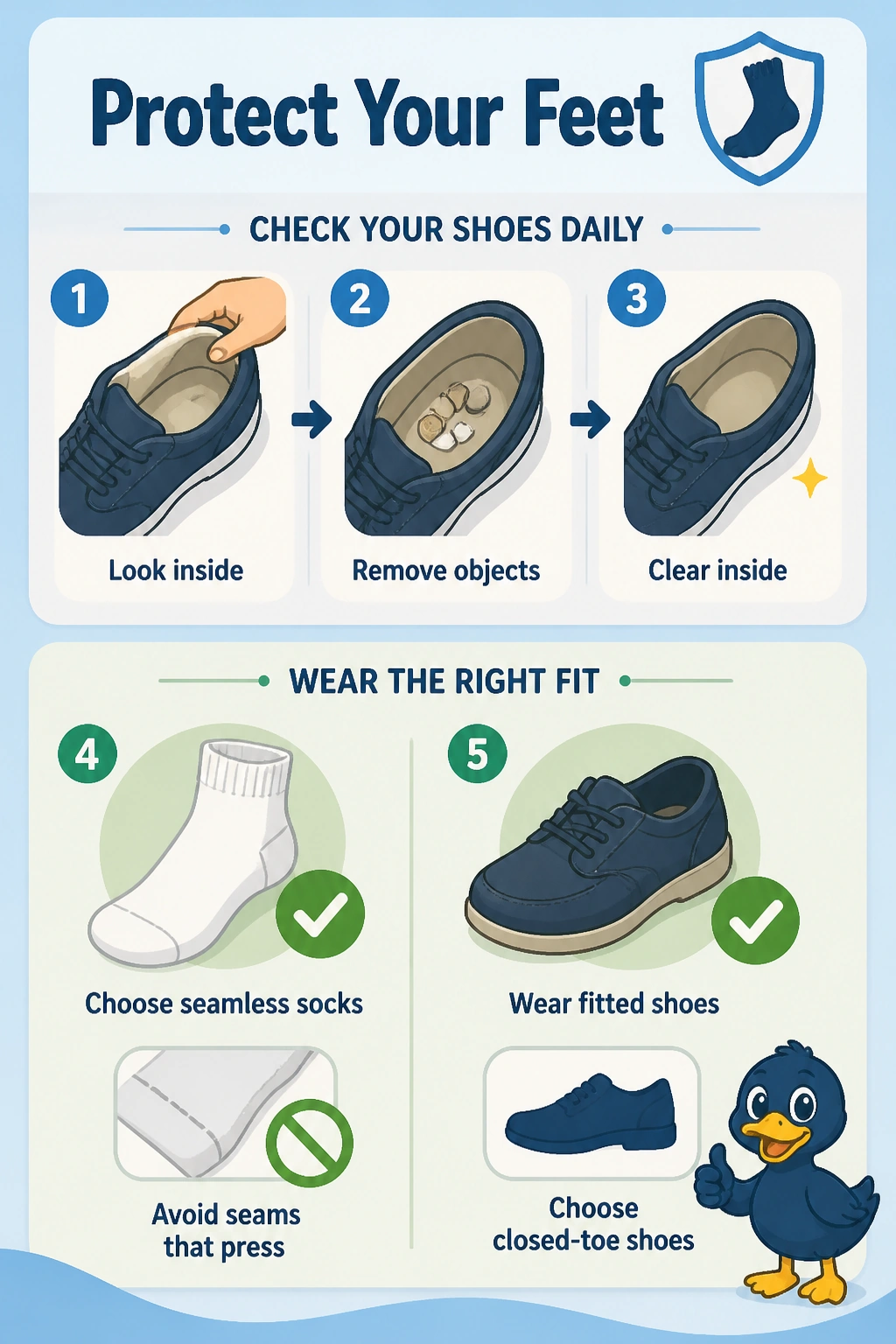
When you have reduced feeling in your feet, a tiny pebble inside a shoe can cause a serious sore before you feel a pinch. Checking your shoes daily and wearing seamless socks with fitted closed-toe shoes helps protect your skin from injury.
Full Explanation
Checking inside shoes daily for foreign objects and wearing seamless socks with fitted closed-toe shoes helps prevent unrecognized mechanical trauma, friction, and pressure ulcers when you have peripheral neuropathy. Loss of protective sensation can mask pain from small stones, seams, or tight toe boxes, so inspect shoes before putting them on. Choosing footwear by the usual size alone without checking internal seams or pressure points leaves friction areas undetected; sizes vary, and seams can injure insensate skin without warning. Walking barefoot indoors on carpeted floors exposes insensate feet to sharp objects, splinters, and stubbed toes, even at home. Judging new-shoe break-in time by pain rather than timed wear and skin checks is unsafe when protective sensation is lost: shear injury and blisters can advance before redness is noticed, while short timed wear with skin checks can detect problems early. As an exam caveat, significant foot deformities or prior ulcers warrant referral for custom therapeutic footwear rather than standard retail shoes. For a practical check, ask the person to demonstrate sweeping a hand inside a shoe before putting it on and inspecting socks for raised toe seams.
Prefer to study offline? Printable PDF study book + test engine ($7.50, unofficial). These questions stay free here.